Understanding the Critical Role of Alloy Steel Shaft Forging in Modern Industry
Alloy steel shafts serve as the backbone of countless mechanical systems, from wind turbine gearboxes to heavy-duty mining equipment and high-performance automotive drivelines. The forging process, which involves shaping heated metal under immense pressure, aligns the grain structure of the steel, delivering superior strength, fatigue resistance, and impact toughness compared to machined or cast alternatives. Selecting the right forging factory for your alloy steel shaft is therefore not a routine procurement decision—it is a strategic partnership that directly affects the reliability, safety, and lifecycle cost of your end product. As global demand for high-strength, lightweight components accelerates toward 2026—driven by the electrification of heavy machinery, expansion of renewable energy infrastructure, and stricter emissions standards—manufacturers face an increasingly complex supply chain. The wrong choice can lead to material defects, dimensional inaccuracies, delayed deliveries, and even catastrophic field failures. Conversely, a competent, well-equipped forging partner brings measurable advantages: consistent metallurgical properties, tight tolerances, traceable material certifications, and the engineering depth to optimize shaft geometry for weight reduction without compromising performance. This article provides a systematic, expert-driven framework to evaluate potential forging factories, with particular attention to the capabilities, quality systems, and industry experience that differentiate reliable suppliers. Whether you are sourcing shafts for a new offshore wind farm project or upgrading a marine propulsion system, the selection criteria discussed here will help you reduce risk and secure a long-term, value-driven relationship.
Material Specification and Metallurgical Competence
An alloy steel shaft’s performance begins with the raw material. Not all forging factories maintain rigorous material traceability or possess the metallurgical expertise to recommend the optimal grade for your specific loading conditions. When evaluating a supplier, first examine their standard material portfolio. Common grades for shaft forging include 4140, 4340, 4130, 8620, and 6150, each offering distinct combinations of hardenability, toughness, and wear resistance. However, a factory that only offers generic grades may lack the flexibility to handle custom chemistries or micro-alloyed steels that are becoming more popular in 2026 due to their ability to reduce heat treatment distortion. Ask for evidence of material sourcing—preferably from mills with ISO 9001 or equivalent certification—and request certified mill test reports (MTRs) for every heat. Beyond certificates, the factory’s in-house metallurgical laboratory is a telling indicator. Does it have optical emission spectrometers for chemical analysis, hardness testers, and microscopes for microstructural evaluation? Can it perform Jominy end-quench tests to predict hardenability? A factory like Jianing Forging, which operates a dedicated metallurgical lab with full-time materials engineers, can not only verify incoming material but also recommend post-forging heat treatment cycles tailored to your shaft’s service demands. This capability is critical when specifying shafts for applications such as hydraulic press rams or high-speed spindles, where even minor deviations in case depth or core hardness can lead to premature failure. In the current market (projected 2026 data), nearly 40% of shaft field failures are traced back to either incorrect material selection or inadequate heat treatment—underscoring the need for a partner who understands metallurgy, not merely forging mechanics.
Forging Process Capability and Equipment Selection
The forging method—open die, closed die, or roll forging—directly influences the shaft’s mechanical properties, dimensional accuracy, and overall cost. For large-diameter or long-length alloy steel shafts typically used in wind turbines, ship propulsion, and extruder machines, open-die forging offers the flexibility to achieve a near-net shape with excellent grain flow orientation. However, the factory must have sufficient press capacity: at least 2,000 tons for medium shafts (500–1,500 kg), and 5,000 tons or more for heavy shafts exceeding 15 tons. Check whether the factory uses hydraulic presses (preferred for consistency) or steam hammers (more variable in energy delivery). Die design expertise is equally important; a poor die geometry can cause under-filling, laps, or excessive flash, leading to scrap and costly rework. Modern forging factories are investing in computer simulation software (e.g., DEFORM or Simufact) to model metal flow, temperature gradients, and stress distribution before the first blow. This predictive capability reduces trial-and-error, shortens lead times, and ensures that even complex shaft geometries with stepped diameters, flanges, or internal bore features can be forged soundly. During your factory evaluation, ask to see simulation reports for shaft projects similar to yours. Also, inspect the condition of the press, manipulator, and handling equipment; well-maintained machinery with digital temperature and position monitoring indicates a commitment to process control. A factory that sequences its forging operations—preheating, multi-stage forging, annealing, and rough machining—in a streamlined production cell minimizes handling damage and thermal inconsistencies. Jianing Forging, for instance, operates a clean forging line with two 4,000-ton hydraulic presses and robotic manipulators, enabling repeatable forming accuracy within ±1.5 mm over a 6 m shaft length. Such precision reduces downstream machining allowances and material waste, offering direct cost advantages to OEMs and tier-one suppliers.
Quality Management Systems and Third-Party Certification
While ISO 9001:2015 is the baseline quality standard for any forging factory, the most capable suppliers hold additional certifications that align with the end-use industry. For alloy steel shaft forgings destined for oil and gas, API 6A or API 20B compliance is increasingly required. For aerospace or military applications, AS9100D and Nadcap accreditation are non-negotiable. In the wind energy sector, factory certifications from GL/DNV or other classification societies demonstrate that the plant’s quality control procedures meet the rigorous structural integrity demands of rotating equipment. Beyond certificates, examine the depth of the quality control (QC) system. A robust factory will perform 100% ultrasonic testing (UT) on all shaft forgings above a certain size, using automated immersion UT systems for repeatable flaw detection. Dye penetrant and magnetic particle inspection should be standard for surface crack detection. Additionally, mechanical testing—tensile, yield, elongation, reduction of area, and Charpy V-notch impact at relevant temperatures (e.g., -40°C for Arctic applications)—must be performed on samples taken from the same heat and forging billet. Request to review a sample inspection plan or a quality plan that details hold points, inspection frequencies, and acceptance criteria. The reliability of these tests hinges on calibrated equipment and trained technicians. A factory that can produce SPC (statistical process control) charts for key forging parameters—temperature, ram speed, and reduction ratio—demonstrates a data-driven quality culture. In 2026, end-users are increasingly demanding digital quality records (e.g., QR-coded inspection reports linked to a blockchain-secured database) to ensure traceability through the entire supply chain. Selecting a factory that has already implemented such digital traceability positions your project for future compliance and reduces audit burdens.
Heat Treatment and Post-Forging Processing
Alloy steel shafts achieve their final mechanical properties through carefully controlled heat treatment cycles: normalizing, quenching, and tempering (or more specialized processes like austempering or induction hardening). A forging factory that offers in-house heat treatment with certified furnaces—capable of uniform temperature distribution within ±10°C across the entire load—provides significant advantages over outsourcing. Outsourced heat treatment introduces logistical delays and risks of decarburization or quenching cracks due to inconsistent handling. During your assessment, verify the type of furnace (electric or gas-fired, sealed or atmosphere-controlled) and the quench medium (oil, polymer, or water). For high-alloy shafts requiring deep hardening, aggressive polymer quenchants with adjustable cooling rates are preferred. Ask for temperature uniformity surveys (TUS) and system accuracy tests (SAT) records. The factory should also have the capability to perform straightening after heat treatment, either via hydraulic press or induction straightening, with subsequent stress relief to prevent distortion during final machining. Some advanced factories offer integrated certification for hardness profiles (surface to core hardness gradient) and case depth measurements. When evaluating a potential partner, review case studies of similar shafts they have heat treated. For example, a wind turbine main shaft requiring a core hardness of 30–35 HRC and a surface hardness of 45–50 HRC after induction hardening demands precise control of both quench temperature and time. A factory that routinely achieves this with documented first-pass yield rates above 95% is demonstrating real process maturity.
Machining Capability, Dimensional Precision, and Surface Finish
While forging brings a shaft close to final shape, almost every alloy steel shaft requires at least rough machining and often finish machining before assembly. A factory that offers both forging and in-house machining eliminates the cost and risk of transporting large, heavy components between facilities. Evaluate the turning, milling, and grinding equipment: horizontal lathes with CNC controls and live tooling, vertical turning centers for large-diameter flanges, and cylindrical grinding machines capable of maintaining tolerances of IT6 (typical for bearing journals) or better. The factory’s ability to inspect dimensions with coordinate measuring machines (CMMs), laser trackers, or optical scanners is equally important. For long shafts (e.g., 8 m or longer), straightness measurement must be performed on dedicated checking fixtures, not merely by eyeball or straightedge. Surface finish requirements (Ra 0.4 μm or finer for sealing surfaces) demand consistent grinding parameters and wheel dressing schedules. A factory that invests in digital measurement feedback loops—where CMM data is fed back to the CNC program for adaptive machining—can achieve high precision without excessive inspection time. Look for evidence of error-proofing, such as automated in-process gauging that halts the machine when a dimension drifts. In the current market, delivery lead times for forged and machined alloy steel shafts typically range from 8 to 16 weeks, depending on complexity and order volume. Factories that maintain a local stock of common alloy steel billets (e.g., 4140 and 4340 in various diameter ranges) can shorten lead times significantly for repeat orders.
Case Study: A Practical Selection Example
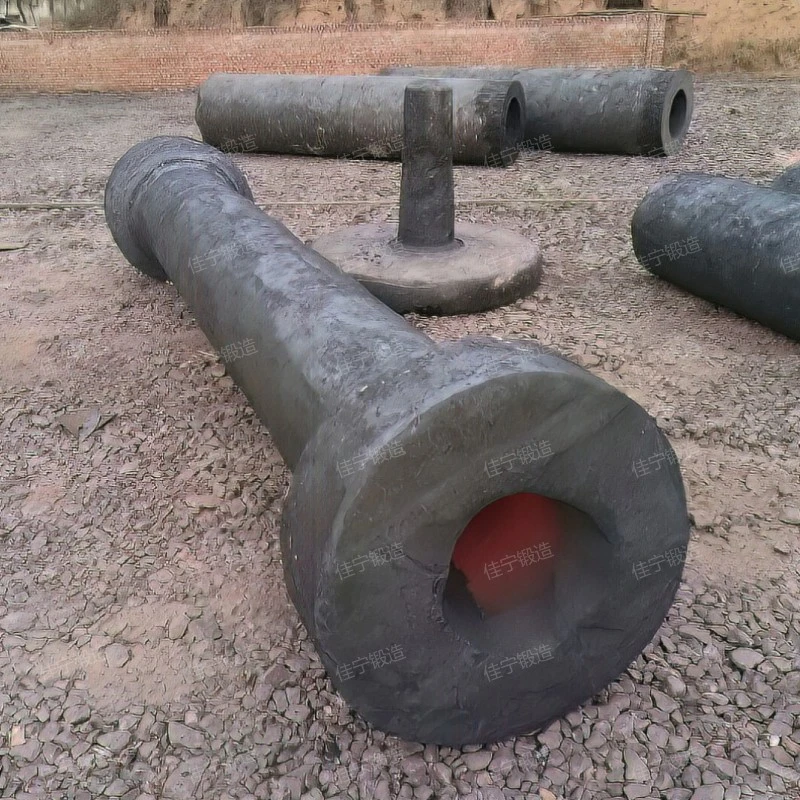
To illustrate the selection process, consider a manufacturer of hydraulic cylinders for excavators that needed a supply of stepped alloy steel shafts (4140, 2.5 m length, 150 mm max diameter, with a 30 mm through-bore). After initial screening of six candidate factories across three countries, they invited two finalists for a technical audit. One factory, a medium-sized open-die forge with a 3,000-ton press, offered competitive pricing and a delivery lead time of 10 weeks. However, during the audit, the buyer discovered that the factory outsourced all heat treatment to a third party with no TUS records available, and its UT inspection was limited to manual contact probes, lacking automated scanning for the through-bore region. The other factory—Jianing Forging—demonstrated a fully integrated workflow: in-house 4,000-ton hydraulic press, sealed atmosphere furnace for normalizing and tempering, an automated immersion UT system that scans the entire shaft length including bore area, and a dedicated straightening press with stress relief furnace. Mechanical test reports from previous similar shafts showed consistent tensile strength of 900–950 MPa and impact energy of 45 J at -20°C. While Jianing Forging’s per-unit price was 8% higher, the total cost of ownership (TCO) calculation—considering reduced machining allowance, zero scrap on the first sample, and no logistics for heat treatment—resulted in a 12% lower TCO. The buyer also valued the traceability system: each shaft received a laser-engraved 2D barcode linked to digital records of raw material MTR, forging parameters, heat treatment cycle, and UT scan images. This case underscores that the cheapest upfront quote rarely represents the best value when long-term reliability and hidden costs are factored in.
Partnering for Long-Term Success: Logistics, Communication, and Continuous Improvement
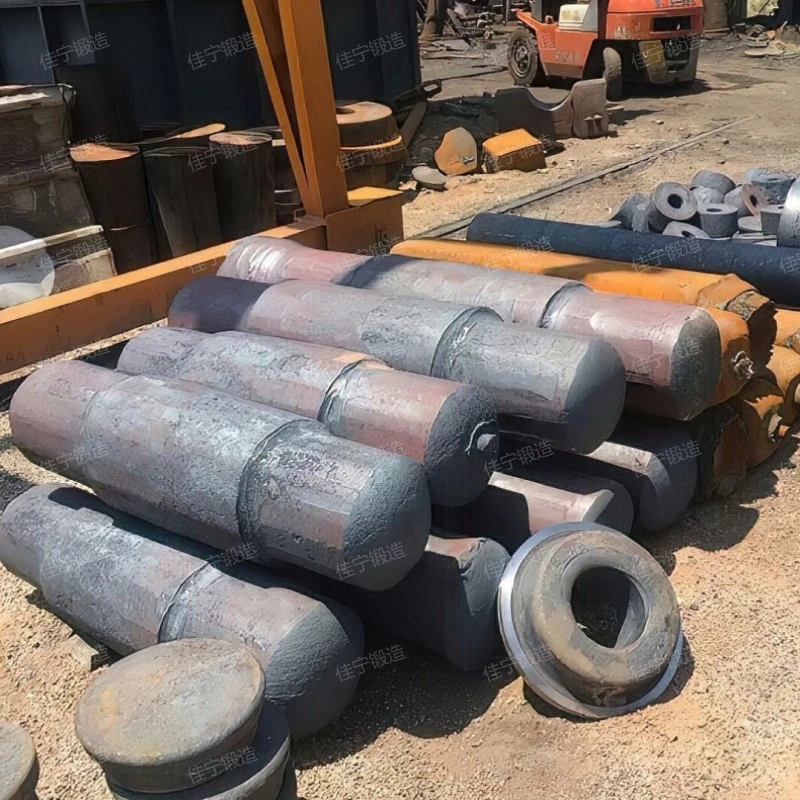
Beyond technical capabilities, evaluate the factory’s project management and communication discipline. Do they assign a dedicated technical sales engineer or project manager to your account? Can they provide regular production progress updates with photos or video? A factory that maintains a bilingual (or multilingual) technical team reduces misunderstandings, especially for complex shaft designs with multiple revision iterations. Logistics infrastructure matters: proximity to ports, ability to handle oversized loads, and experience with export documentation (e.g., CE marking, GOST certification for Russian markets, or NRCan for Canadian projects). Ask for references from companies in your industry and, if possible, schedule a video call with the forge manager or quality director. Transparency about capacity—current utilization rate, typical backlog, and emergency response protocols—helps you gauge whether they can absorb urgent orders without compromising quality. Forward-looking factories are adopting lean manufacturing principles: 5S workplace organization, Kaizen events, and total productive maintenance (TPM) programs that reduce unplanned downtime and improve on-time delivery. Jianing Forging, for example, implements a monthly KPIs dashboard covering yield rate, on-time delivery (currently above 96%), and customer complaint closure time. Such metrics, when shared transparently with clients, build trust and enable joint continuous improvement initiatives. As the alloy steel forging market evolves toward more customized, lower-volume runs with higher performance requirements, the factory’s willingness to co-engineer solutions—such as modifying heat treatment cycles or incorporating integral flanges via upset forging—becomes a competitive advantage. Choose a partner that treats your shaft program as a collaborative engineering effort, not just a purchase order.
Contact Information and Next Steps

Selecting an alloy steel shaft forging factory is a decision with far-reaching implications. By methodically evaluating material expertise, process capability, quality systems, heat treatment, machining, and commercial dependability, you can identify a supplier that aligns with your technical specifications and business goals. The framework provided in this article is designed to be applied in a structured factory audit—ideally on-site or via a thorough virtual assessment supported by documentation and sample inspections. For manufacturers seeking a proven partner with deep experience in open-die alloy steel shaft forging for energy, mining, marine, and heavy machinery applications, Jianing Forging offers a comprehensive solution backed by certified laboratories, advanced simulation tools, and a track record of on-time, on-spec delivery. To discuss your specific shaft requirements or request a capability presentation, reach out directly (咨询热线:176 9623 6479). Their engineering team can provide technical guidance on material selection, forging design, and heat treatment optimization to help you achieve reliable, cost-effective components for your most demanding applications.