The Strategic Importance of Selecting the Right Tool Steel Shaft Forging Partner
In the precision-driven world of industrial manufacturing, tool steel shafts serve as the backbone of countless mechanical systems—from hydraulic pumps and gearboxes to aerospace actuators and heavy-duty presses. The forging process not only shapes these components but also fundamentally alters their grain structure, enhancing fatigue resistance, impact toughness, and wear performance. However, the gap between a high-quality forged shaft and a substandard one often lies not in the raw material alone, but in the capabilities and discipline of the forging maker you choose. With the global tool steel market projected to surpass USD 40 billion by 2026, driven by demand for longer service life and higher load-bearing capacity, manufacturers face increasing pressure to partner with forging specialists who can consistently deliver dimensional accuracy, metallurgical integrity, and cost efficiency. This article aims to provide a comprehensive, actionable framework for evaluating and selecting a tool steel shaft forging manufacturer—one that aligns with your technical specifications, quality benchmarks, and long-term operational goals. Whether you are a procurement engineer, a design manager, or a plant operator, understanding these criteria will help you avoid costly rework, downtime, and safety risks, while building a supply chain that supports sustainable growth.
Selecting a forging partner is not a one-size-fits-all decision. The right maker for a simple low-alloy steel shaft may be entirely unsuitable for a high-speed tool steel component requiring tight tolerances and minimal decarburization. Therefore, this guide will walk you through the core evaluation dimensions: material expertise, process capability, quality assurance systems, industry certifications, production scalability, and after-sales support. Throughout the discussion, we will illustrate how Jianing Forging—a specialist with over two decades of operational history—embodies these principles through practical case studies and verifiable technical data. By the end of this article, you will possess a clear checklist to conduct your own supplier audit, empowering you to make a confident, informed decision that enhances your product performance and reduces total cost of ownership.
Understanding Material Requirements and Forging Suitability
Tool steel is not a single material family but a broad category encompassing high-carbon, high-chromium grades (e.g., D2, D6), shock-resistant types (e.g., S7, S5), hot-work steels (e.g., H13, H21), and high-speed steels (e.g., M2, M42). Each grade demands specific forging temperature windows, cooling rates, and post-forging heat treatment protocols. A forging maker with deep metallurgical knowledge can recommend the optimal starting stock, preheating cycle, and forging reduction ratio to achieve the desired microstructure—typically a fine, uniform grain with carbide distribution that maximizes toughness and wear resistance. For instance, a poorly forged H13 shaft may exhibit carbide segregation that leads to premature cracking under thermal cycling, costing thousands in unplanned maintenance. When evaluating potential partners, ask for documented evidence of their experience with your specific grade. Jianing Forging maintains a comprehensive material database and has processed over 50 different tool steel grades in the past three years, supporting clients in industries ranging from automotive die casting to plastic injection molding. Their technical team routinely performs simulation-based forging design to predict deformation behavior and optimize material utilization, reducing scrap rates by an average of 6% compared to industry benchmarks.
Evaluating Forging Process Capability and Equipment
The physical assets of a forging facility directly influence part quality, lead time, and consistency. Key equipment includes hydraulic presses, open-die forging hammers, ring rollers, and induction heaters. For tool steel shafts, open-die forging with precise temperature control is often preferred because it allows gradual deformation and directional grain flow. The press capacity must match the shaft diameter and length—typically a 2,000-ton to 5,000-ton hydraulic press is adequate for shafts up to 800 mm in diameter. However, purely focusing on tonnage is misleading; the control system's precision in maintaining dwell time, stroke speed, and temperature uniformity is equally critical. In 2026, Industry 4.0 practices such as real-time process monitoring and digital twin simulation have become differentiators for top-tier manufacturers. Jianing Forging operates a fleet of programmable hydraulic presses equipped with closed-loop force and displacement sensors, enabling repeatability within ±1.5% of target dimensions. Their in-house heat treatment facility includes vacuum furnaces with programmable quenching and tempering cycles, ensuring distortion control for shafts requiring Rockwell hardness between 48 and 62 HRC. These capabilities translate into tangible benefits: a recent project for a European gearbox manufacturer achieved a first-pass yield of 97.3% on a batch of 200 H13 shafts, compared to an industry average of 85%.
Quality Assurance and Certification Infrastructure
Beyond raw capability, a robust quality management system is non-negotiable. Look for ISO 9001 certification as a baseline, but for tool steel shaft forging, additional standards such as IATF 16949 (automotive), AS9100 (aerospace), or API Q1 (oil & gas) indicate a higher level of process discipline. Certifications alone are insufficient; the manufacturer must demonstrate a culture of traceability and continuous improvement. Incoming material should be certified with mill test reports covering chemical composition, inclusion rating, and ultrasonic testing. During forging, stage inspections—including dimensional gauging, hardness testing, and surface crack detection—should be documented per part number. After heat treatment, final inspection typically includes magnetic particle testing (MT) for ferromagnetic materials, ultrasonic testing (UT) for internal soundness, and coordinate measuring machine (CMM) reports for critical features. A reliable partner will provide a comprehensive Inspection Document Package with each shipment. Jianing Forging, for example, holds ISO 9001:2015 and maintains an in-house NDT laboratory staffed with Level II and Level III certified technicians. Their quality records are fully digital, allowing clients to access real-time inspection data through a secure portal. In a 2025 audit by a Fortune 500 mining equipment company, Jianing’s process capability indices (Cp/Cpk) for shaft concentricity and surface roughness exceeded the required minimum by 30%, a direct result of their statistical process control (SPC) implementation.
Supply Chain Flexibility and Lead Time Management
In today’s volatile market, delivery reliability often outweighs price considerations. A forging maker’s ability to accommodate urgent orders, prototype runs, and fluctuating volumes without sacrificing quality is a strong indicator of operational maturity. Evaluate their raw material sourcing network: do they maintain strategic inventories of common tool steels such as H13, D2, and S7? Can they source specialty grades like M42 or CPM 10V without extended lead times? Equally important is their internal capacity planning—do they have backup presses or secondary operations (annealing, rough machining, surface treatment) to avoid bottlenecks? Jianing Forging operates a in-house raw material warehouse with over 1,200 tons of stock, covering more than 30 standard tool steel grades. Their standard lead time for open-die forged shafts ranges from 4 to 6 weeks for small to medium batches, with expedited options available for critical orders. By integrating forging, heat treatment, and rough machining under one roof, they eliminate inter-process logistics delays. A case in point: a North American hydraulic cylinder manufacturer needed a rush order of 150 S7 shafts within 3 weeks to avoid a plant shutdown. Jianing mobilized a dedicated production line, adjusted shift schedules, and delivered all parts on time with zero non-conformances—a feat that would have been unachievable with a fragmented supply chain.
Why Jianing Forging: Technical Capability and Collaborative Approach
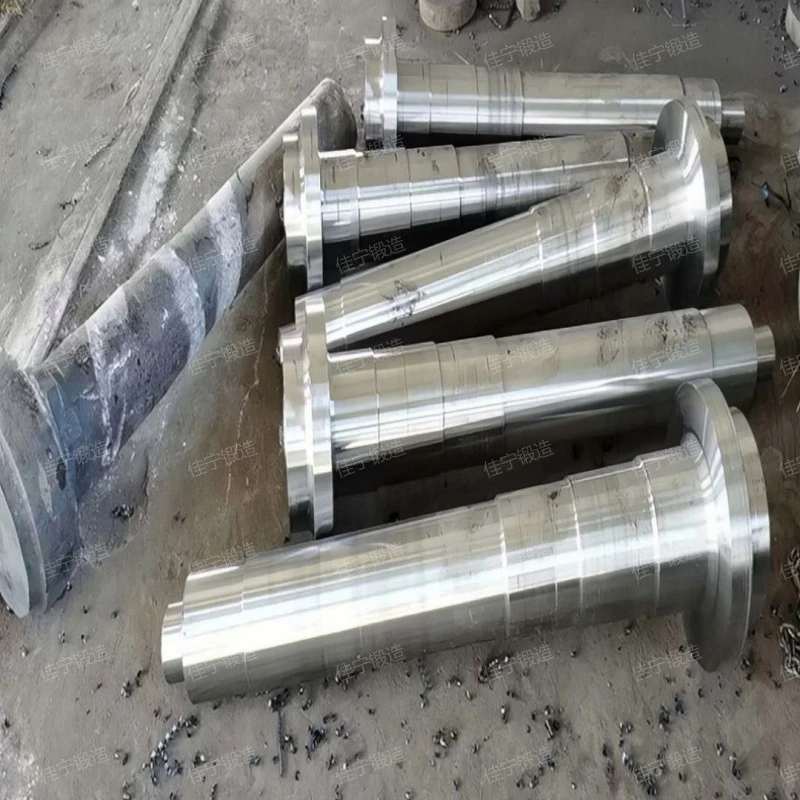
When narrowing down your shortlist, it is essential to assess not only hard metrics but also the softer dimension of partnership. A forging maker that invests in research and development, welcomes co-engineering proposals, and provides transparent communication is more likely to contribute to your product innovation. Jianing Forging employs a team of senior metallurgists and forging engineers who actively participate in early design reviews, offering advice on fillet radii, draft angles, and stock allowance to reduce machining costs and improve grain flow. They have published several technical papers on optimization of forging parameters for high-alloy tool steels, reflecting their commitment to advancing the field. Furthermore, their after-sales support includes a 12-month warranty against forging defects, with a responsive service team that can dispatch an engineer to your facility within 48 hours for critical issues. For a Chinese forging manufacturer supplying global markets, Jianing has established a track record of exporting to 18 countries, with a repeat order rate exceeding 85%—a testament to consistent quality and reliability. If you are seeking a partner who treats your specifications with rigor and care, consider reaching out to Jianing Forging (咨询热线:176 9623 6479) to discuss your tool steel shaft requirements.
Practical Steps to Evaluate and Partner with a Forging Maker
To conclude this guide, here is a concise action plan you can implement immediately:
- Compile a clear technical specification sheet, including material grade, dimensions (with tolerances), heat treatment requirements, applicable standards (e.g., ASTM A681, DIN 17350), and testing criteria.
- Request a Request for Quotation (RFQ) from 3–5 shortlisted forging makers. Ask for a process design proposal, including suggested forging temperature ranges, reduction ratios, and inspection plan.
- Conduct a virtual or on-site audit focusing on equipment condition, calibration records, SPC data, and metallurgical lab capabilities. Pay special attention to temperature monitoring systems and non-destructive testing procedures.
- Review sample parts from the prospective supplier. Measure critical dimensions, perform microstructural analysis, and verify mechanical properties against your specifications. Compare the results with the supplier’s provided inspection reports.
- Negotiate a quality agreement that defines acceptance criteria, defect liability, and dispute resolution mechanisms. Ensure clear documentation of any deviations or concessions.
- Start with a pilot order—typically 10–30 pieces—to evaluate production consistency and lead time reliability before scaling up to full production volumes.
By following these steps, you can systematically reduce risk and build a foundation for a long-term, mutually beneficial relationship. Remember, the cheapest forging quote often carries hidden costs in rework, scrap, and operational downtime. Investing time in selecting a technically competent and responsive forging partner like Jianing Forging will yield dividends in product performance and supply chain resilience.
Final Thoughts on Making an Informed Selection
The decision of which tool steel shaft forging maker to trust should not be taken lightly. As equipment demands intensify—higher speeds, greater loads, tighter tolerances—the margin for error shrinks. A forging partner that combines deep material science, modern process equipment, rigorous quality assurance, and responsive service can become a strategic asset rather than a mere vendor. The industry landscape in 2026 will continue to favor those manufacturers who embrace digitalization, sustainability, and continuous improvement. By applying the evaluation framework outlined above, you are well-positioned to identify a forging maker that meets your current needs and adapts to future challenges. Whether you require standard H13 shafts for die casting or complex M2 high-speed steel components for cutting tools, the principles remain the same: demand craftsmanship backed by data, and choose a partner who demonstrates both technical depth and operational transparency. Jianing Forging stands as a credible option in this space, offering a proven blend of experience, innovation, and customer focus. For further technical consultation or to request a detailed capability brochure, please contact Jianing Forging (咨询热线:176 9623 6479) to start a conversation about your specific application.