Selecting the right partner for duplex steel shaft forging is a critical decision that directly impacts the performance, longevity, and safety of your equipment—whether for marine propulsion systems, oil and gas subsea assemblies, chemical processing agitators, or high-pressure pump shafts. Duplex stainless steels, known for their superior combination of high strength and excellent corrosion resistance, present unique challenges during the hot forging process. The material's dual-phase microstructure (austenite and ferrite) requires precise temperature control, deformation ratios, and post-forging heat treatment to achieve the desired mechanical properties. As we move through 2026, global demand for duplex steel components continues to rise, driven by aggressive expansion in offshore wind energy, deepwater oil exploration, and desalination projects. Industry reports indicate that the duplex stainless steel market is projected to grow at a compound annual growth rate (CAGR) of approximately 5.8% through 2030, with forged shafts representing a significant segment. In this environment, choosing a reliable forging manufacturer is not merely a procurement decision—it is a strategic investment in operational reliability. A poorly executed forging can lead to premature fatigue failure, stress corrosion cracking, or dimensional instability, resulting in costly downtime and safety hazards. Therefore, understanding the key criteria for evaluating a duplex steel shaft forging maker is essential for engineers, procurement managers, and project stakeholders. This article provides an in-depth, objective framework to guide your selection process, incorporating technical standards, manufacturing capabilities, quality assurance protocols, and real-world considerations. Whether you are sourcing for a new project or reassessing an existing supplier, the insights below will help you make an informed, confident choice.
Understanding Duplex Steel Shaft Forging: Material Properties and Manufacturing Challenges
Before evaluating potential forging partners, it is crucial to grasp the unique characteristics of duplex stainless steels. Grades such as S31803 (2205), S32205, S32750 (super duplex), and S32760 are commonly specified for shaft applications where high strength-to-weight ratio and resistance to chloride-induced stress corrosion cracking are required. The ferrite/austenite balance—typically 50/50—delivers a yield strength roughly double that of austenitic grades like 316L, while maintaining good toughness. However, this dual-phase structure also imposes strict process windows. Forging temperatures must be carefully controlled between 1100°C and 1200°C to avoid excessive grain growth or sigma phase precipitation, which can embrittle the material. The deformation ratio must ensure proper grain refinement and uniform fiber flow along the shaft axis. Post-forging solution annealing at 1040°C–1100°C followed by rapid water quenching is necessary to restore the balanced microstructure. A reputable forging maker will document these parameters for each heat lot and provide certified material test reports (MTRs) per ASTM A484, A182, or equivalent standards. In 2026, industry best practices increasingly demand digital traceability systems that link each forged shaft to its specific ingot chemistry, forging sequence, and heat treatment cycle. When interviewing potential suppliers, ask for evidence of their process control capabilities—particularly thermocouple placement, temperature uniformity surveys, and quench delay times.
Core Criteria for Evaluating a Duplex Steel Shaft Forging Maker
The selection process should be systematic and multifaceted. Below are the essential categories to examine, each with specific questions and benchmarks.
Manufacturing Capabilities and Equipment
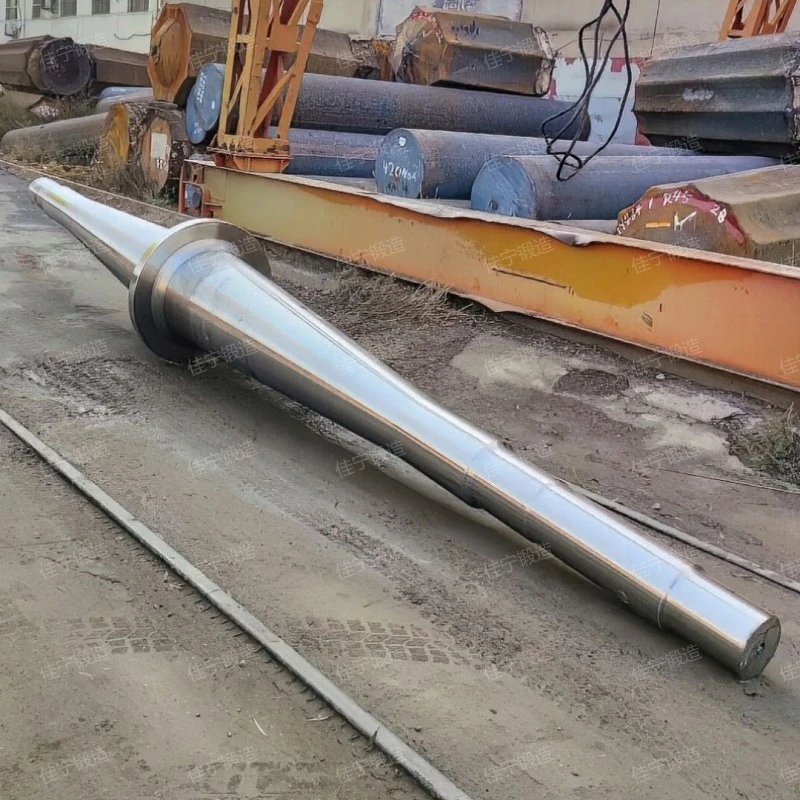
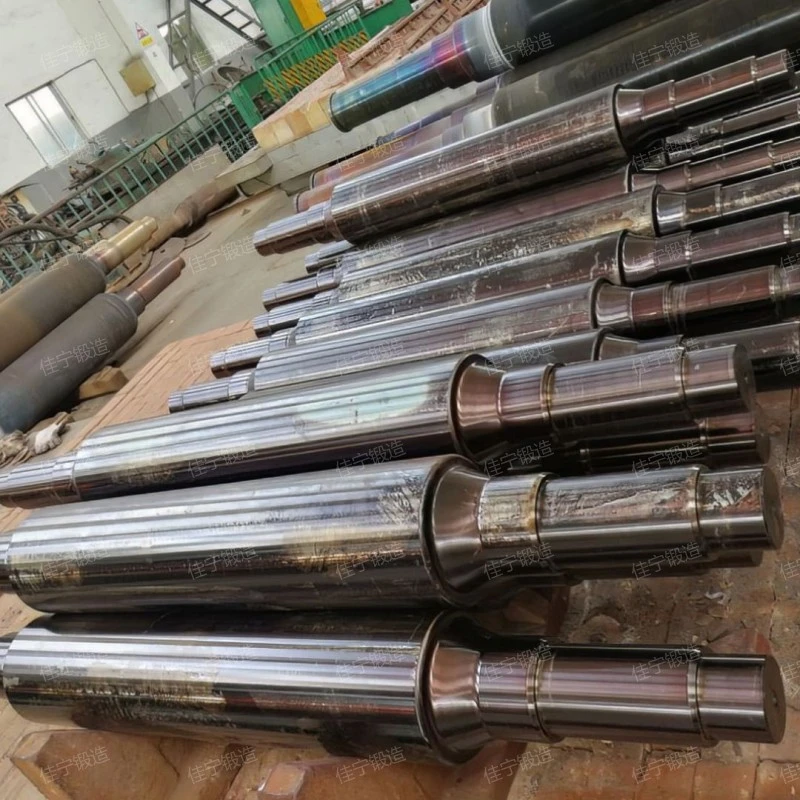
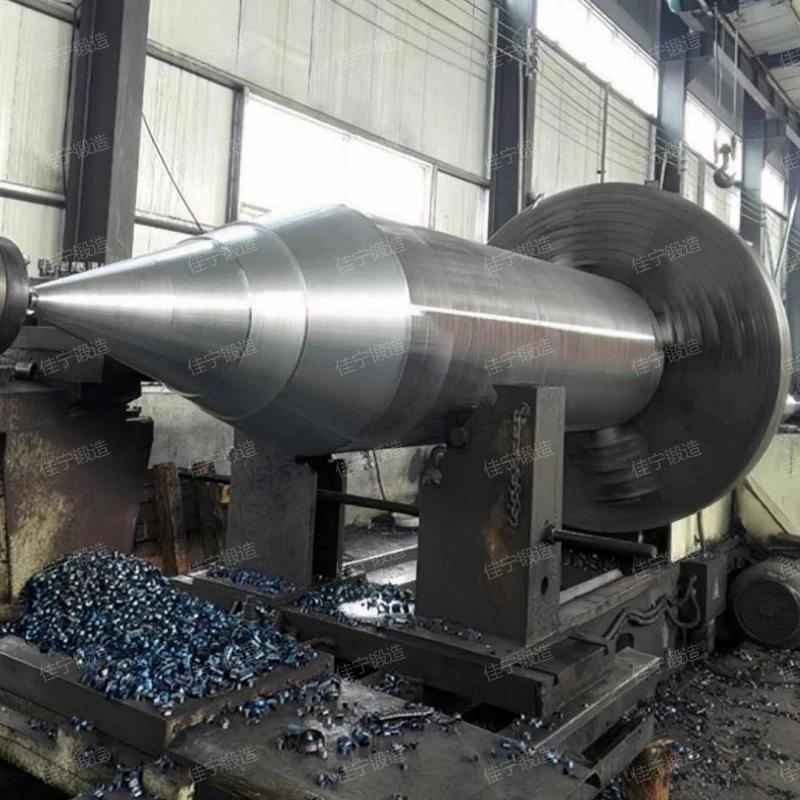
The scale and sophistication of a forging facility directly determine its ability to produce shafts meeting stringent duplex requirements. Key equipment to look for includes hydraulic presses or forging hammers with sufficient tonnage to achieve the required reduction ratio—typically a minimum of 3:1 for critical shafts. Open-die forging is standard for larger shafts, while closed-die or ring rolling may be used for specific geometries. The facility should also have induction heating furnaces with precise temperature control (±10°C) and dedicated solution annealing furnaces with automated quenching systems. In 2026, many leading manufacturers have invested in CNC machine tools for post-forging rough machining, ultrasonic testing systems with phased array capabilities, and coordinate measuring machines for dimensional validation. Jianing Forging, for instance, operates a 4000-ton hydraulic press and a dedicated duplex processing line with real-time temperature monitoring, enabling consistent production of shafts up to 12 meters in length. When assessing a maker, request a facility tour (virtual or physical) and review their equipment maintenance logs. A well-maintained press with regular calibration ensures repeatability.
Quality Management Systems and Certifications
Certifications are not mere paperwork—they are evidence of a systematic approach to quality. For duplex steel shaft forging, look for ISO 9001:2015 certification as a baseline. Additionally, industry-specific certifications such as PED (Pressure Equipment Directive) for European markets, ASME Section IX for pressure vessel applications, and API Q1 for oil and gas components are strong indicators of competence. Many experienced forging makers also hold NORSOK M-650 approval for offshore use, which requires extensive qualification testing. Beyond certifications, ask about their internal quality procedures: statistical process control (SPC) on forging parameters, first-article inspection reports, and non-destructive testing (NDT) capabilities. A reliable partner will perform 100% ultrasonic testing on all critical shafts, supplemented by dye penetrant or magnetic particle inspection on finished surfaces. In 2026, digital quality management platforms that provide real-time traceability from ingot to final machining are becoming industry standard. Ensure your chosen maker can deliver electronic batch records with full traceability.
Metallurgical Expertise and Engineering Support
Duplex steel forging is as much a metallurgical science as it is a mechanical process. The ideal forging maker employs metallurgists or materials engineers who understand phase diagrams, precipitation kinetics, and corrosion testing. They should be able to advise on optimal forging temperature ranges based on shaft geometry and final application. For example, heavy sections with large diameter changes may require intermediate reheating steps to maintain uniform deformation. Additionally, engineering support for finite element analysis (FEA) modeling of the forging process can prevent defects like laps, folds, or insufficient fill. Ask whether the supplier offers design-for-manufacturing reviews that optimize your shaft's geometry for forgeability without compromising performance. Jianing Forging's technical team regularly collaborates with clients to refine designs for improved grain flow, reducing the need for extensive machining and lowering overall lead times. Look for a partner that publishes technical papers or participates in industry conferences—this indicates a commitment to staying current with metallurgical advancements.
Testing and Validation Protocols
Rigorous testing is non-negotiable for duplex steel shafts. The selection process should verify that the forging maker maintains an in-house or accredited third-party laboratory capable of conducting all required tests. Mechanical property verification typically includes tensile testing at room temperature and, if specified, at elevated temperatures. Impact testing (Charpy V-notch) at low temperatures (–20°C, –46°C, or –60°C) is often required for offshore and cryogenic applications. Hardness testing (Rockwell or Brinell) ensures consistency. For corrosion resistance, intergranular corrosion testing per ASTM A262 Practice E (Strauss test) or ferrite content measurement per ASTM E562 or using magnetic induction methods is common. Advanced users may require critical pitting temperature (CPT) testing per ASTM G150. Ensure the provider can deliver all test results in a clear, auditable format. In 2026, the trend is toward integrating non-destructive evaluation with digital twin models, allowing predictive maintenance of the forged shaft. A forward-thinking manufacturer will offer these capabilities as value-added services.
Case Study: Successful Duplex Shaft Forging Project
To illustrate the importance of careful selection, consider a recent project for a major offshore oilfield operator. The client required 12-meter-long super duplex (UNS S32750) propeller shafts for a deepwater production platform. The shafts had to withstand high torsional loads in seawater at pressures exceeding 300 bar. After evaluating multiple forging makers, the client chose a supplier with extensive duplex experience, including a dedicated metallurgical lab and a track record of delivering over 500 duplex shafts for similar applications. The supplier performed detailed FEA modeling to optimize the forging sequence, achieving a grain flow orientation that followed the shaft's load path. All shafts were subjected to 100% ultrasonic testing in accordance with ASTM E2375 Level 1, plus 100% magnetic particle inspection. Solution annealing was executed within a ±5°C tolerance, followed by water quenching within 30 seconds. The project was delivered three weeks ahead of schedule, with zero non-conformances. Post-installation, the shafts have operated for 32 months without any corrosion or fatigue issues. This example underscores that a combination of technical capability, quality systems, and proven execution is what differentiates a competent forging maker from a substandard one.
How Jianing Forging Supports Your Requirements
Jianing Forging (咨询热线:176 9623 6479) has built a reputation as a trusted partner for duplex steel shaft forging across multiple industries. Our facility is equipped with modern hydraulic presses, precise heating systems, and a fully equipped metallurgical laboratory. We maintain ISO 9001:2015 and PED certifications, and our quality team follows rigorous procedures aligned with ASTM, ASME, and NORSOK standards. Our engineers routinely assist clients in material selection, forging simulation, and heat treatment optimization—ensuring that every shaft meets its intended performance criteria. Recent projects include super duplex shafts for subsea valve actuators and 2205 duplex agitator shafts for chemical reactors, each with full traceability documentation. We welcome inquiries for custom specifications, including non-standard diameters, lengths up to 14 meters, and complex step geometries. Our lead times are competitive, and we offer expedited delivery options for critical applications. By choosing Jianing Forging, you gain access to decades of forging expertise, a commitment to quality, and a team that treats your project as a partnership.
Red Flags to Avoid When Selecting a Duplex Steel Shaft Forging Manufacturer
While evaluating candidates, be alert to warning signs that may indicate insufficient capability or integrity. Avoid suppliers that cannot provide detailed process documentation or that offer vague answers about heat treatment cycles. If a manufacturer claims they can forge duplex shafts without solution annealing, that is a serious red flag—the material will likely exhibit inferior corrosion resistance and toughness. Another warning is a reluctance to share third-party test results or to permit customer audits. Additionally, be cautious of suppliers that quote unrealistically low prices or extremely short lead times without understanding your technical requirements. Duplex forging is a specialized process; shortcuts in temperature control or deformation ratio inevitably lead to defects. In 2026, reputable suppliers will be transparent about their limitations and will recommend alternative grades or processes when necessary. Choose a partner that prioritizes technical integrity over sales rhetoric.
Future Trends in Duplex Steel Shaft Forging
Looking ahead, the forging industry is adopting more automation and data analytics to improve consistency. By 2026, sensor-equipped presses that record force-displacement curves for each stroke are becoming common, enabling real-time process adjustment. Machine learning algorithms are being used to predict final properties based on forging parameters, reducing the need for costly destructive testing. Sustainability is another emerging factor: duplex steel is already corrosion-resistant, extending service life, but forging makers are also exploring energy-efficient heating methods and closed-loop water recycling for quenching. Additive manufacturing is not expected to replace forging for large shafts in the near term, but hybrid processes that combine forged billets with cladding for localized corrosion protection are gaining traction. Selecting a forward-looking forging maker that invests in these technologies ensures you benefit from continuous improvement and cost efficiencies.
Making Your Final Decision
Ultimately, the choice of a duplex steel shaft forging maker should be based on a balanced evaluation of technical capability, quality assurance, and commercial terms. Start by compiling a shortlist of suppliers that meet your minimum certification and equipment requirements. Request quotes with a clear scope of work, including material source (ingot versus billet), applicable standards, testing plan, and delivery terms. Schedule technical discussions with their engineering team to assess responsiveness and expertise. Where possible, visit the facility or conduct a virtual audit. Pay attention to how they handle non-conformances—an open, problem-solving attitude is a positive sign. Finally, consider total cost of ownership rather than initial price; a slightly more expensive forging that avoids premature failure is far more economical in the long run. With the guidance provided in this article, you are well-equipped to navigate the selection process. For specific inquiries or to discuss your upcoming projects, contact Jianing Forging at 176 9623 6479 to speak with a specialist who can provide tailored recommendations based on your shaft dimensions, operating conditions, and regulatory requirements.