Understanding the Core Requirements of Bearing Steel Shaft Forging
When you are sourcing components for high‑performance rotating machinery, the selection of bearing steel shaft forging directly influences the operational lifespan, reliability, and safety of the entire assembly. Bearing steel shafts are subjected to cyclic stresses, heavy radial and axial loads, and often operate under demanding conditions such as elevated temperatures, corrosive environments, or high‑speed rotation. The forging process refines the grain structure of the steel, eliminates internal voids, and aligns the fiber flow along the shaft axis, which significantly enhances fatigue resistance compared to machined‑from‑bar alternatives. In the 2026 market landscape, engineers and procurement professionals are increasingly prioritizing forging quality over simple cost metrics, because the total cost of ownership — including downtime, maintenance, and premature failure — can far exceed the initial purchasing price. Forging of bearing steel shafts is not a generic operation; it demands meticulous control of material chemistry, strict adherence to thermal‑mechanical parameters, and rigorous non‑destructive testing. A poorly forged shaft may exhibit micro‑cracks, non‑uniform hardness, or residual stresses that accelerate bearing raceway wear or shaft distortion under load. Therefore, understanding how to evaluate a forging supplier’s capability, process technology, and quality assurance system becomes a strategic decision. At Jianing Forging, we have observed that clients who invest time in specifying forging parameters — such as forging ratio, temperature range, and post‑forging heat treatment — consistently achieve longer mean time between failures (MTBF) for their equipment. The purpose of this article is to provide a structured, data‑driven guide for selecting the right bearing steel shaft forging, covering metallurgical fundamentals, process insights, dimensional tolerances, and supplier evaluation criteria. Whether you are designing a new gearbox, upgrading a wind turbine drive train, or sourcing shafts for heavy‑duty pumps, the following sections will help you make informed choices that align with 2026 industry standards and best practices.
Metallurgical Basis: Why Steel Grade and Cleanliness Matter
The first step in choosing a bearing steel shaft forging is defining the appropriate steel grade. Bearing steels commonly used for shafts include AISI 52100 (100Cr6), SAE 8620, SAE 4320, and induction‑hardening grades such as SAE 1550 or 51CrV4, depending on the application’s hardness, toughness, and case‑hardening requirements. In 2026, the trend toward higher power density and lighter designs has pushed many OEMs to adopt advanced bearing steels with stricter inclusion control, such as vacuum‑degassed or electro‑slag remelted (ESR) variants. These ultra‑clean steels contain less than 0.05% non‑metallic inclusions, which are primary initiation sites for subsurface fatigue cracks. The forging process cannot eliminate existing inclusions; it can only redistribute them. Therefore, starting with a clean steel feed stock is non‑negotiable for shafts intended for high‑cycle fatigue applications like main shafts in wind turbines or spindles in machine tools. For example, a study published in the Journal of Materials Processing Technology (2025) showed that reducing the oxygen content in 52100 steel from 15 ppm to 8 ppm improved the rolling contact fatigue life by more than 300%. When specifying a bearing steel shaft forging, always request the supplier’s metallurgical certificate indicating the steel’s inclusion rating per ASTM E45 or ISO 4967, and the hydrogen content measured in ppm. Hydrogen flaking can occur in large forged sections if the steel is not properly degassed during the melting stage. At Jianing Forging, we routinely work with clients to select steel grades that balance hardenability, toughness, and cost, and we provide full traceability from ladle analysis to final ultrasonic results. Additionally, keep in mind that the chosen material must be compatible with the intended heat treatment — through‑hardening, carburizing, induction hardening, or nitriding — as the forging scale and microstructure directly influence the response to those treatments.
Forging Process Parameters: Ratio, Temperature, and Deformation Control
Once the steel grade is locked, the actual forging parameters determine whether the shaft will achieve the required mechanical properties. The forging ratio — defined as the ratio of original cross‑sectional area to final cross‑sectional area — is a critical variable. For bearing steel shafts, a minimum forging ratio of 4:1 is generally recommended to break up the cast dendritic structure and achieve a homogeneous, fine‑grained microstructure. Ratios below 3:1 risk leaving residual segregation and porosity, which can lead to premature failure under cyclic loading. However, excessive reduction (beyond 10:1) may cause fiber flow lines to become too pronounced and create anisotropy in the transverse direction, reducing through‑thickness toughness. In 2026, advanced finite‑element simulation tools allow forging shops to optimize the deformation sequence, ensuring that the core of the shaft receives sufficient work while avoiding surface cracking. Temperature control is equally vital. For most bearing steels, the forging temperature range is between 1050°C and 1200°C. If the steel is heated too high, grain growth and decarburization occur, weakening the surface layer. If forged too low (below 950°C for 52100), the material becomes less ductile and cracking may initiate. After forging, the shaft should be allowed to cool in a controlled manner — typically still air or a slow cooling furnace — to prevent the formation of internal stresses or martensite that could cause cracking during subsequent heat treatment. Some high‑performance shafts undergo a preliminary normalizing or annealing step after forging to refine the grain structure and relieve residual forging stresses before final machining and heat treatment. When evaluating a potential forging partner, ask about their process documentation: are the forging temperatures logged for each billet? Is the forging ratio calculated and recorded? At Jianing Forging, our process control system tracks every thermal cycle and deformation step, and we provide a forging process report with each batch of shafts, enabling our clients to verify compliance with their specifications.
Heat Treatment Integration: From Normalizing to Final Hardening
The performance of a bearing steel shaft forging is ultimately realized through its heat treatment. The forging stage sets the stage, but the final hardness profile, case depth, and residual stress distribution are determined by the selected heat‑treating cycle. For through‑hardened shafts made of 52100, the typical sequence includes spheroidize annealing (to soften the material for machining), followed by austenitizing at 840–870°C, oil quenching, and tempering at 150–200°C to achieve a hardness of 58–62 HRC. For carburizing grades like 8620 or 4320, the forging is machined to near‑net shape, then carburized at 920–950°C to a case depth of 0.8–2.5 mm, followed by hardening and low‑temperature tempering. Induction‑hardened shafts offer the advantage of selective hardening: the surface can be hardened to 55–60 HRC while the core remains tough at 25–35 HRC, which is ideal for applications where the shaft experiences high bending loads. In 2026, the industry is moving toward more precise and repeatable heat‑treating methods, such as vacuum carburizing and gas‑quenching, which minimize distortion and oxidation. When selecting a forging supplier, ensure they either have an in‑house heat‑treatment facility or a long‑standing partnership with an accredited heat treater. The supplier should be able to demonstrate capability for through‑scanning of hardness, case depth measurement via micro‑hardness testing, and verification of retained austenite content (ideally below 10% for bearing steels). Moreover, the forging design must account for heat‑treatment distortion: shafts with large diameter steps or thin wall sections require extra stock allowance and straightening allowances. Jianing Forging coordinates with our heat‑treatment partners to simulate distortion in advance and adjust the as‑forged geometry accordingly, reducing the need for costly post‑treatment straightening. We have documented case studies where this pre‑forging alignment reduced scrap rates from 8% to below 0.5% for a line of compressor shafts used in the petrochemical industry.
Dimensional Accuracy and Surface Integrity

Bearing steel shaft forgings typically serve as the blank from which the finished shaft is machined. However, the closer the forging is to the final shape — known as near‑net forging — the less machining is required, saving material and cycle time. In 2026, the adoption of precision forging with closed‑die or multi‑stage forging techniques has allowed dimensional tolerances of ±0.5 mm on diameter and ±0.3 mm on length for shafts up to 500 mm in length. Even tighter tolerances (±0.2 mm) are achievable with warm or hot‑precision forging for small‑diameter shafts used in automotive transmission applications. Beyond dimensions, surface integrity must not be overlooked. Forging marks, lap defects, or scale pits can act as stress raisers and lead to crack initiation under service loads. A good practice is to specify a surface roughness target of Ra ≤ 6.3 µm on forged surfaces, and to require 100% visual inspection or magnetic particle inspection (MPI) after shot blasting. For critical applications (e.g., aircraft actuator shafts or high‑speed spindles), a full ultrasonic inspection following ASTM A388 should be mandated to detect internal flaws larger than 0.5 mm equivalent flat‑bottom hole. The supplier’s quality management system should be certified to ISO 9001 and, ideally, IATF 16949 for automotive applications or AS9100 for aerospace. At Jianing Forging, we combine 3D scanning with dimensional gauging to ensure every shaft meets the agreed blueprint tolerances, and we provide a dimensional inspection report with each shipment. Our clients frequently comment that the consistency of our forging geometry reduces their machining setup time by up to 20%, directly improving their production efficiency.
Selecting a Forging Supplier: Criteria Beyond Price

With the global forging market projected to reach 98.2 billion USD by 2026 (according to a 2025 industry forecast by Grand View Research), the number of forging vendors can be overwhelming. However, not all suppliers are equipped to handle high‑quality bearing steel shafts. When evaluating potential partners, consider the following criteria in order of importance: (1) Technical capability — does the supplier have experience forging bearing steel grades? Can they provide reference projects for shafts with similar size and complexity? (2) Process control — are their forging presses temperature‑controlled? Do they perform real‑time data logging? (3) Quality assurance — what is their NDT scope? Can they perform tensile, impact, and metallographic tests on test coupons? (4) Lead time and batch consistency — can they deliver repeatable quality across batches, especially when scaling from prototypes to serial production? (5) After‑sales support — do they offer design assistance for forging geometry optimization? A supplier that helps you reduce total manufacturing cost through smarter forging design adds value far beyond the unit price. Jianing Forging, with over two decades of specialization in bearing steel shaft forging, has built a reputation for reliability. We work closely with our clients from the initial design stage, offering feedback on die‑fill analysis, draft angles, and parting line placement to minimize material waste. For example, a recent collaboration with a European gearbox manufacturer resulted in a 12% reduction in forging weight while maintaining the required strength, translating into lower material costs and reduced carbon footprint. (Tel: 176 9623 6479) We invite you to discuss your specific shaft requirements; our engineering team can review your drawing and provide a detailed forging proposal with process parameters and delivery timeline. Choosing the right forging partner is an investment in your equipment’s long‑term performance, and we are confident that our technical depth and quality focus will meet your expectations.
Future Trends and Final Considerations for 2026
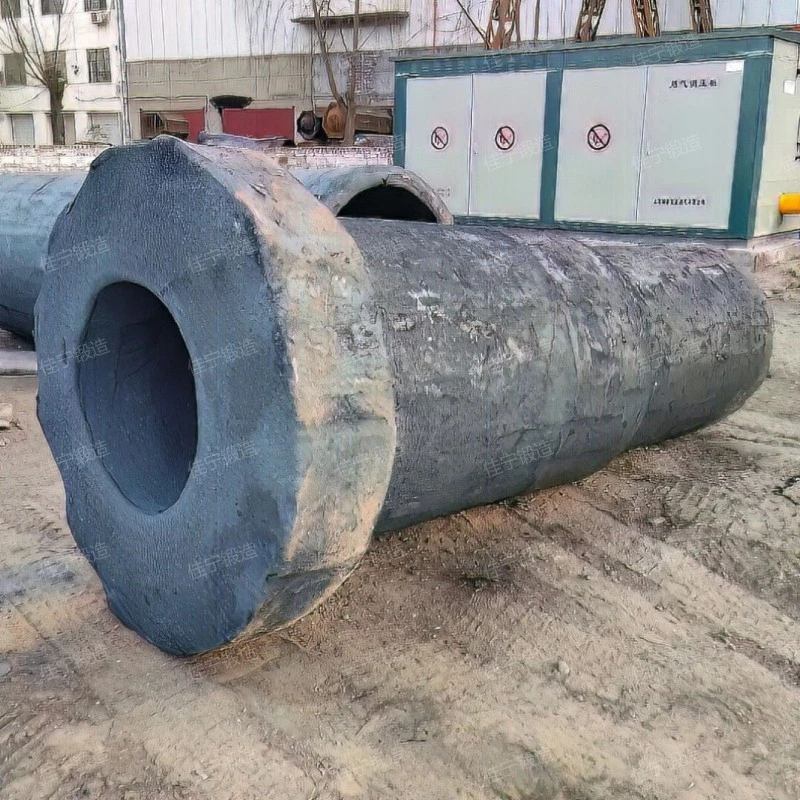
As the power generation, mining, and heavy transportation industries continue to push for higher efficiency, the demand for bearing steel shaft forgings with enhanced fatigue life and dimensional precision will only grow. Emerging trends include the use of micro‑alloyed bearing steels that can achieve high strength without traditional quenching and tempering, simplifying the process chain. Additionally, digital twin technology is becoming more prevalent in forging simulation, allowing engineers to predict material flow, temperature distribution, and residual stresses before a single billet is heated. For buyers, this means you can request simulation reports alongside physical samples to verify that the forging process is optimized. Also, sustainability is gaining traction — many OEMs now require forged shafts to be produced with minimal energy and material waste. Suppliers who use induction heating instead of gas furnaces, or who recycle billet remnants into smaller parts, demonstrate environmental responsibility that aligns with corporate ESG goals. In summary, selecting the right bearing steel shaft forging is a multifaceted decision that involves material science, thermal‑mechanical processing, quality control, and partnership evaluation. By following the guidelines outlined in this article — specifying clean steel grades, defining forging ratios and temperature ranges, integrating heat‑treatment planning, and vetting suppliers on technical depth and track record — you can secure shafts that perform reliably over decades of service. Jianing Forging remains committed to advancing forging technology and providing our clients with engineering support from concept to delivery. We encourage you to contact us for a technical discussion on your next bearing steel shaft project. (Tel: 176 9623 6479) Your equipment’s longevity begins with the quality of the forging — choose wisely.