Selecting the right aluminum shaft forging manufacturer is a critical decision that directly impacts the performance, durability, and cost-efficiency of your mechanical assemblies, automotive drivetrains, aerospace components, or industrial equipment. Aluminum shafts are widely used in applications requiring high strength-to-weight ratios, corrosion resistance, and excellent thermal conductivity. However, not all forging manufacturers possess the metallurgical expertise, process control, and quality assurance systems needed to deliver consistent, defect-free products. This article provides a comprehensive framework for evaluating potential suppliers, covering technical capabilities, material standards, production processes, quality certifications, and commercial considerations. By understanding these criteria, procurement professionals and engineering teams can make informed decisions that align with their project requirements and long-term operational goals.
Understanding Aluminum Shaft Forging Processes
Before evaluating manufacturers, it is essential to understand the primary forging methods used for aluminum shafts. The two dominant approaches are open-die forging and closed-die forging. Open-die forging, also known as hammer forging, involves repeated hammering or pressing of heated aluminum billets between flat or shaped dies. This method offers flexibility for large shafts with simple geometries and is often used for prototypes or low-volume production. Closed-die forging, or impression-die forging, uses specially designed dies that confine the metal to form complex shapes with tighter tolerances and better surface finish. For aluminum shafts used in high-stress applications—such as automotive half-shafts, compressor rotors, or marine propeller shafts—closed-die forging is preferred because it produces a more uniform grain flow, enhanced mechanical properties, and reduced machining allowances.
Another advanced technique is precision forging, which integrates near-net-shape capabilities. Precision forging minimizes material waste and reduces secondary machining time, making it cost-effective for medium to high-volume runs. The choice of process depends on your shaft geometry, material grade (e.g., 6061, 7075, 2024 aluminum alloys), and required mechanical properties such as yield strength, fatigue resistance, and elongation. A reliable manufacturer should be able to recommend the optimal forging method based on your application and provide detailed process documentation, including die design, preform stages, heat treatment cycles, and post-forging inspections.
Key Material Specifications and Alloy Selection
Aluminum shaft forging manufacturers must demonstrate proficiency in handling a wide range of aluminum alloys, each with distinct characteristics. For general industrial shafts, 6061-T6 offers good machinability, weldability, and moderate strength. Aerospace-grade shafts often require 7075-T73 or 7050-T7452, which deliver high strength and stress-corrosion resistance. For high-temperature environments, such as those in turbocharger shafts, 2618 or 2219 alloys are common. A competent manufacturer should maintain an inventory of certified raw materials from approved mills, with traceable mill test reports (MTRs) that verify chemical composition, tensile properties, and grain structure.
Material handling is equally important. Aluminum billets must be properly preheated to the forging temperature range—typically between 350°C and 480°C depending on the alloy—to avoid cracking or excessive oxidation. The manufacturer should control the heating atmosphere and use thermocouples or pyrometers for accurate temperature monitoring. In addition, the forging reduction ratio (cross-sectional area reduction from billet to final shaft) should be optimized to achieve the desired grain refinement. A reduction ratio of at least 3:1 is generally recommended for homogeneous mechanical properties. Insufficient reduction can lead to residual porosity or weak zones, while excessive reduction may cause anisotropic behavior.
Quality Assurance and Certifications
Reliable aluminum shaft forging manufacturers operate under recognized quality management systems. ISO 9001:2015 is the baseline certification for consistent process control. For automotive applications, IATF 16949 is often required, which includes additional requirements for defect prevention and continuous improvement. Aerospace clients typically demand AS9100D certification, which encompasses special processes like heat treatment, non-destructive testing (NDT), and material traceability. Inquire whether the manufacturer holds these certifications and request recent audit reports or surveillance records.
Beyond certifications, specific inspection capabilities are critical. Non-destructive testing methods such as ultrasonic testing (UT) for internal flaws, magnetic particle inspection (MPI) for surface cracks, and dye penetrant inspection (DPI) for surface discontinuities are standard for aluminum shafts. Dimensional verification using coordinate measuring machines (CMM) or optical scanners ensures the shaft meets drawing tolerances, which for precision forged shafts can be as tight as ±0.1 mm for critical features. Mechanical testing—tensile, yield, elongation, and hardness—should be performed on every production lot or at a statistically valid frequency. A reputable manufacturer provides a detailed inspection report with each shipment, including traceability to the original heat lot.
Production Capacity and Lead Time Considerations
When selecting an aluminum shaft forging partner, evaluate their production capacity in relation to your demand profile. Consider both the maximum part weight and length the manufacturer can handle—some aluminum shafts exceed 2 meters in length and require large tonnage presses (e.g., 3000–8000 metric tons). Review their equipment list: hydraulic presses offer better control over deformation speed and dwell time, while mechanical presses provide higher cycle rates for smaller shafts. A well-equipped shop with multiple press sizes can accommodate both prototype runs and mass production without sacrificing lead times.
Lead time depends on die manufacturing, material procurement, forging scheduling, heat treatment, and secondary operations such as machining, shot blasting, or surface treatment. A manufacturer that maintains an in-house die shop and heat treatment facility can reduce turnaround times significantly—often by 2–4 weeks compared to outsourcing these steps. For example, a medium-complexity aluminum shaft forging (2–5 kg weight, 300–600 mm length) might require 6–8 weeks from die design to first article delivery if the manufacturer has full in-house capabilities. Always request a clear timeline and inquire about rush order flexibility, but avoid manufacturers that promise unreasonably short lead times at the expense of quality.
Cost Structure and Total Cost of Ownership
Price is a key factor, but the lowest initial quote rarely yields the lowest total cost of ownership (TCO). Aluminum shaft forging costs include raw material (typically 30–40% of total), forging labor and overhead (25–35%), die amortization (10–20%), heat treatment and finishing (15–25%), and quality assurance (5–10%). Be cautious of quotes that are significantly below market average—they may indicate the use of lower-grade alloys, reduced testing, or skipped process steps. Instead, request a detailed cost breakdown and understand what is included: material surcharges, packaging, freight terms, and any tooling costs.
Another important TCO element is scrap rate. A manufacturer with high forging yield (typically above 90% for well-designed processes) passes savings to you through more stable pricing. Conversely, a manufacturer with high scrap rates may increase your per-part cost due to rework or rejected lots. Inquire about their typical first-pass yield and corrective action procedures when defects occur. For long-running programs, consider negotiating a price reduction agreement based on cumulative volume or continuous improvement savings.
Secondary Operations and Value-Added Services
Many aluminum shaft forging manufacturers offer integrated secondary operations that streamline your supply chain. Common value-added services include:
- Precision machining (turning, milling, drilling) to bring shafts to final dimensions
- Heat treatment: solution heat treatment, aging, annealing—optimized for each alloy to achieve target hardness and strength
- Surface treatments such as hard coat anodizing, shot peening, or chemical conversion coating
- Balancing services for rotating shafts, especially critical for high-speed applications
- Assembly and packaging (e.g., applying coatings, protective wrapping, kitting)
Evaluating whether a manufacturer can handle these processes in-house versus outsourcing them affects quality control, lead time, and cost. In-house capabilities allow for tighter coordination between forging and final machining, reducing the risk of dimensional mismatches or heat treatment distortion. When visiting or auditing a potential supplier, ask to see their machining center and heat treatment furnace certifications. For example, a manufacturer with a 5-axis CNC machining center and a T6/T73 heat treatment line can deliver a fully finished shaft that requires no additional work from your side, reducing your internal handling and inspection workload.
Industry Experience and Application Expertise

The best aluminum shaft forging manufacturers have deep experience in your specific industry. A manufacturer that has supplied shafts for automotive steering systems, for instance, will understand the nuances of fine-grained microstructures needed for high-cycle fatigue life. Similarly, a manufacturer serving the oil and gas sector will be familiar with NACE MR0175 requirements for sulfide stress cracking resistance in sour service environments, even for aluminum alloys used as non-metallic alternatives. Ask for case studies or reference projects that match your application. For example, a manufacturer might have successfully reduced the weight of a 2-meter marine propeller shaft by 30% while maintaining the same torque capacity through optimized die design and material selection.
During the evaluation, request product examples or visit their warehouse to inspect shafts from different industries. Look for consistency in surface finish—no scale pits, folds, or laps that could indicate improper die lubrication or temperature control. Also check the straightness: aluminum shafts with excessive runout (>0.5 mm per meter) may require costly straightening operations. An experienced manufacturer can predict thermal distortion during heat treatment and incorporate compensation into the forging dies, resulting in near-perfect straightness as-forged.
Communication and Technical Support
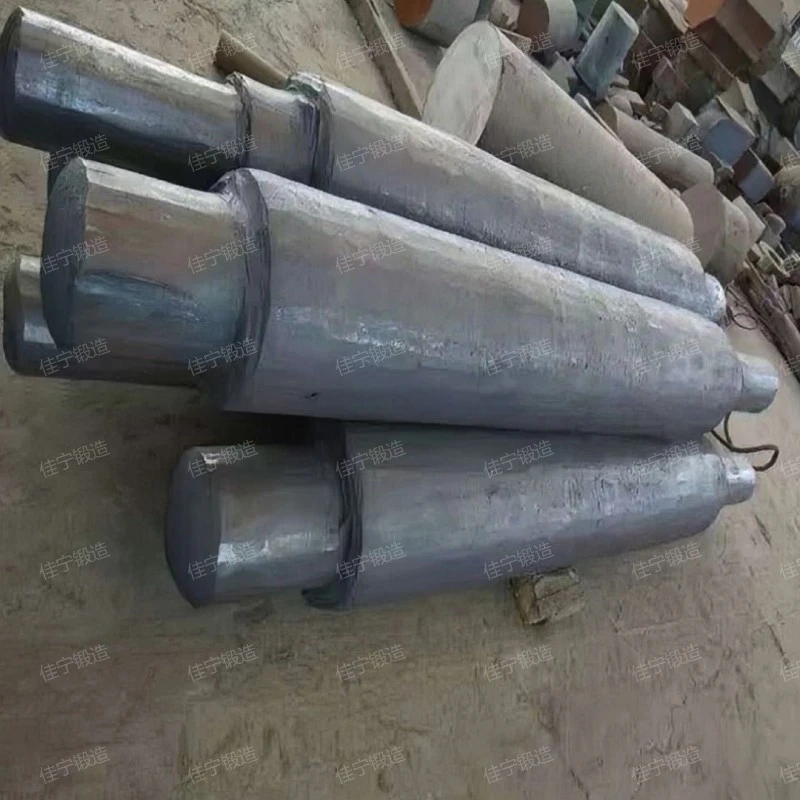
A strong technical partnership requires clear and responsive communication. The manufacturer’s engineering team should be willing to review your shaft design early and suggest modifications that improve forgeability, reduce material waste, or lower tooling cost. For instance, they might recommend adding draft angles, adjusting fillet radii, or eliminating sharp corners to avoid stress concentrations. They should also provide design for manufacturability (DFM) feedback within 2–3 business days after receiving your CAD file.
Additionally, consider the manufacturer’s willingness to collaborate on product development. If your project involves a new alloy or unusual geometry, ask about their in-house simulation capabilities using finite element analysis (FEA) software like DEFORM or Simufact. Process simulation helps predict material flow, temperature distribution, and die stresses, minimizing trial-and-error during die tryout. A manufacturer that invests in simulation and offers virtual prototyping reduces project risk and accelerates time-to-market.
Conclusion: Making the Right Choice
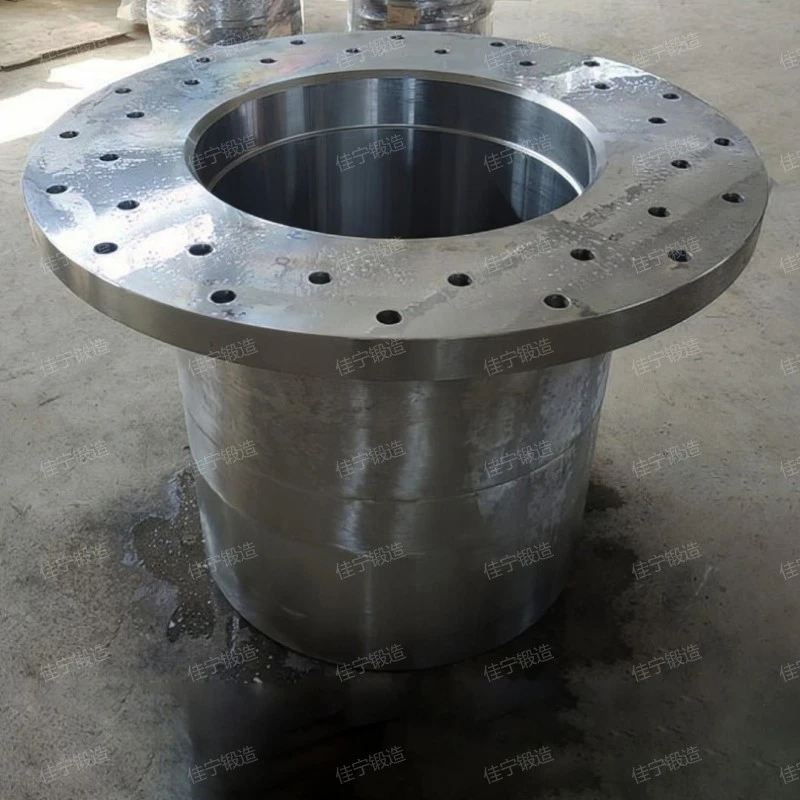
Choosing an aluminum shaft forging manufacturer is not a transactional decision—it is a strategic investment in product reliability and supply chain resilience. The ideal partner combines robust process technology, material science expertise, comprehensive quality assurance, and flexible production capabilities. By evaluating candidates against the criteria outlined above—including forging methods, material handling, certifications, production capacity, cost structure, secondary services, industry experience, and technical support—you can identify a manufacturer that meets your technical requirements and aligns with your commercial objectives.
Jianing Forging, with over a decade of experience in aluminum shaft forging for automotive, aerospace, and industrial sectors, exemplifies the kind of partner that delivers consistent results. Our facilities include a 5000-ton hydraulic press, in-house heat treatment and non-destructive testing lab, and a dedicated engineering team that provides end-to-end DFM support. We supply forged shafts ranging from 0.5 kg to 50 kg, in alloys such as 6061, 7075, and 2618, with tolerances as tight as ±0.05 mm on critical dimensions. Our ISO 9001 and AS9100D certifications ensure traceability and compliance across every production lot. For more information on how we can meet your aluminum shaft forging needs, please reach out to our technical sales team (咨询热线:176 9623 6479).