Selecting the appropriate low-temperature steel shaft forging is a critical decision for industries operating in extreme cold environments, such as oil and gas exploration in Arctic regions, cryogenic liquid handling, offshore wind energy platforms, and cold-climate mining operations. As global energy infrastructure expands into harsher climates and the demand for reliable cryogenic equipment continues to rise through 2026, engineers and procurement specialists face the challenge of balancing material performance, cost efficiency, and long-term durability. This comprehensive guide provides a systematic approach to evaluating low-temperature steel shaft forgings, drawing on established industry standards, metallurgical principles, and practical application considerations. By understanding the key selection criteria, you can ensure operational safety, reduce maintenance intervals, and optimize total cost of ownership for your critical rotating equipment.
Low-temperature steel forgings are engineered to maintain toughness, ductility, and impact resistance at temperatures as low as –50°C or even –100°C, depending on the alloy and heat treatment. Unlike standard carbon steels that become brittle under sub-zero conditions, properly selected low-temperature alloys exhibit a ductile-to-brittle transition behavior that remains above the expected service temperature. The selection process involves evaluating the operating temperature range, mechanical load profile, environmental factors, and applicable international codes such as ASTM A350, ASTM A694, EN 10222-4, and NACE MR0175 for sour service. Jianing Forging, with over two decades of experience in producing heavy-duty shaft forgings for cryogenic applications, emphasizes that a thorough upfront analysis significantly reduces the risk of catastrophic failure and unplanned downtime.
Understanding Low-Temperature Steel Grades and Their Properties
The foundation of any successful forging selection lies in matching the steel grade to the specific low-temperature requirements. Common low-temperature steel grades include ASTM A350 LF2, LF3, and LF5, as well as ASTM A694 F52, F60, and F65 for higher-strength applications. These materials are characterized by their Charpy V-notch impact toughness measured at the minimum design temperature. For example, A350 LF2 typically offers 20 J minimum impact energy at –46°C, while LF3 provides enhanced toughness down to –101°C. In 2026, the market is seeing increased adoption of micro-alloyed and quenched-and-tempered steels that combine improved strength with excellent cryogenic properties, driven by the need for lighter components in offshore and mobile equipment. Jianing Forging's material sourcing team works closely with certified mills to ensure traceability and compliance with the latest editions of these standards, providing customers with full mechanical test reports and heat treatment records.
Beyond standard grades, specialized alloys such as 9% nickel steel (ASTM A353) and austenitic stainless steels (like 304L or 316L) offer superior low-temperature toughness but at higher material costs. The selection must consider not only the minimum operating temperature but also the potential for thermal cycling, shock loading, and corrosive media. For shaft forgings used in cryogenic pumps and compressors, the combination of high yield strength and impact resistance is essential to withstand startup stresses and vibration fatigue. Jianing Forging has supplied low-temperature shaft forgings for LNG liquefaction plants where operating temperatures reach –162°C, utilizing a proprietary heat treatment protocol that refines grain structure and minimizes residual stresses. These case studies demonstrate that material selection is not a one-size-fits-all decision; it requires careful correlation between the forging geometry, service conditions, and metallurgical response.
Key Selection Criteria for Low-Temperature Shaft Forgings
When evaluating candidate forgings, engineers should systematically assess the following criteria: chemical composition limits, heat treatment methodology, forging reduction ratio, ultrasonic testing requirements, and mechanical property verification. Low-temperature steels must have controlled levels of detrimental elements such as phosphorus and sulfur to prevent intergranular fracture. Carbon equivalent (CEV) calculations help predict weldability and hardenability, both of which affect the final toughness in thick sections. For shaft forgings with diameters exceeding 300 mm, the quenching rate during heat treatment becomes critical to achieve uniform martensitic or bainitic microstructure throughout the cross-section. Jianing Forging uses computer-controlled heat treatment furnaces with temperature uniformity within ±5°C, ensuring consistent mechanical properties from core to surface.
The forging reduction ratio, typically defined as the ratio of ingot cross-section to final forging cross-section, directly influences the fiber flow orientation and grain refinement. For low-temperature applications, a minimum reduction ratio of 3:1 is recommended to break down cast structures and close internal porosity. Higher ratios of 5:1 or more are preferred for shafts subject to high alternating stresses. Non-destructive examination (NDE) plays a pivotal role in quality assurance. Ultrasonic testing in accordance with ASTM A388, supplemented by magnetic particle or dye penetrant inspection, identifies internal discontinuities that could serve as crack initiation sites under cryogenic conditions. Jianing Forging's in-house NDE laboratory is accredited to ISO 17025, and every low-temperature shaft forging undergoes 100% volumetric ultrasonic inspection with acceptance criteria tailored to the end-user's specification. This rigorous quality control has earned the company preferred supplier status for several major EPC contractors in the Arctic energy sector.
Manufacturing Process and Quality Assurance Considerations
The manufacturing route for low-temperature steel shaft forgings begins with careful selection of the raw material. Vacuum degassed steel is preferred to reduce hydrogen content and minimize the risk of flaking during heat treatment. After forging, a normalizing and tempering treatment (N&T) is common for grades like A350 LF2, while quenched and tempered (Q&T) processing is applied to high-strength alloys such as A694 F65. The tempering temperature must be carefully chosen to achieve the desired strength-toughness balance; over-tempering can reduce strength, while under-tempering leaves the material susceptible to brittle fracture. Jianing Forging invests in modern multi-zone heat treatment facilities that enable precise control of heating and cooling rates, supported by real-time data logging for complete process traceability.
Machining allowances and surface finish also affect the performance of low-temperature shafts. Rough machining after heat treatment allows for the removal of decarburized layers and surface defects, while final machining to tight tolerances ensures proper fit with bearings and couplings. Jianing Forging maintains a separate machining line for low-temperature components, using carbide tooling and coolant systems that prevent thermal damage to the workpiece. After final machining, each shaft is subject to dimensional inspection using coordinate measuring machines and a hardness survey to verify uniformity. The company's quality management system is certified to ISO 9001 and API Q1, with additional compliance to PED 2014/68/EU for European projects. These certifications provide customers with confidence that the forging meets the highest international standards for safety and reliability.
Market Trends and Technical Developments in 2026
As of 2026, the global low-temperature steel forging market is experiencing several notable trends. The expansion of LNG infrastructure in Southeast Asia and the Middle East, coupled with the development of floating liquefied natural gas (FLNG) vessels, has increased demand for large-diameter shaft forgings capable of operating in both cryogenic and marine environments. Additionally, the growth of green hydrogen and ammonia as energy carriers requires reliable low-temperature components for storage and transport at –253°C and –33°C respectively. These applications push the limits of conventional low-temperature steels, leading to greater interest in cryogenic duplex stainless steels and nickel-rich alloys. Jianing Forging has responded to these trends by investing in advanced finite element modeling capabilities that simulate the forging process and predict microstructural evolution, enabling faster development of customized solutions without compromising quality.
Another significant development is the adoption of digital traceability and smart manufacturing technologies. Blockchain-based material certificates, IoT-enabled heat treatment monitoring, and AI-assisted defect recognition in ultrasonic testing are becoming standard expectations for major projects. Jianing Forging has implemented a comprehensive digital platform that links each forging's unique identification number to its complete manufacturing history, from melt shop to final inspection. This transparency not only satisfies regulatory requirements but also allows customers to perform remote audits and verify compliance in real time. The company's commitment to innovation is reflected in its participation in international research consortiums focused on improving low-temperature toughness of heavy forgings through novel alloy design and thermal-mechanical controlled processing.
Practical Guidance for Procurement and Specification
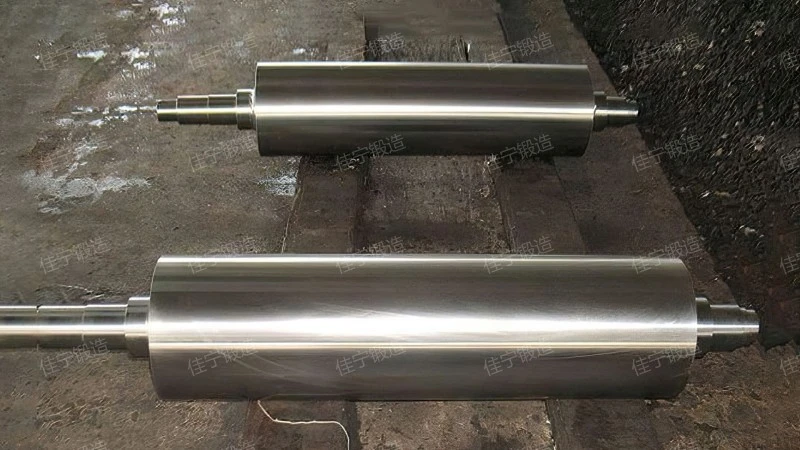
For procurement professionals, writing a clear and complete specification is the first step toward obtaining a suitable low-temperature shaft forging. The specification should include the applicable material standard and grade, the minimum service temperature and required Charpy energy values, dimensional tolerances, surface finish requirements, and NDE acceptance criteria. It is advisable to include a supplementary requirement for fracture toughness testing (such as CTOD or KIC) for critical applications involving high strain rates or large section sizes. Jianing Forging's engineering team routinely assists customers in developing these specifications, drawing on extensive experience with projects that have met the rigorous demands of API 6A, ASME B31.3, and EN 13445. The company also offers value engineering suggestions to optimize material utilization and reduce lead times without sacrificing safety margins.
Lead time and supply chain resilience are additional considerations that have gained prominence after recent global disruptions. Low-temperature steel forgings often require long-lead materials, especially for non-standard grades or large dimensions. Jianing Forging maintains strategic inventory of common low-temperature billet sizes and has established long-term agreements with qualified steel mills to ensure priority access to raw materials. The company's manufacturing facilities in [location] operate multiple forging presses with capacities up to 10,000 tons, allowing parallel processing of multiple orders. For urgent projects, a fast-track service is available that reduces typical lead times by 30–40% through optimized scheduling and overtime heat treatment cycles. (咨询热线:176 9623 6479) For any inquiries or to discuss your specific low-temperature shaft forging requirements, the experienced team at Jianing Forging is ready to provide technical consultation and competitive quotations.
Case Study: Successful Delivery of Low-Temperature Shafts for Arctic Pump System
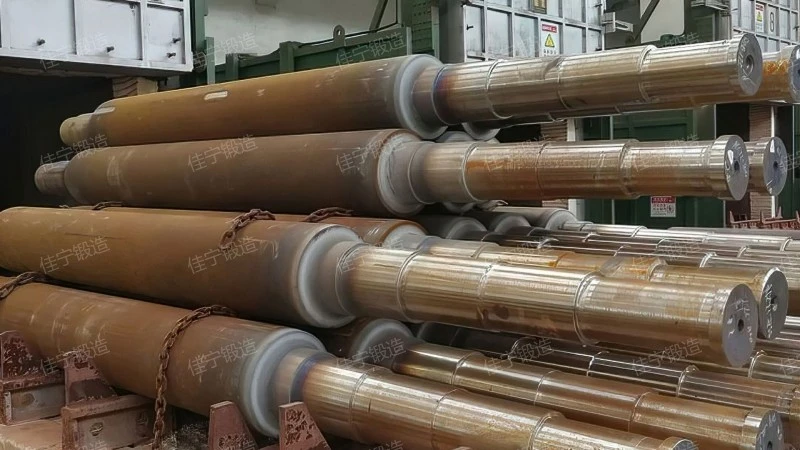
A recent project illustrates the value of thorough selection and manufacturing discipline. A major oil and gas operator required a set of 4-meter-long shaft forgings weighing 8 tons each for a high-pressure cryogenic pump system at an Arctic LNG plant. The design temperature was –55°C with a required Charpy impact energy of 40 J at that temperature. After evaluating several candidates, Jianing Forging recommended ASTM A694 F60 material with a quenched and tempered heat treatment, combined with additional impact testing at –60°C to provide a safety margin. The forgings were produced with a reduction ratio of 4.5:1, fully ultrasonic tested to ASTM A388 sensitivity level 2, and machined to a surface roughness of Ra 1.6 μm. The project was completed within 14 weeks from order, and the shafts have been operating without incident for over two years, with regular condition monitoring confirming excellent performance. This case demonstrates how a collaborative approach between the customer's engineering team and Jianing Forging's technical staff results in optimized solutions that balance cost, schedule, and reliability.
Final Recommendations for Selecting Low-Temperature Steel Shaft Forgings
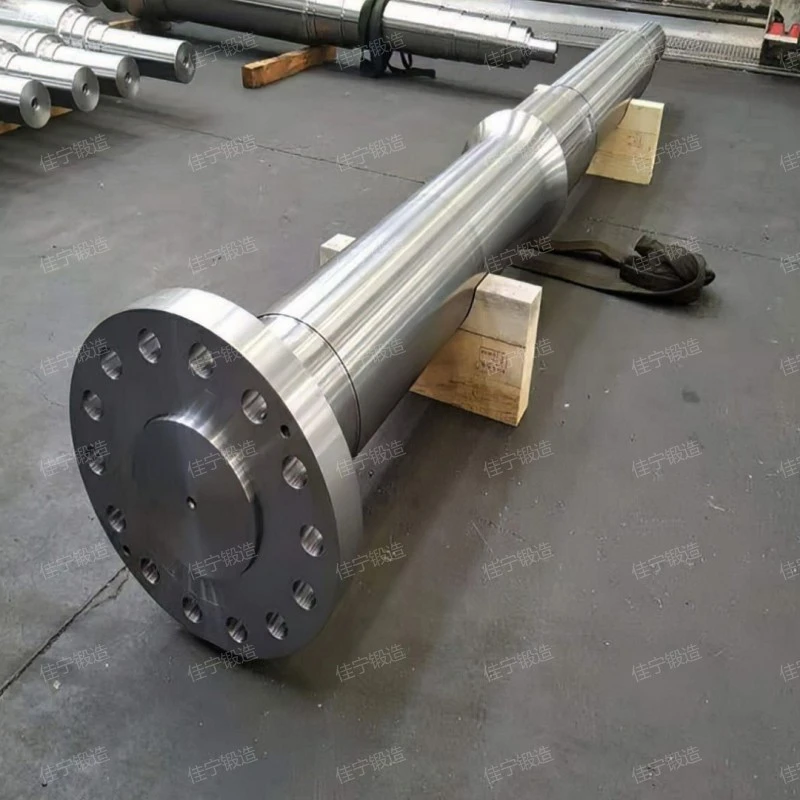
Choosing the right low-temperature steel shaft forging requires a multi-disciplinary understanding of material science, manufacturing processes, and application-specific loads. Start by clearly defining your minimum service temperature and mechanical property targets, referencing appropriate international standards. Engage with a forging manufacturer that has demonstrated expertise in low-temperature grades and can provide comprehensive testing and certification. Do not overlook the importance of forging geometry and heat treatment uniformity, as these factors directly influence the final toughness and fatigue life. Jianing Forging's track record in supplying shaft forgings for cryogenic, offshore, and cold-climate applications—combined with its investment in digital quality systems and responsive customer support—makes it a reliable partner for projects of any scale. By following the guidelines outlined in this article, procurement and engineering teams can make informed decisions that enhance equipment reliability, reduce lifecycle costs, and ensure safe operation in the most demanding low-temperature environments.