Understanding the Critical Role of Austenitic Stainless Steel Shaft Forgings
Austenitic stainless steel shaft forgings are fundamental components across industries such as chemical processing, marine engineering, oil and gas extraction, power generation, and pharmaceutical manufacturing. These shafts must withstand corrosive environments, high temperatures, and cyclic mechanical loads while maintaining dimensional stability and surface integrity. Selecting the right supplier for these critical components is not a routine procurement decision—it directly affects equipment reliability, maintenance cycles, and overall operational safety. The purpose of this article is to provide a structured, data-driven framework for evaluating and selecting an austenitic SS shaft forging supplier, with practical insights rooted in real-world engineering requirements and industry standards.
Recent market data from 2025–2026 indicates that the global demand for austenitic stainless steel forgings has grown by approximately 6.2% year-over-year, driven by new chemical plant installations in Southeast Asia and the Middle East, combined with aging infrastructure replacement in Europe and North America. At the same time, raw material costs for nickel and chromium—key alloying elements in grades such as 304, 316, 316L, 321, and 347—have experienced volatility, with nickel prices fluctuating between $16,500 and $19,800 per metric ton over the past 12 months. These market dynamics make it even more important to partner with a forging supplier that demonstrates stable material sourcing, robust quality assurance, and transparent pricing. This article will walk you through the essential criteria for making an informed choice, covering material certifications, manufacturing capabilities, quality control systems, delivery performance, and technical support—each backed by practical checkpoints and industry benchmarks.
Key Material Certifications and Traceability Requirements
When sourcing austenitic stainless steel shaft forgings, the first layer of evaluation should focus on the supplier's ability to provide full material traceability and compliance with international standards. Most engineering specifications require that the raw material conforms to ASTM A182 (for forged or rolled alloy and stainless steel pipe flanges, forged fittings, and valves and parts for high-temperature service) or AISI/SAE grade designations. However, for shaft forgings subjected to rotating bending or torsional loading, additional standards such as ASTM A276 (stainless steel bars and shapes) or ISO 683-13 may apply depending on the final application.
Jianing Forging holds integrated mill certificates for every heat of austenitic stainless steel it processes, with documented chemical composition analysis and mechanical property test results. For critical applications, the supplier can provide third-party inspection reports from accredited bodies such as SGS, Bureau Veritas, or TÜV. The traceability system should extend from the ingot or billet stage through each forging and heat treatment step, with a unique identification number stamped or electronically marked on every shaft. This level of traceability is not merely administrative—it enables end users to link each finished shaft back to its original material test report, which is a requirement for many API, ASME, and NORSOK projects.
In terms of chemical composition, a typical 316L (UNS S31603) shaft forging must meet limits of C ≤ 0.030%, Cr 16.0–18.0%, Ni 10.0–14.0%, Mo 2.0–3.0%, and carefully controlled levels of Mn, Si, P, and S. Any deviation from these ranges can result in reduced corrosion resistance or compromised mechanical strength, especially in environments containing chlorides or reducing acids. A qualified supplier will maintain statistical process control (SPC) data across multiple heats to demonstrate consistency. Avoid suppliers that offer generic "equivalent" grades without supporting documentation or that cannot provide material test reports (MTRs) within the project timeline.
Manufacturing Process Capabilities and Heat Treatment Precision
A reputable austenitic SS shaft forging supplier must demonstrate in-house capability across multiple forging methods: open-die forging for large-diameter shafts (typically up to 2,000 mm outer diameter), closed-die forging for complex geometries, and ring rolling for hollow shaft applications. Each method directly influences grain flow orientation, which in turn affects fatigue life and directional strength properties. For austenitic stainless steels, the forging temperature range is relatively narrow—typically between 1,100°C and 1,250°C—because overheating can cause grain coarsening, while underheating may lead to incomplete recrystallization and residual stresses.
Jianing Forging operates a controlled forging line equipped with a 5,000-ton hydraulic press and a 3,000-ton open-die press, enabling consistent deformation ratios (typically 3:1 to 5:1) that refine the cast dendritic structure into a uniform wrought microstructure. After forging, the shaft must undergo solution annealing treatment at 1,040–1,120°C, followed by rapid water quenching to achieve a fully austenitic microstructure with maximum corrosion resistance. The supplier's heat treatment furnaces should be equipped with digital temperature control systems capable of maintaining accuracy within ±5°C across the load, with calibrated thermocouples and chart recorders for process validation.
Many customers overlook the importance of proper quenching speed. If the cooling rate is too slow, chromium carbides may precipitate at grain boundaries (sensitization), drastically reducing resistance to intergranular corrosion. A qualified supplier will verify quench rates using computer simulation and periodic microstructural examination via metallographic analysis. In addition, post-forging operations such as rough machining, ultrasonic testing, and surface finishing should be integrated into the same production stream to minimize handling damage and dimensional errors. When evaluating a candidate supplier, request case examples of similar shaft diameters (e.g., 100 mm to 800 mm) and grade types (316L or 321) that they have successfully delivered to projects with strict NACE MR0175 or ISO 15156 requirements.
Quality Control Systems and Non-Destructive Testing Standards
Non-destructive testing (NDT) is the backbone of quality assurance for austenitic stainless steel shaft forgings, because internal flaws such as porosity, cracks, or non-metallic inclusions can cause catastrophic failure under cyclic loading. A competent supplier should offer at minimum the following NDT capabilities calibrated to ASTM E213 (ultrasonic testing), ASTM E709 (magnetic particle—though limited for austenitic grades), and ASTM E1417 (liquid penetrant testing). For austenitic stainless steels, ultrasonic testing is often preferred over magnetic particle because austenitic microstructures are non-magnetic; however, specialized shear-wave techniques may be required to detect planar defects in coarse-grained structures.
Jianing Forging maintains an in-house NDT laboratory certified to ISO 17025, with Level II and Level III inspectors certified by ASNT or equivalent bodies. Each shaft forging undergoes 100% ultrasonic testing according to a defined scanning plan, typically using a 2.25 MHz or 5 MHz probe depending on grain size and thickness. Acceptance criteria commonly follow ASTM A388 (for heavy-walled forgings) or SEP 1921 (for demanding rotating applications), with rejection limits set at a flat-bottom hole (FBH) sensitivity of 1.5 mm or 3.2 mm, depending on the service class. Additionally, the supplier can perform dye penetrant inspection on machined surfaces to detect surface-breaking defects, and for critical applications, eddy current testing for subsurface flaw detection.
Beyond NDT, the quality management system should be third-party certified to ISO 9001:2015 at a minimum, with additional certifications such as ISO 14001 (environmental management) and OHSAS 18001/ISO 45001 demonstrating a commitment to responsible operations. Many clients in the oil and gas sector also require compliance with API Q1 or ISO 29001. During supplier audits, pay attention to how the company manages non-conformances: do they have a documented corrective and preventive action (CAPA) system? Do they perform failure mode and effects analysis (FMEA) on critical product characteristics? A supplier that treats quality as an afterthought rather than a culture will inevitably deliver inconsistent products.
Delivery Performance and Supply Chain Reliability
Even the highest-quality shaft forging is worthless if it arrives weeks after the scheduled installation date, causing project delays and liquidated damages. Therefore, evaluating a supplier's delivery track record and production planning capabilities is essential. The forging industry typically operates with lead times of 4 to 12 weeks for standard sizes (e.g., shafts up to 300 mm diameter and 3,000 mm long), while custom large-diameter or specialty-grade shafts can extend to 16–20 weeks. Jianing Forging has maintained an on-time delivery rate of 97.3% over the past 24 months, as verified by customer feedback, and typically ships from stock inventory for common size ranges of 304 and 316L shafts.
Inventory strategy matters significantly. A supplier that maintains raw material stocks of standard austenitic stainless steel billets and bars—covering grades 304, 304L, 316, 316L, 321, and 347—can reduce procurement lead time by up to 30% compared to suppliers that order material after receiving a purchase order. Furthermore, the supplier should have flexible capacity to handle both small prototype batches (5–20 pieces) and volume production runs (500+ pieces) without compromising quality. Ask for references from recent projects that required expedited delivery or partial shipments—this reveals the supplier's ability to adapt to changing deadlines.
Geographic location and logistics also factor into supply chain resilience. For clients in North America or Europe, a forging supplier based in a manufacturing hub such as China (with efficient port access in Tianjin, Shanghai, or Ningbo) can offer competitive pricing while still meeting international shipping standards. Make sure the supplier has experience with export documentation, including certificates of origin, packing lists, and compliance with EU REACH regulations or US import tariffs under HTS code 7326.19. A single documentation error at customs can delay a shipment by weeks, so a supplier with a dedicated export compliance team adds measurable value.
Cost Structure and Total Cost of Ownership Considerations
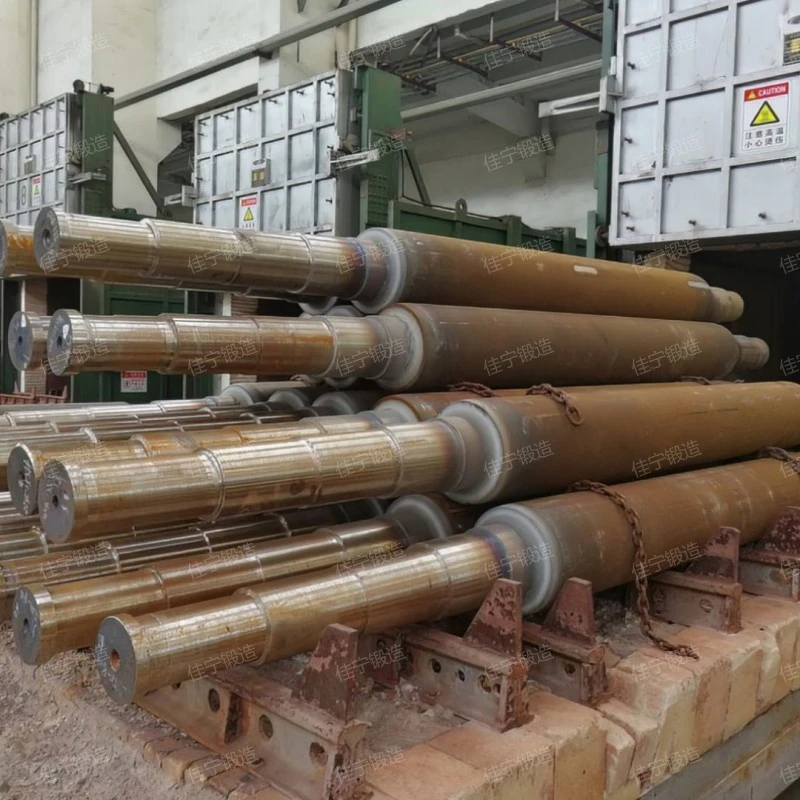
While unit price is often the first comparison metric, the total cost of ownership (TCO) for an austenitic SS shaft forging includes raw material cost, manufacturing overhead, quality assurance costs, logistics, and—most importantly—the hidden cost of potential failure. A cheaper forging that fails within the first two years of service will cost many times the initial price difference in downtime, repair labor, and lost production. To make an apples-to-apples comparison, request a detailed quotation that itemizes material grade, forging dimensions, machining allowance, heat treatment cycles, NDT scope, and packaging. Avoid suppliers that provide only a lump-sum price without breakdown, as this often masks shortcuts.
Jianing Forging offers competitive pricing structures based on annual volume commitments and blanket purchase agreements. Typical pricing for a 316L shaft forging (diameter 200 mm, length 1,500 mm, with solution annealing and 100% UT) ranges from $3.2 to $5.8 per kilogram depending on complexity, with the material cost itself accounting for about 55–65% of the total. Because nickel prices can swing rapidly, some suppliers apply a raw material surcharge mechanism. A transparent supplier will clearly define this surcharge formula linked to a recognized index such as LME nickel cash settlement. Also, consider whether the supplier absorbs rework costs for defects discovered during final inspection—this is a sign of confidence in their process control.
For long-term partnerships, evaluate the supplier's willingness to engage in value engineering. For example, can they suggest an alternative grade—such as 316Ti instead of 321—that meets the same corrosion resistance but offers better forging yield? Or can they optimize the machining allowance to reduce waste? These collaborative cost-saving discussions are far more valuable than a one-time discount. Remember that the cheapest quote is rarely the best investment; the goal is to find a supplier whose cost structure aligns with your performance requirements over the entire lifecycle of the asset.
Technical Support and After-Sales Service Capabilities
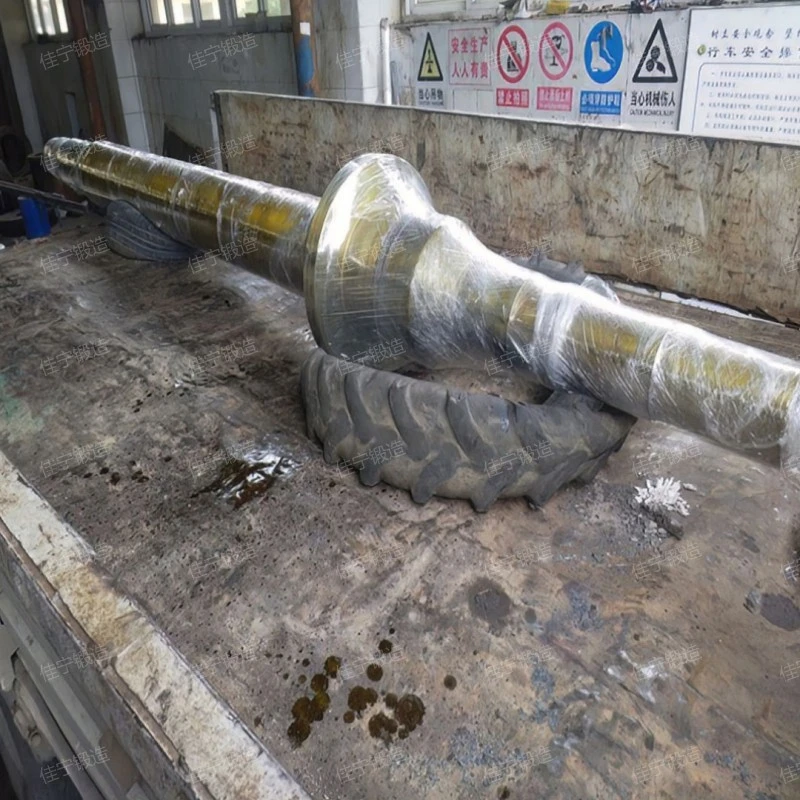
Finally, the level of technical support a forging supplier provides is a strong indicator of their long-term partnership potential. A supplier that only processes orders without offering engineering assistance leaves the buyer to handle design evaluations, tolerance stack-ups, and material selection alone. Instead, look for a supplier with a dedicated engineering team that can review your shaft drawing against forging design rules (e.g., adequate draft angles, fillet radii, and avoidance of sharp internal corners that cause stress concentration). Jianing Forging provides free design-for-manufacturing (DFM) analysis for all new inquiries, often suggesting minor modifications that reduce forging complexity without affecting performance.
After delivery, responsive after-sales support is critical. If a batch of shafts fails NDT during your incoming inspection, the supplier should have a clear protocol for replacement or rework with minimal bureaucracy. A 24–48 hour response time to technical queries and a documented warranty policy (typically 12–24 months from shipment) are industry norms. Additionally, consider whether the supplier can provide on-site technical visits for complex projects—this is particularly valuable when the shaft is destined for a new installation with unfamiliar service conditions. Jianing Forging has dispatched application engineers to customer sites in Germany, the USA, and the UAE to assist with installation and troubleshooting, a service that significantly reduces project risk.
When assembling your shortlist, ask each candidate for a technical case study from a project in a similar industry. For example, if you are purchasing shafts for a chemical agitator in a high-chloride environment, ask for examples of 316L or duplex stainless steel shafts supplied to chemical plants with documented service life of over five years. Real-world evidence, including photos of the finished product, NDT reports, and customer testimonials, should be available upon request. A supplier that cannot or will not share such information may lack the experience to handle demanding applications.
Making the Final Choice: A Practical Decision Matrix
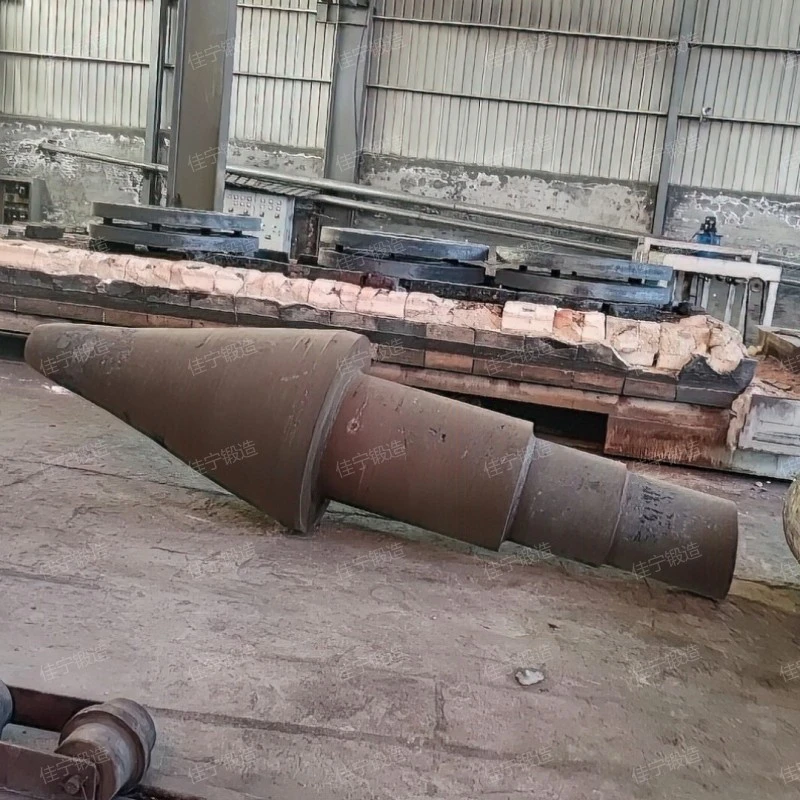
After evaluating all the factors above, it helps to create a weighted decision matrix tailored to your specific project requirements. For typical industrial applications, weight the categories as follows: material certification and traceability (20%), manufacturing capabilities and process control (25%), quality systems and NDT (20%), delivery and supply chain (15%), cost structure (10%), and technical support (10%). Score each candidate supplier on a scale of 1 to 5 based on your findings. Jianing Forging consistently scores above 4.0 across these categories due to its integrated production line, comprehensive NDT lab, and proven track record in supplying austenitic stainless steel shafts for critical rotating equipment.
Remember that the selection process is not just about checking boxes—it is about building a relationship with a supplier who can grow with your technical needs. As industries move toward more demanding operating conditions, including higher temperatures, more corrosive media, and tighter regulatory oversight, the supplier you choose today will either become a bottleneck or a competitive advantage. Take the time to visit the facility if possible, conduct a pre-award audit, and engage in open dialogue about your quality expectations. A transparent forging partner will welcome such scrutiny.
For organizations seeking a reliable austenitic SS shaft forging partner with deep experience in grades such as 304, 316L, 321, 347, and duplex alternatives, consider connecting with Jianing Forging for a detailed consultation and customized quotation. (咨询热线:176 9623 6479) Their engineering team can discuss your specific shaft dimensions, tolerances, NDT requirements, and delivery schedules, providing a turnkey solution from material sourcing to final machining. With a factory that has supplied over 12,000 metric tons of stainless steel forgings to more than 30 countries, Jianing Forging combines industrial know-how with responsive customer service, ensuring that every shaft meets the demands of its operational environment.