Selecting the right partner for large shaft forging is a critical decision that directly impacts the performance, safety, and longevity of heavy machinery across industries such as energy, marine, mining, and aerospace. Large shafts serve as the backbone of turbines, generators, compressors, and propulsion systems, and any defect in material or process can lead to costly downtime or catastrophic failure. As the global market for forged components expands—with forecasts projecting a steady compound annual growth rate of 5.2% through 2026—the demand for reliable, high-capacity forging suppliers intensifies. However, not all suppliers possess the metallurgical expertise, dimensional accuracy, or quality assurance systems required for large shaft applications. This article provides a comprehensive framework for evaluating potential forging partners, drawing on technical specifications, industry standards, and real-world performance data. Whether you are a procurement manager, design engineer, or project lead, understanding the key selection criteria will help you mitigate risks and secure a supplier capable of delivering consistent, high-integrity large shaft forgings.
Understanding the Technical Demands of Large Shaft Forgings
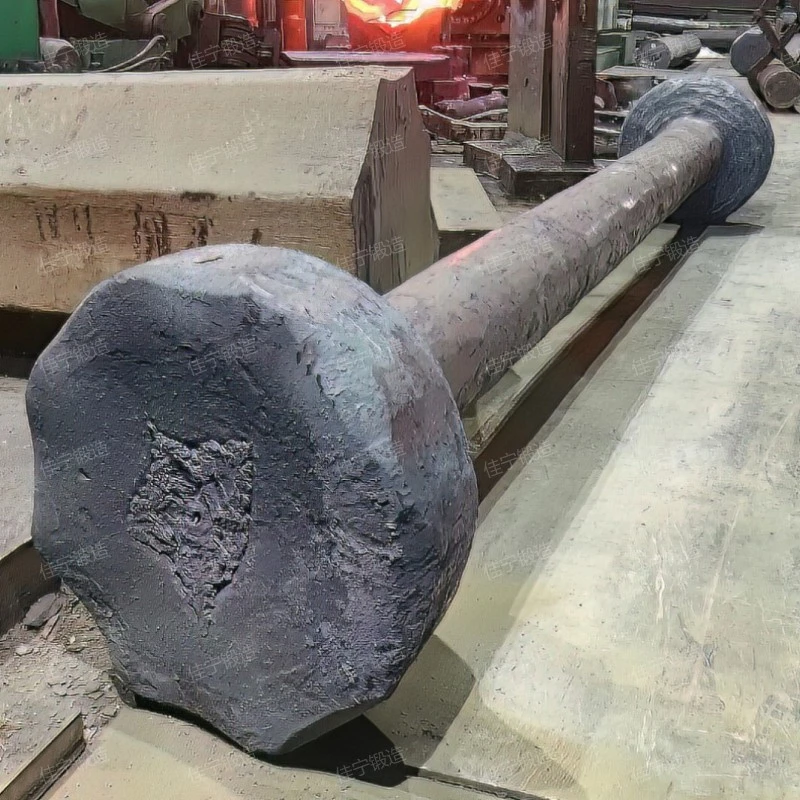
Large shaft forgings typically range from several hundred kilograms to over 200 metric tons, with diameters exceeding 500 mm and lengths surpassing 10 meters. The manufacturing process involves heating ingots to precise temperatures, applying controlled deformation through open-die or closed-die forging, and then performing heat treatments such as quenching and tempering to achieve the required mechanical properties. A competent supplier must demonstrate mastery of these processes, especially when dealing with demanding alloys like carbon steel, alloy steel, stainless steel, or nickel-based superalloys. In 2026, the industry is seeing increased adoption of vacuum degassed steels to minimize hydrogen content and reduce the risk of flaking. Therefore, when assessing a supplier, inquire about their ingot sourcing practices, melting techniques (e.g., electric arc furnace, ladle refining), and ability to perform ultrasonic testing on raw material. The metallurgical pedigree of each heat should be traceable from the melt shop to the final forged product.
Evaluating Manufacturing Capabilities and Equipment
The physical infrastructure of a forging facility directly dictates its capacity to produce large shafts within tolerance and on schedule. Look for suppliers equipped with hydraulic presses of at least 3,000 metric tons, preferably 8,000-12,000 tons for the largest components. The press should offer precise speed and force control to ensure uniform grain flow and avoid forging defects like laps or folds. Additionally, the availability of manipulators with holding capacity equal to the workpiece weight is essential for safe and accurate handling. Beyond the press, the heat treatment department must have furnaces capable of maintaining uniform temperature profiles across the entire shaft length, with quenching systems that can deliver consistent cooling rates. Modern suppliers invest in digital temperature monitoring and automated data logging to meet the requirements of ASTM A388 and other international standards. When visiting a candidate supplier or reviewing their documentation, request records of recent large shaft projects, including dimensional inspection reports, mechanical test results, and non-destructive examination (NDE) reports. Jianing Forging operates a 12,000-ton hydraulic press line with CNC-controlled manipulators, enabling the production of shafts up to 18 meters in length, and maintains ASME and ISO 9001 certifications that underpin process consistency.
Quality Assurance Systems and Certification Compliance
Reliable suppliers operate under a robust quality management system that integrates incoming material inspection, in-process control, and final product validation. Key certifications to look for include ISO 9001:2025, ASME BPVC Section II and Section IX, and specific industry standards such as API 6A for oil and gas or DNV-GL for marine applications. For large shafts, the most critical quality steps are the initial ultrasonic testing (UT) of the billet, surface magnetic particle inspection (MPI) after rough machining, and final dimensional verification using laser trackers or coordinate measuring machines (CMM). The supplier should provide a comprehensive quality plan that outlines the inspection hold points, witness points, and acceptance criteria. Furthermore, the ability to perform mechanical testing—including tensile, yield, elongation, reduction of area, and Charpy impact tests—at temperatures as low as -46°C is often mandatory for arctic or cryogenic applications. In 2026, digital twinning and real-time process monitoring are becoming standard among leading forging manufacturers, reducing human error and improving traceability. Ask your potential partner how they handle non-conformances and whether they have a documented corrective action process. A transparent quality culture is often more valuable than a list of certifications alone.
Material Sourcing and Alloy Expertise
Large shafts are frequently specified in high-strength low-alloy steels (e.g., AISI 4340, 4140), heat-treatable carbon steels (e.g., 1045, 1050), and stainless grades such as 17-4PH or duplex. The supplier’s ability to source premium-grade ingots from reliable steel mills—preferably those with vacuum degassing and electroslag remelting (ESR) capabilities—directly affects the mechanical integrity of the final forging. For critical applications like wind turbine main shafts or marine propeller shafts, the material must achieve specific properties such as fine grain size (ASTM 5 or finer), uniform hardness across the cross-section, and minimal microstructural segregation. A knowledgeable supplier will recommend the optimal chemistry and heat-treat cycle based on your load case, operating environment, and fatigue life requirements. Jianing Forging maintains long-term partnerships with top-tier steel producers in Asia and Europe, and their metallurgists collaborate with clients to qualify alternate alloys when supply chain disruptions arise, without compromising performance.
Engineering Support and Customization Flexibility
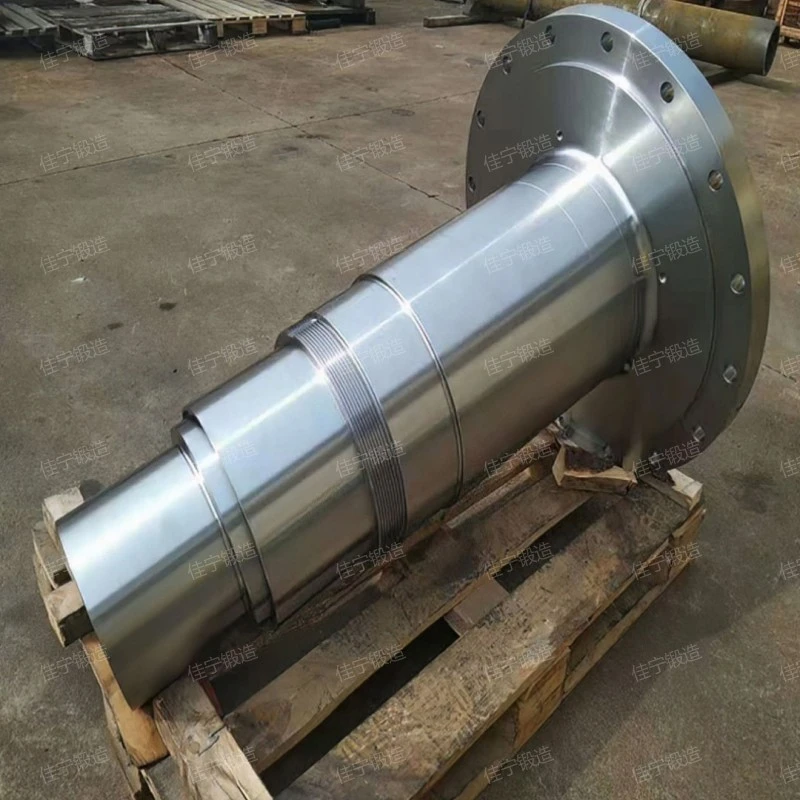
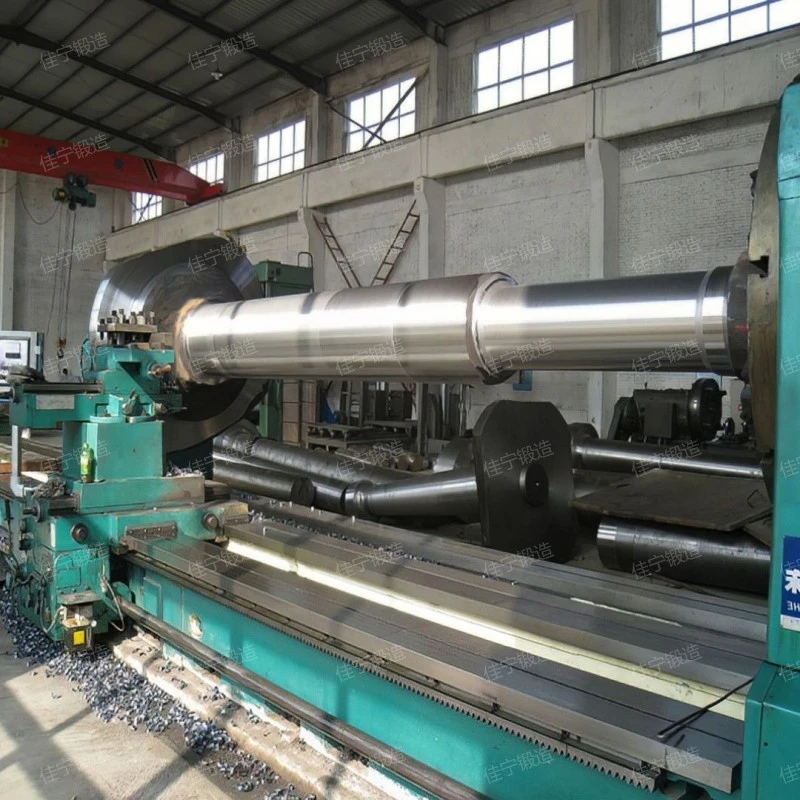
No two large shaft applications are identical. The best suppliers offer engineering assistance at the design stage, helping customers optimize geometries for forgeability, reduce weight without sacrificing strength, and specify appropriate machining allowances. Look for a partner that can perform finite element analysis (FEA) to simulate the forging process, predict grain flow, and identify potential stress concentrations. They should also be willing to modify their standard procedures to accommodate custom test coupons, special surface finishes, or unique marking requirements. In the case of large shafts that will be welded to other components, the supplier should provide welding procedure specifications (WPS) and procedure qualification records (PQR) as needed. The ability to combine forging with subsequent rough or finish machining reduces lead times and eliminates the cost of shipping semi-finished parts to a second vendor. Some suppliers offer multi-stage value-add services, including heat treatment, surface hardening (induction, nitriding), and balancing, further streamlining your supply chain.
Lead Times, Production Capacity, and Global Logistics
Lead time for a large shaft forging can range from 8 weeks for a simple carbon steel part to 20 weeks or more for complex alloy steel shafts requiring extensive heat treatment and inspection. When evaluating suppliers, examine their current order backlog and capacity utilization. A shop running near maximum capacity may struggle to accommodate urgent deadlines. Conversely, a facility with excess capacity might indicate inconsistent demand or quality issues. Ideally, choose a supplier that maintains a buffer capacity of at least 15-20% to handle volume fluctuations. For multi-year programs, consider a partner willing to enter into long-term agreements with scheduled release orders, securing both pricing and delivery slots. Global logistics also matter: large shafts weigh tens of tons and require special handling, flatbed trailers, ocean freight or air cargo, and sometimes customs clearance support. A supplier with experience exporting to your region will have established freight forwarders and documented procedures for oversized cargo, reducing the risk of delays at ports.
Case Study: Large Shaft for a Hydropower Turbine
To illustrate the selection process, consider a real-world scenario where a European turbine manufacturer needed a forged shaft for a 40 MW hydropower generator. The shaft material was specified as ASTM A668 Class N, with a minimum yield strength of 345 MPa, an elongation of 20%, and a Charpy impact value of 27 J at -20°C. The supplier—Jianing Forging—was evaluated alongside three competitors. The evaluation criteria included press capacity (minimum 5,000 tons to achieve full cross-sectional deformation), previous experience with similar hydro shafts, and the availability of an ASME-certified NDE team. Jianing Forging provided metallurgical simulation data showing predicted grain flow orientation, and they proposed a modified quench-and-temper cycle to meet the low-temperature toughness requirements without excessive hardness. After receiving the forging, the client performed additional UT and found zero discontinuities larger than 1 mm. The shaft was delivered in 14 weeks, two weeks ahead of schedule, and has been operating continuously for over three years without maintenance issues. This example underscores the importance of supplier transparency, technical problem-solving, and adherence to delivery commitments.
Cost Considerations and Total Value Analysis
Price is always a factor, but the lowest bid rarely results in the lowest total cost of ownership. A slightly higher upfront investment in a forging from a reliable supplier can prevent premature failure, warranty claims, and production losses that dwarf the initial savings. When comparing quotes, ask for a detailed breakdown: material surcharges, heat treatment costs, testing fees, and shipping. Also consider the supplier’s warranty terms and after-sales support—will they accept returns due to hidden defects discovered during machining? Do they provide replacement parts at a reduced price if a forging fails within the first five years? A 2026 industry survey found that 68% of procurement professionals reported higher satisfaction with suppliers that offered comprehensive post-delivery technical support, including on-site troubleshooting and repair recommendations. When total cost per shaft (including inspection, handling, and risk) is calculated, a premium-tier supplier often proves more economical over the asset’s lifecycle.
How to Shortlist and Vet Potential Suppliers
Start by researching suppliers through trade associations such as the Forging Industry Association (FIA) or international exhibition directories. Request a pre-qualification questionnaire covering equipment, certifications, typical lead times, and recent project references. Narrow your list to three to five candidates and conduct a virtual or on-site audit focusing on:
- Press and manipulator capacity relative to your shaft dimensions
- Heat treatment furnace uniformity and recording systems
- NDE personnel certification (e.g., ASNT Level III)
- Incoming material inspection and storage conditions
- Past non-conformance trends and corrective action records
After the audit, request a trial order for a simpler shaft geometry before committing to a complex multi-tonnage project. This trial will reveal the actual communication speed, document accuracy, and dimensional repeatability. A supplier that passes these checks will likely perform well on larger, more demanding orders.
Conclusion: Making an Informed Decision for Your Large Shaft Needs
Choosing a large shaft forging supplier is not a transactional purchase but a strategic partnership that affects your operational reliability and market competitiveness. The ideal partner combines robust technical capabilities, rigorous quality systems, flexible engineering support, and a proven track record of on-time delivery. By systematically evaluating equipment, metallurgical expertise, certifications, and project history—and by conducting pilot orders before full-scale production—you can minimize risk and ensure that your large shafts meet the stringent demands of your application. For those seeking a reliable forging partner with decades of experience in producing shafts for energy, marine, and heavy industrial sectors, Jianing Forging offers a comprehensive solution. (咨询热线:176 9623 6479). Their team is ready to discuss your specific requirements and provide technical documentation for reference. Investing time in supplier selection today will pay dividends in component integrity and operational uptime tomorrow.