Understanding the Critical Role of Roller Shaft Forging in Industrial Applications
Roller shafts are fundamental components in heavy machinery across industries such as steel manufacturing, mining, cement production, paper processing, and material handling. These shafts endure extreme torsional loads, bending stresses, and repetitive fatigue cycles during operation. The forging process imparts superior grain structure, enhanced mechanical properties, and improved fatigue resistance compared to cast or machined alternatives. When selecting a roller shaft forging supplier, decision-makers must evaluate technical capabilities, quality assurance systems, material traceability, and long-term reliability. The wrong choice can lead to premature shaft failure, unplanned downtime, costly replacements, and safety hazards. This article provides a structured framework for evaluating and selecting a forging partner that meets the demanding requirements of modern industrial operations, with actionable criteria based on industry standards and real-world performance metrics.
The global market for forged roller shafts continues to expand as industries prioritize equipment longevity and operational efficiency. According to 2026 market projections, the demand for high-strength forged components will grow by approximately 5.8% annually, driven by infrastructure development and industrial automation. Forging suppliers must now demonstrate capabilities in precision forging, heat treatment optimization, and non-destructive testing. A thorough supplier evaluation involves examining their equipment fleet, metallurgical expertise, certification portfolio, and track record with similar applications. This guide synthesizes technical best practices with practical procurement considerations to help engineering teams and procurement professionals make informed decisions that align with their operational and budgetary objectives.
Core Technical Capabilities That Define a Reliable Roller Shaft Forging Partner
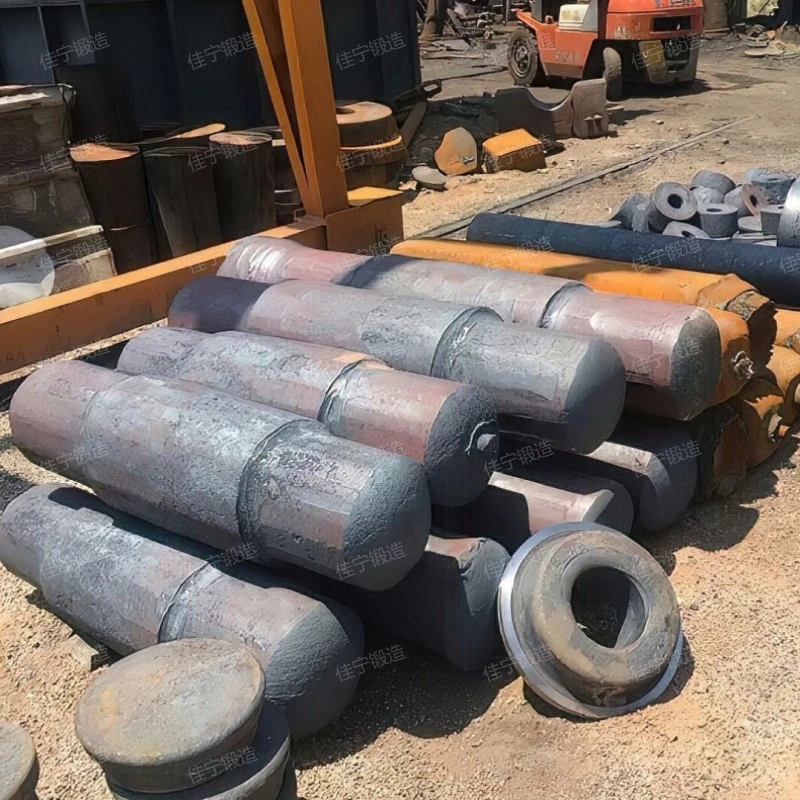
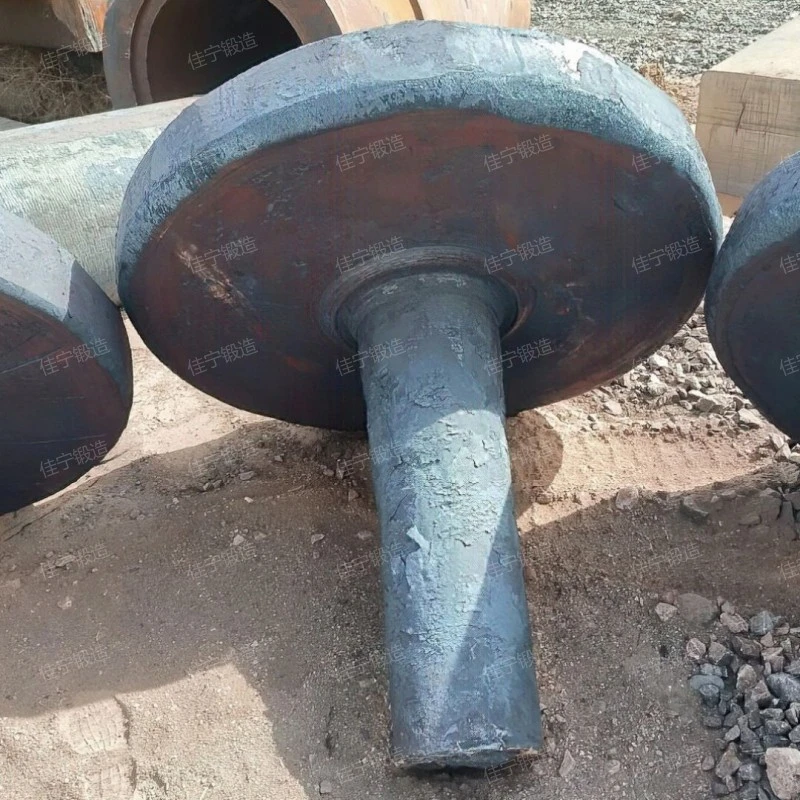
The foundation of any forged roller shaft lies in the supplier's ability to control the forging process from billet selection to final machining. A competent supplier must possess open-die forging presses with sufficient tonnage — typically ranging from 1,000 to 6,000 tons depending on shaft diameter and length — to achieve proper grain flow alignment along the shaft axis. This grain flow orientation is critical for maximizing fatigue life under cyclic bending and torsional loads. Suppliers should demonstrate documented process control for forging temperature ranges, reduction ratios, and cooling rates that prevent internal defects such as porosity, segregation, or micro-cracking.
Material selection is another pivotal factor. Roller shafts commonly require steels like AISI 4140, 4340, 1045, or alloy grades with specific hardenability requirements. A qualified supplier maintains in-house or partnered spectrometric analysis to verify chemistry compliance with ASTM A29, EN 10083, or equivalent standards. For heavy-duty applications, vacuum degassing or secondary refining is necessary to reduce hydrogen content and non-metallic inclusions. Jianing Forging employs vacuum arc remelting (VAR) and electroslag remelting (ESR) capabilities for critical shafts that demand extra cleanliness. The supplier should also offer tailored heat treatment profiles — quenching and tempering, induction hardening, nitriding — to achieve target hardness gradients and case depths. A detailed heat treatment record with time-temperature curves and hardness mapping across the shaft length demonstrates process reliability.
Non-destructive testing (NDT) coverage is non-negotiable. Ultrasonic testing (UT) per ASTM E428 or EN 10228-3 should detect internal flaws down to 0.5 mm diameter flat-bottomed holes. Magnetic particle inspection (MT) for surface defects and dye penetrant inspection (PT) for non-ferrous surfaces add an extra layer of assurance. Look for suppliers that provide 100% UT inspection on critical zones and offer third-party verification upon request. Additionally, mechanical testing — tensile, yield, elongation, reduction of area, and Charpy V-notch impact at specified temperatures — must be reported with actual values rather than generic certificate statements. A supplier with an accredited in-house laboratory reduces turnaround time and enhances data integrity.
Quality Management Systems and Certification Standards
Certification compliance is a baseline requirement, but the depth of quality management systems distinguishes average suppliers from exceptional ones. At minimum, a roller shaft forging supplier should hold ISO 9001:2015 certification with scope covering forging, heat treatment, and machining. For industries with higher safety demands, additional certifications such as ISO 14001 (environmental management), ISO 45001 (occupational health), and AS9100 (aerospace) indicate a culture of continuous improvement. Many end users in oil and gas, power generation, and marine applications require compliance with API 6A or NORSOK M-650 standards.
Audit readiness matters. A supplier that maintains detailed internal audit records, corrective action reports, and supplier performance metrics demonstrates commitment to quality. Jianing Forging has successfully passed audits from major equipment manufacturers and classification societies including DNV, Lloyds Register, and Bureau Veritas. Their quality manual includes standard operating procedures for each forging stage, from raw material receiving inspection to final dimensional verification. Statistical process control (SPC) charts for key parameters like forging temperature variation and hardness distribution provide objective evidence of process stability. When evaluating potential partners, request a sample quality plan for a roller shaft of similar size and material to assess how thoroughly they address potential failure modes.
Evaluating Manufacturing Capacity, Equipment, and Lead Time Reliability
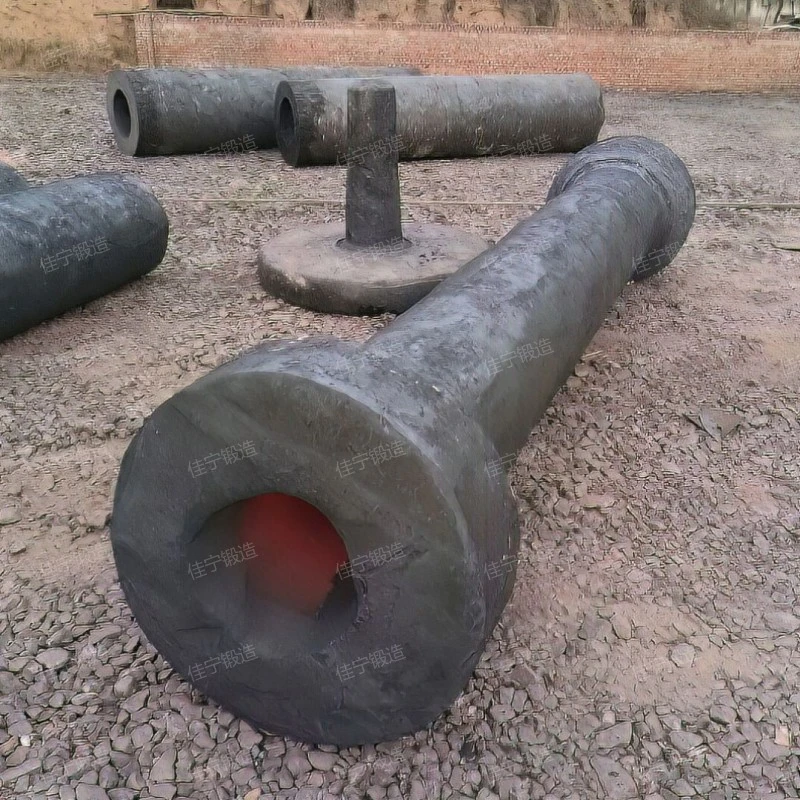
Production capability directly impacts project timelines and scalability. A supplier's equipment inventory should include multiple forging presses to accommodate different sizes and avoid bottlenecks. For roller shafts with diameters over 300 mm and lengths exceeding 6 meters, a supplier needs ring rolling capabilities or large-capacity open-die presses with manipulators that can handle heavy ingots. Heat treatment furnaces should have uniform temperature distribution within ±10°C, verified by periodic calibration and nine-point thermocouple surveys. Quenching tanks with controlled agitation and cooling rate monitoring prevent distortion and ensure consistent mechanical properties.
Lead time reliability is often underappreciated until a rush order arises. Investigate the supplier's raw material procurement cycle: do they maintain a strategic stock of common alloy steel billets? How long does custom alloy sourcing take? A supplier with long-term relationships with steel mills can negotiate shorter lead times and better material traceability. Furthermore, assess their capacity for rush orders. Jianing Forging has a dedicated expedite team that can compress standard delivery timelines by 30% for urgent emergency replacements, supported by three shifts of production when necessary. This flexibility stems from a modular workshop layout and cross-trained workforce that can reallocate resources dynamically.
Geographic location also influences lead time and logistics costs. A supplier close to major ports or industrial hubs reduces inland transportation expenses. However, proximity should not override technical capability. Modern communication tools, 3D CAD file sharing, and real-time production tracking systems can mitigate distance disadvantages. Ask for a sample production schedule for a similar shaft to see how milestones are tracked and communicated.
Cost Considerations Beyond the Initial Price Quote
Total cost of ownership (TCO) for forged roller shafts includes initial purchase price, but also installation cost, maintenance intervals, and potential downtime costs. A low-cost supplier may use inferior materials or skip certain heat treatment steps to cut expenses, leading to shorter service life or unexpected failure. Compare quotes on a standardized basis: request pricing for a specific shaft size, material grade, heat treatment specification, NDT scope, and delivery terms. A reputable supplier will break down costs into raw material, forging, heat treatment, machining, testing, and packaging, allowing transparent comparison.
Consider volume discounts for annual contracts or blanket orders, but ensure that the supplier can maintain consistent quality across multiple batches. Some suppliers offer a “cradle-to-grave” service covering design assistance, finite element analysis (FEA) of the forging geometry, and post-delivery technical support. While these add-ons increase upfront cost, they often reduce overall project risk. Jianing Forging provides free FEA simulation for first-time custom designs, helping customers optimize weight and stress distribution before production begins. Always factor in the cost of third-party inspection if the supplier’s in-house lab does not hold accreditation from a recognized body. Ultimately, the cheapest bid rarely produces the lowest TCO when shaft reliability and operational continuity are critical.
Real-World Application Experience and Case Study Evidence
Nothing substitutes for proven performance. Ask potential suppliers for references from similar industries — preferably citing projects where shafts operate under similar loads, speeds, and environmental conditions. A supplier that has supplied roller shafts for continuous casting machines in steel mills or for large rotary kilns in cement plants understands the specific failure modes: bending fatigue from misalignment, torsional fatigue from shock loads, and wear at bearing journal surfaces. Request a summary of their top three case studies, including shaft dimensions, material specifications, heat treatment specifics, and in-service performance data such as average lifespan and any reported issues.
For example, Jianing Forging recently supplied a series of 4.5-meter-long roller shafts for a copper rod mill in Southeast Asia. The shafts were forged from AISI 4340 with induction-hardened bearing surfaces to HRC 55–60. After two years of operation, inspection revealed no surface cracks or measurable wear beyond allowable limits. The client reported a 40% reduction in unplanned downtime compared to previous shafts from a different supplier. Such data points illustrate the real-world value of stringent quality controls and customized engineering. When a supplier shares this level of detail — ensuring anonymity when required — it builds confidence in their competence and transparency.
Communication Transparency and Post-Sale Support
A forging project involves many stakeholders: engineering, procurement, quality, and logistics. The supplier’s communication practices directly affect project efficiency. Look for a single point of contact (project manager) who coordinates internally and provides regular progress updates. Key milestones should include design approval, raw material release, forging completion, heat treatment confirmation, and NDT results sharing. Many suppliers now offer online portals with real-time status dashboards and document repositories. If a supplier cannot provide timely updates during the evaluation phase, expect similar issues during production.
Post-sale support is equally important. A warranty period of at least 12 months from delivery is standard, but some suppliers offer extended warranties for shafts subjected to moderate loading conditions. Clarify the warranty terms: what is covered (material defects, dimensional non-conformance) and what is excluded (improper installation, overload). The availability of spare parts or repair services for shafts that need reconditioning after years of use is a valuable differentiator. Jianing Forging maintains a spare billet inventory for common shaft sizes and can dispatch a technical engineer to site within 48 hours for emergency assessments. Their customer service hotline connects directly to a metallurgist who can advise on field modifications or failure analysis.
Final Decision Framework: How to Compare and Select
To synthesize the evaluation, create a weighted scoring matrix tailored to your specific application needs. Use the following criteria with suggested weighting percentages — adjust based on your priorities:
- Technical capability (press tonnage, material range, heat treatment depth, NDT scope) — 25%
- Quality certifications and audit track record — 20%
- Lead time reliability and capacity flexibility — 15%
- Total cost of ownership (not just unit price) — 15%
- Industry experience and case study relevance — 10%
- Communication transparency and post-sale support — 10%
- Geographic location and logistics — 5%
Score each shortlisted supplier on a scale of 1 to 5 for each criterion, multiply by the weight, and sum. A score above 4.0 indicates a strong candidate. Avoid selecting solely on the highest total; also consider intangible factors like cultural fit, responsiveness during negotiations, and willingness to invest time in understanding your specific operational environment. A site visit — either physical or virtual — is strongly recommended before final commitment. Observe housekeeping, equipment maintenance, documentation storage, and the attitude of quality personnel.
In industries where failure is not an option, the forging supplier becomes a long-term strategic partner rather than a transactional vendor. Investing three to six months in a thorough evaluation can yield years of reliable shaft performance and reduced maintenance headaches. The selection process is as much about trust and shared values as it is about technical specs. Jianing Forging has built its reputation by treating every shaft as a mission-critical component, backing it with extensive engineering support and a commitment to continuous improvement. For more detailed guidance or to discuss your specific roller shaft requirements, contact their team directly (咨询热线:176 9623 6479).
Closing Thoughts on Building a Sustainable Supplier Relationship
The relationship with a roller shaft forging supplier should evolve beyond transactional exchanges. As your operation scales or shifts toward higher productivity targets, the supplier’s ability to innovate — through new alloy development, advanced simulation techniques, or lean manufacturing practices — becomes increasingly valuable. Schedule periodic performance reviews that go beyond complaint handling; assess delivery adherence, failure rates, and support responsiveness. Share your own operational feedback so the supplier can refine their processes. Many leading manufacturers collaborate with forging partners on joint R&D projects to reduce weight, improve fatigue life, or lower production costs without compromising integrity. Such partnerships require mutual trust and data sharing, but they yield competitive advantages that are difficult for rivals to replicate. When both parties treat quality as a non-negotiable baseline, the resulting roller shafts perform consistently under the toughest industrial conditions, supporting your own reputation for reliability and excellence.