Selecting a reliable long shaft forging manufacturer is a critical decision that directly impacts the performance, safety, and longevity of your mechanical systems. Whether you are sourcing components for heavy earthmoving equipment, marine propulsion shafts, hydraulic cylinders, or wind turbine drivetrains, the quality of the forged shaft determines how well your entire assembly withstands cyclic loads, torsional stress, and environmental corrosion. In a global market where raw material costs fluctuate and supply chains become increasingly complex, the ability to identify a manufacturer that combines metallurgical expertise, precision forging capabilities, and rigorous quality assurance is more valuable than ever. This article provides a structured, evidence-based guide to help procurement engineers, project managers, and equipment owners evaluate potential suppliers. We will examine key selection criteria—from forging process selection and material traceability to dimensional tolerances and surface finish specifications—while also illustrating how a manufacturer like Jianing Forging (Jianing Forging) translates technical requirements into dependable, cost-effective solutions. By the end of this guide, you will have a clear framework for making an informed choice that aligns with your application demands and operational budget. (咨询热线:176 9623 6479)
Understanding Long Shaft Forging Applications and Technical Demands
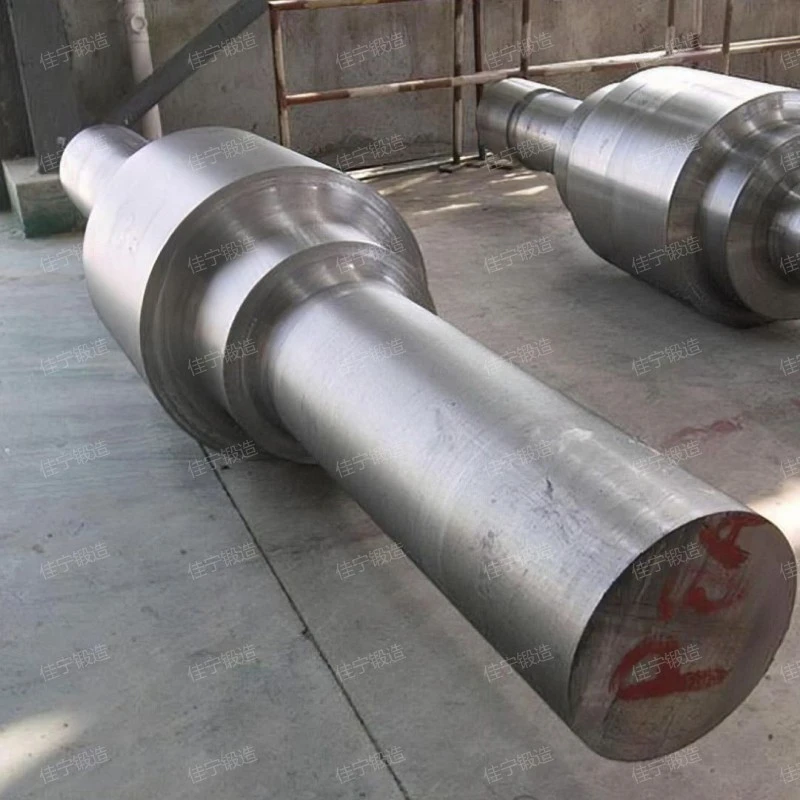
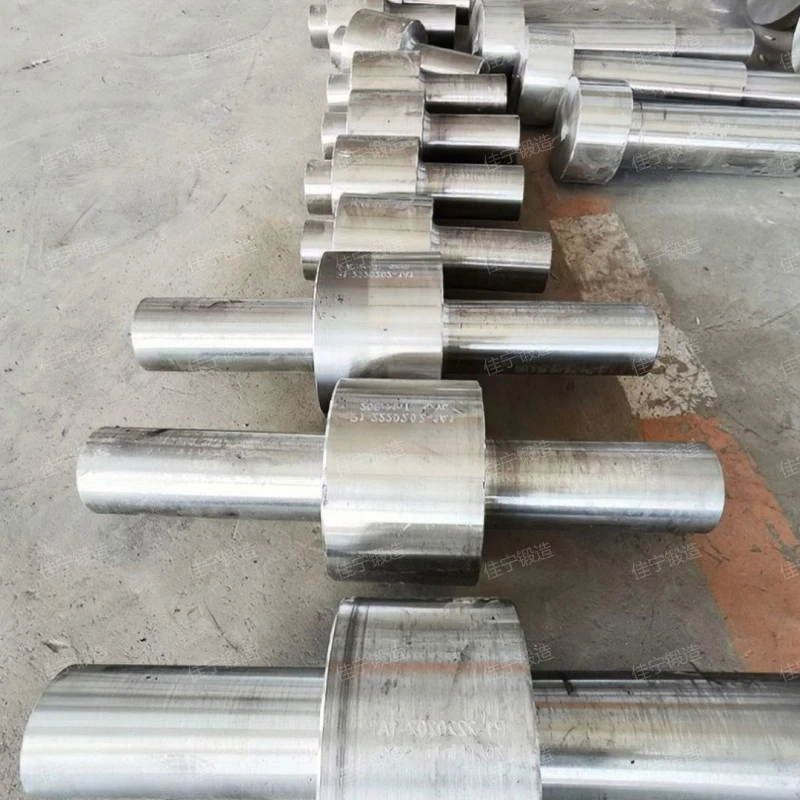
Long shafts are among the most challenging components to forge due to their high length-to-diameter ratio and the need for consistent mechanical properties along the entire axis. Typical applications include marine propeller shafts, hydraulic piston rods, generator rotors, pump shafts, and conveyor drive shafts. These components must endure both static and dynamic loading, often operating in corrosive or high-temperature environments. A reputable manufacturer must demonstrate capability in handling large-diameter, extended-length forgings with minimal distortion. Material selection is equally critical: common grades include carbon steels (e.g., 1045, 4140), alloy steels (4340, 17-4PH stainless), and in some cases, custom chemistries to meet specific fatigue or wear resistance standards. Standards such as ASTM A668, ASTM A290, or EN 10225 provide dimensional and mechanical property baselines. An experienced manufacturer will not only process these materials but also recommend modifications to enhance performance for your unique service conditions. Jianing Forging, for instance, routinely works with clients to optimize chemical composition and heat treatment cycles, ensuring the final shaft meets or exceeds international code requirements.
Core Criteria for Evaluating a Long Shaft Forging Manufacturer
When assessing potential partners, several technical and operational factors deserve close attention. The following list outlines the most important parameters, with practical guidance for verification:
- Forging Process Capability: Determine whether the manufacturer uses open-die forging, closed-die forging, or ring rolling for long products. Open-die forging is typical for custom-length shafts up to 20 meters or more, as it allows incremental reduction and grain-flow alignment. Verify the maximum press capacity (e.g., 3,000-ton or 8,000-ton presses) and the ability to maintain uniform heating and cooling over long geometries.
- Material Sourcing and Traceability: Ask for mill certificates and material traceability documentation. A reliable manufacturer sources steel from certified mills and performs incoming inspection of chemical composition and cleanliness. Look for documented procedures for heat number tracking and segregation control to prevent mix-ups.
- Dimensional Accuracy and Machining Allowance: Long shafts often require subsequent machining to achieve final tolerances. The forging manufacturer should provide consistent “near-net” shapes with sufficient allowance for post-forging operations. Request typical diameter tolerance data (e.g., ±3 mm on a 200 mm diameter) and straightness criteria (e.g., 1 mm per meter of length).
- Heat Treatment Capability: Normalizing, quenching, and tempering are essential for achieving the desired hardness and toughness. Confirm that the manufacturer has controlled atmosphere or vacuum furnaces capable of handling long shafts, and that they can perform simulated post-weld heat treatment if needed. Hardness uniformity along the length is a key indicator of process control.
- Non-destructive Testing (NDT): Ultrasonic testing (UT) is mandatory for long shaft forgings to detect internal discontinuities. Look for manufacturers that offer phased-array UT, magnetic particle inspection (MPI), and dye penetrant testing in-house. Ensure that NDT personnel are certified to ASNT Level II or III standards.
- Quality Management System: ISO 9001 certification is the baseline, but consider additional certifications like ISO 14001, OHSAS 18001, or sector-specific approvals (e.g., API for oil and gas, DNV-GL for marine). A manufacturer that maintains a documented, audited QMS demonstrates commitment to repeatability and continuous improvement.
How to Validate Manufacturer Experience with Real-World Case Data
Beyond general checks, examining past projects provides the strongest evidence of capability. Request references or case studies that detail shaft dimensions, material grade, application environment, and final inspection results. For example, a manufacturer that has supplied 8-meter-long propeller shafts for Class NK-certified vessels with 0.02 mm/m straightness demonstrates a high degree of process control. Similarly, experience with hydraulic piston rods that require a surface hardness of 28-32 HRC after induction hardening indicates proficiency in thermal treatment. Jianing Forging has delivered long shafts for offshore wind turbine pitch systems where the forging must handle both high torque and seawater corrosion. In one case, a customer required a 12-meter alloy steel shaft with a maximum ultrasonic indication size of less than 1 mm equivalent flat-bottom hole. Through careful billet selection, upsetting, and elongation, the manufacturer achieved 100% UT acceptance on the first batch. This level of consistency reduces your risk of field failures and costly downtime.
Evaluating Production Scale and Lead Time Reliability
Production capacity directly influences delivery schedules, especially for large or urgent orders. Ask about the number of presses, furnace capacity, and whether the facility operates multiple shifts. A manufacturer running 24/7 operations with redundant heat treatment lines can offer shorter lead times and better parallel processing. Also, inquire about rough machining or final machining services: if the shop can perform turning, drilling, keyway cutting, and threading in-house, it reduces logistics complexity and single-source responsibility. Jianing Forging maintains a fleet of heavy-duty CNC lathes capable of turning shafts up to 15 meters, and its in-house heat treatment department includes automated quenching tanks and tempering furnaces that ensure uniformity. This vertical integration has allowed the company to maintain average lead times of 8-12 weeks for custom long shaft forgings, even during volatile raw material supply periods.
Cost Considerations: Beyond the Unit Price
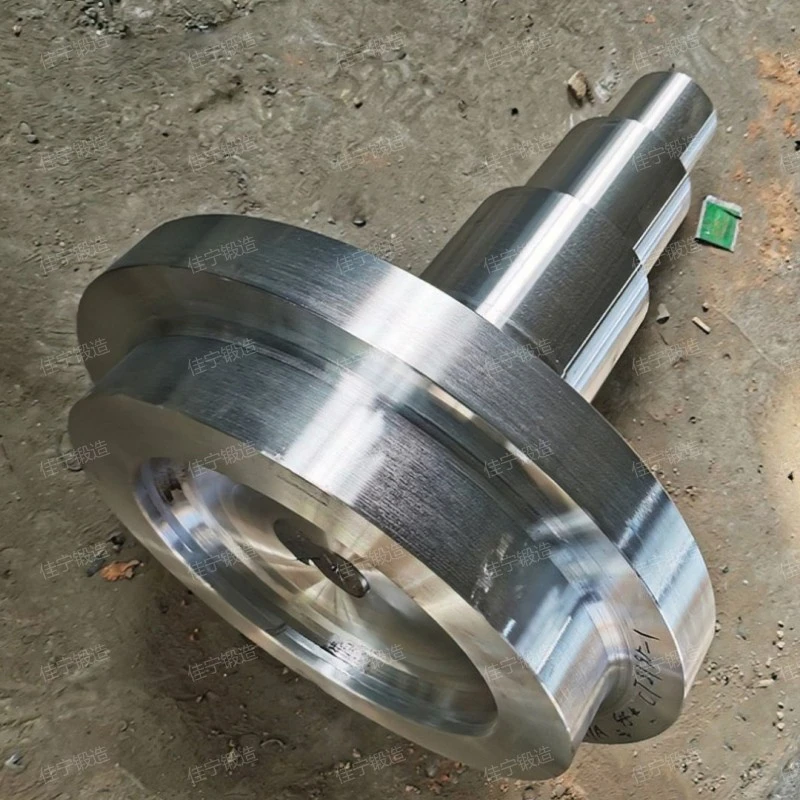
While price is always a factor, the total cost of ownership for a forged shaft includes material cost, scrap rate, machining costs after forging, and potential warranty risks. A low-priced manufacturer may use substandard steel or skip intermediate inspection steps, leading to higher rejection rates during final machining. Conversely, a manufacturer that invests in simulation software (e.g., Deform or Simufact) to predict grain flow and residual stress can reduce trial-and-error costs. Request a cost breakdown that separates material, forging labor, heat treatment, NDT, and machining. Jianing Forging provides transparent pricing and often collaborates with clients to adjust design parameters—such as adding draft angles or simplifying step transitions—to reduce forging complexity without compromising performance. This value-engineering approach can lower the overall project cost by 10-15% compared to a “black box” procurement.
Post-Delivery Support and Long-Term Partnership
The relationship with a forging manufacturer should not end when the part ships. After-sale support includes technical documentation (forging procedure specification, NDT reports, heat treatment certificates), assistance with third-party inspection, and troubleshooting if issues arise during installation or operation. Look for manufacturers that offer a warranty covering material defects and dimensional non-conformance. Some suppliers provide rapid rework or replacement in exchange for a long-term volume agreement. Jianing Forging assigns dedicated project managers to each account, facilitating communication across time zones. The company has established a global logistics network that can expedite urgent replacements within 72 hours for standard grades. Such responsiveness is invaluable when unplanned downtime costs thousands of dollars per hour.
Conclusion: Making the Right Choice for Your Application
Choosing a long shaft forging manufacturer requires a balanced assessment of technical capability, quality systems, production scale, and commercial fairness. By focusing on material traceability, forging process control, NDT rigor, and post-delivery support, you can mitigate the risks associated with large, custom-engineered components. A manufacturer that demonstrates expertise in your industry—whether marine, energy, mining, or industrial automation—will bring invaluable insights that improve product performance and reduce lifecycle costs. Jianing Forging combines decades of practical forging experience with modern simulation and testing facilities, and its team is prepared to discuss your specific requirements and provide a detailed qualification package. To evaluate whether Jianing Forging can meet your long shaft forging needs, we invite you to contact us directly. (咨询热线:176 9623 6479)