Understanding the Importance of Selecting the Right Roller Shaft Forging Manufacturer
In modern industrial operations, roller shafts serve as critical components across a broad spectrum of machinery—from heavy-duty mining equipment and steel rolling mills to conveyor systems and agricultural machinery. The performance, durability, and safety of these systems depend heavily on the quality of the forged roller shafts they employ. When a roller shaft fails, it can lead to costly downtime, equipment damage, and even safety hazards. This makes the selection of a reliable roller shaft forging manufacturer a strategic decision that directly impacts operational efficiency and long-term profitability.
As industries move toward more demanding production environments in 2026, the requirements for roller shaft forgings have become increasingly stringent. Higher load capacities, tighter dimensional tolerances, improved fatigue resistance, and enhanced surface finish are now baseline expectations. The global forged roller shaft market has seen steady growth, driven by expansion in mining, infrastructure, and automotive sectors. According to recent industry analyses, the demand for custom-engineered forged shafts is projected to increase by approximately 4.8% annually through 2026, with a particular emphasis on manufacturers that can deliver both technical expertise and supply chain reliability.
Choosing a forging partner is not simply about comparing prices or lead times. It involves evaluating metallurgical knowledge, forging process capabilities, heat treatment precision, machining accuracy, quality assurance systems, and post-delivery support. A manufacturer that lacks depth in any of these areas may compromise the integrity of the final product. This article serves as a practical guide for procurement professionals, engineers, and plant managers who need to make informed decisions when selecting a roller shaft forging manufacturer. We will examine the key factors that define a qualified manufacturer, highlight industry standards, and provide actionable evaluation criteria—all while demonstrating how a dedicated partner like Jianing Forging can meet these rigorous demands. (咨询热线:176 9623 6479)
Core Capabilities of a Reliable Roller Shaft Forging Manufacturer
Before engaging with any potential supplier, it is essential to confirm that the manufacturer possesses the fundamental capabilities required to produce roller shafts that meet your specifications. These capabilities go far beyond basic forging equipment and extend into areas such as material science, process engineering, and quality management.
Material Selection and Metallurgical Expertise
The foundation of any high-quality roller shaft forging lies in the correct selection of raw materials. Common grades include 42CrMo, 40Cr, 4140, 4340, and specialized micro-alloyed steels, each chosen based on the shaft’s working environment, load conditions, and fatigue requirements. A competent manufacturer should maintain a documented material sourcing policy, including mill certifications that trace back to ISO-compliant steel mills. They should also have in-house metallurgical capability or close partnerships with third-party labs to verify chemical composition and inclusion ratings. For example, a manufacturer that can recommend a tailored material grade based on your specific application—such as higher hardenability for heavy-duty rolling mill shafts or improved toughness for shock-load applications—demonstrates genuine value. Jianing Forging employs a team of experienced metallurgists who review every material specification with customers to ensure the chosen steel grade aligns with the intended heat treatment cycle and service conditions.
Forging Process Control
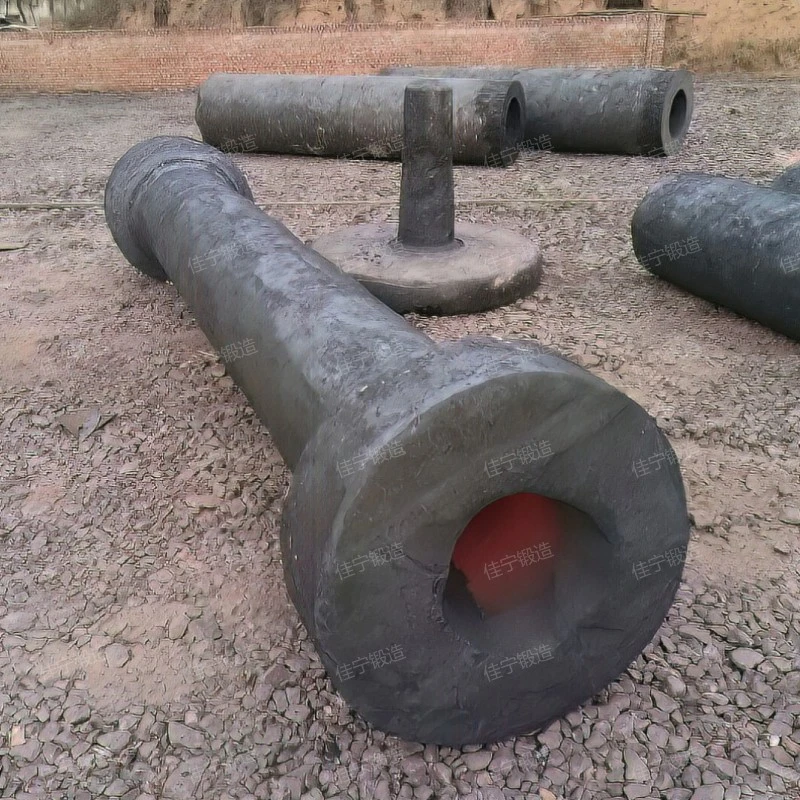
The forging method itself—whether open-die, closed-die, or ring rolling—must be selected to achieve the desired grain flow and mechanical properties. For roller shafts, open-die forging is often preferred as it allows directional grain flow along the shaft axis, enhancing strength and fatigue resistance. Key process parameters such as forging temperature, reduction ratio, and deformation speed must be tightly controlled. Reputable manufacturers utilize temperature-monitored furnaces with consistent heating profiles to avoid overheating or underheating, which can lead to grain coarseness or incomplete deformation. Automated forging presses with real-time load monitoring further ensure repeatability. When evaluating a manufacturer, ask about their forging ratios (typically 3:1 or higher for critical shafts) and whether they perform grain flow analysis. At Jianing Forging, every roller shaft forging undergoes controlled reduction with documented process records to guarantee structural integrity.
Heat Treatment Precision
Heat treatment is arguably the most critical stage in determining the final mechanical properties of a roller shaft. Quenching and tempering (Q&T) is standard for achieving the required hardness and tensile strength. Normalizing and stress relieving may also be applied to refine the grain structure and eliminate residual stresses. A reliable manufacturer shall have calibrated furnaces with uniform temperature distribution (typically within ±10°C) and quench tanks with adequate agitation to prevent soft spots. They should also perform hardenability tests and maintain records of time-temperature profiles. For shafts requiring surface hardening (e.g., induction hardening or nitriding), the manufacturer must demonstrate depth consistency and minimal distortion. Jianing Forging operates a dedicated heat treatment facility with programmable controllers and full data logging, enabling traceability from furnace entry to final hardness verification.
Quality Assurance and Certification Standards
In an era where liability and compliance are paramount, the quality management system of a roller shaft forging manufacturer is a non-negotiable factor. Look for certifications such as ISO 9001:2015 as a baseline, but for more demanding applications, additional certifications like IATF 16949 (automotive), API (oil & gas), or EN 10204 (material certificates) may be required.
Non-Destructive Testing (NDT) Capabilities
Comprehensive NDT is essential to detect internal defects that could lead to catastrophic failure. Common methods include ultrasonic testing (UT), magnetic particle inspection (MPI), dye penetrant testing (PT), and in some cases, radiographic testing (RT). A credible manufacturer will have dedicated NDT personnel certified to ASNT Level II or III, and they should offer both initial inspection during the forging process and final inspection on the finished shaft. For example, ultrasonic scanning at multiple angles can reveal laminations, cracks, or porosity. Jianing Forging integrates NDT at multiple stages—raw material, after forging, and after rough machining—to ensure defects are caught early and do not proceed to costly finished parts.
Dimensional and Mechanical Testing
Precision machining and strict dimensional tolerance control are critical for roller shafts that must fit into bearing housings, gearboxes, or coupling assemblies. A reliable manufacturer will use coordinate measuring machines (CMM), laser gauges, and surface profilometers to verify critical dimensions such as diameter, concentricity, straightness, and surface finish. Tensile testing, impact testing, and hardness surveys (Rockwell or Brinell) should be performed on representative samples from each heat treat lot. The manufacturer should be willing to share these test reports as part of the quality documentation package. Jianing Forging follows a rigorous in-process inspection protocol, with every roller shaft accompanied by a complete dimensional report and mechanical test certificate before shipment.
Technical Support and Custom Engineering
Off-the-shelf roller shaft designs rarely meet the unique demands of every application. The best manufacturers offer engineering support to help customers optimize shaft geometry, select appropriate materials, and design forging processes that reduce machining stock and material waste. This collaborative approach can significantly lower total cost of ownership while improving performance.
Design for Forgeability (DFF) Expertise
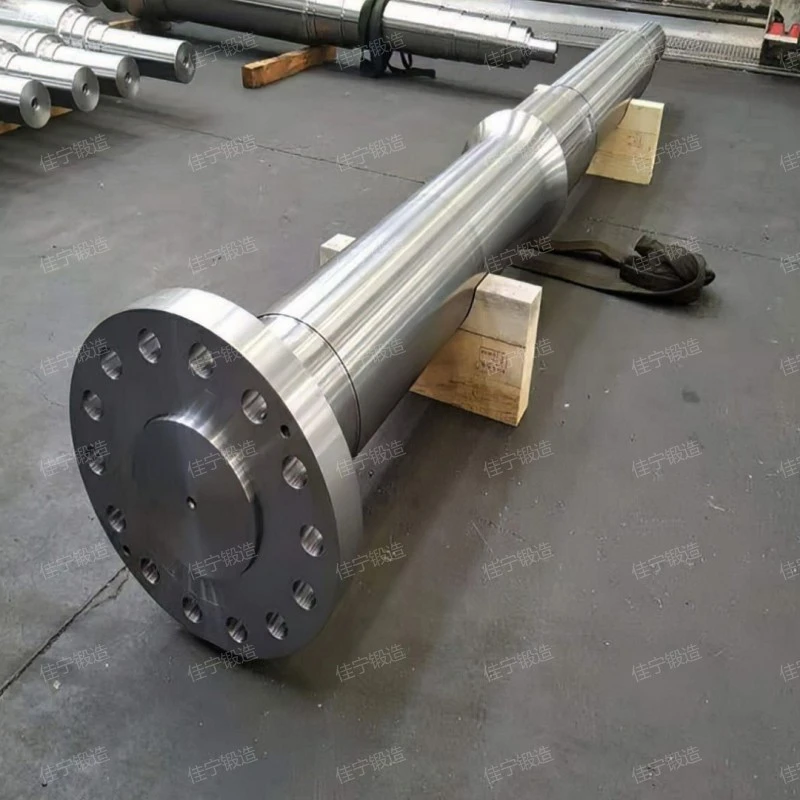
When a manufacturer provides input on draft angles, fillet radii, and stock allowances during the design phase, the resulting forging is easier to produce, requires less machining, and has fewer internal defects. This is especially valuable for complex stepped shafts or shafts with integral flanges. A manufacturer that claims “design for forgeability” capability should be able to run finite element analysis (FEA) simulations to predict metal flow and stress distribution. Jianing Forging’s engineering team routinely collaborates with customers to refine shaft designs, often achieving 10–15% material savings through optimized forging geometries while maintaining full compliance with mechanical requirements.
Prototyping and Lead Time Management
In many industries, time-to-market is critical. A manufacturer that can produce prototype quantities quickly—using existing die sets or near-net-shape forging—offers a competitive edge. Moreover, the ability to scale from prototype to full production without changing process parameters is a sign of manufacturing maturity. Jianing Forging maintains a flexible production schedule that accommodates small-batch trials (as low as 5 pieces) for new designs, with typical lead times of 15–20 working days for prototype forging and machining, subject to material availability and complexity.
Evaluating Long-Term Partnership and Supply Chain Reliability
Selecting a roller shaft forging manufacturer is not a one-time transaction; it is a long-term partnership that affects your supply chain resilience. Factors such as production capacity, inventory management, and after-sales support are equally important as technical capability.
Production Capacity and Scalability
A manufacturer with limited capacity may struggle to meet sudden demand surges or compressed delivery schedules. Evaluate their forging press tonnage range (e.g., from 1000 tons to 8000 tons) and their ability to handle shafts of varying lengths and diameters. For large-diameter roller shafts (e.g., 500 mm or more), a high-tonnage press with adequate manipulator capacity is essential. Jianing Forging’s production facility includes multiple open-die forging presses with capacities up to 8000 tons, capable of forging shafts up to 12 meters in length and 800 mm in diameter. This scale ensures that both small orders and high-volume contracts can be fulfilled without compromising quality.
After-Sales Service and Responsiveness
Even the best-manufactured roller shafts may require post-delivery troubleshooting, rework, or replacement under warranty. A responsive manufacturer should have a dedicated customer service team that can address technical inquiries, provide documentation, and coordinate logistics quickly. Additionally, consider their geographic location and shipping capabilities—proximity to ports or major transportation hubs can reduce transit times and costs. Jianing Forging offers a 12-month warranty on all forged roller shafts against material and manufacturing defects, with a standard response time of 24 hours for service requests. They also maintain a network of logistics partners to expedite international shipments.
Conclusion: Making an Informed Decision
Selecting the right roller shaft forging manufacturer is a multifaceted decision that directly influences the reliability, safety, and cost-effectiveness of your equipment. The ideal partner should demonstrate deep metallurgical knowledge, precise forging and heat treatment processes, robust quality assurance systems, and a collaborative engineering mindset. By thoroughly evaluating these factors—rather than focusing solely on price—you can avoid the hidden costs of premature failures, production delays, and compliance issues.
In today’s competitive landscape, manufacturers that invest in technology, personnel certification, and continuous improvement stand out. Jianing Forging has built its reputation on delivering consistent quality across thousands of roller shaft projects for industries ranging from mining and cement to marine and power generation. Their commitment to traceability, from raw material source to final inspection, ensures that every shaft leaving their facility meets or exceeds the required standards. With a dedicated team of engineers, state-of-the-art testing equipment, and a customer-first approach, Jianing Forging positions itself as a reliable long-term partner for companies that demand excellence in forged components. (咨询热线:176 9623 6479)
When you are ready to evaluate potential suppliers, consider requesting a facility audit, reviewing sample quality documentation, and discussing a trial order for a non-critical shaft design. This hands-on approach will give you a realistic view of their capabilities and communication style. Ultimately, the time invested in choosing the right roller shaft forging manufacturer today will pay dividends in operational uptime and product performance for years to come.