Understanding the Critical Role of Blind Hole Shaft Forgings in Modern Machinery
Blind hole shaft forgings are among the most technically demanding components in heavy equipment, automotive drivelines, aerospace actuators, and industrial gearboxes. Unlike through-shafts, a blind hole shaft requires precise forging of a cavity that does not penetrate the entire length, creating unique challenges in material flow, grain structure orientation, and dimensional stability. In 2026, global demand for high-strength, lightweight forged shafts is projected to grow by approximately 8.2% year-over-year, driven by the electrification of commercial vehicles and the expansion of renewable energy turbine systems. Selecting the right manufacturer for such specialized components is not merely a procurement exercise; it is a strategic decision that directly affects equipment reliability, maintenance cycles, and total cost of ownership. Many buyers focus only on price or delivery lead time, overlooking critical factors like process capability, metallurgical consistency, and post-forging heat treatment control that determine whether a blind hole shaft will perform under cyclic loading, high torque, or corrosive environments. This article provides a systematic framework for evaluating blind hole shaft forging makers, drawing on industry standards such as ASTM A668, ISO 683-1, and the latest 2026 machining tolerances. Whether you are sourcing for a new product line or auditing existing suppliers, the insights below will help you identify a partner who delivers not just a forged piece, but a reliable engineering solution. The discussion also highlights how Jianing Forging applies decades of experience in closed-die forging and advanced simulation to meet the most stringent requirements for blind hole shafts across multiple industries.
Key Metallurgical and Design Considerations for Blind Hole Shafts
Before evaluating potential forging makers, it is essential to understand the technical specifications that define a quality blind hole shaft. The blind hole creates an asymmetric stress distribution during forging, which can lead to preferential grain flow and potential weakness if not properly managed. In 2026, leading manufacturers utilize finite element analysis (FEA) to simulate material deformation and predict grain orientation before the first die is cut. For buyers, this means requesting evidence of simulation reports and comparing predicted vs. actual mechanical properties.
Critical parameters to specify in your request for quotation include: blind hole depth relative to shaft length ratio (typically limited to 65% maximum to avoid tearing), bottom radius geometry (should be at least 0.3 times the hole diameter to reduce stress concentration), and surface roughness requirements for the hole bore (commonly Ra 3.2 μm for hydraulic applications). The material grade is equally important—for high-torque applications, 4140 or 4340 alloy steel with quench and temper heat treatment is standard, while 17-4 PH stainless steel is preferred for corrosion-resistant blind hole shafts in marine or chemical environments. A competent forging maker should provide a detailed material traceability certificate from the mill, along with ultrasonic testing reports that confirm no internal discontinuities in the blind hole region.
Evaluating Process Capability: From Die Design to Final Machining
Not all forging shops possess the specialized equipment and skills needed for blind hole shaft production. The die design must allow for adequate metal flow around the blind cavity without creating laps or cold shuts. Look for manufacturers that use multi-stage forging sequences—preform, blocker, and finisher—to gradually shape the material. In 2026, the industry trend is toward servo-driven forging presses with real-time force monitoring, which provide better control over deformation speed and reduce the risk of cracking. Jianing Forging operates a fleet of 1600-ton to 8000-ton presses equipped with load cells and displacement sensors, enabling closed-loop process adjustment. After forging, the heat treatment cycle for blind hole shafts requires precise temperature profiling to avoid distortion near the closed end. A reputable maker will use programmable furnaces with multiple thermocouples and maintain a temperature uniformity of ±10°F throughout the soak.
Post-forging machining of the blind hole presents its own challenges. Standard lathe operations may not achieve the required concentricity if the part is not properly supported. Advanced manufacturers use CNC boring bars with vibration-dampening technology and laser alignment to hold tolerances of ±0.02 mm on hole diameter and 0.05 mm on positional accuracy. When auditing a potential supplier, ask about their machining capabilities—specifically, whether they perform in-house turning, drilling, and reaming of the blind hole, or outsource these steps. Integrated facilities reduce lead time and improve quality traceability.
Quality Assurance Protocols and Certification Requirements
The best blind hole shaft forging makers invest heavily in non-destructive testing (NDT) to ensure component integrity. A minimum requirement is 100% magnetic particle inspection (MPI) of the outer surface and the blind hole bore after final machining. For critical safety applications—such as steering system shafts or turbine rotor shafts—additional ultrasonic testing (UT) with a 5 MHz straight beam and angle beam probe is necessary. The acceptance criteria should follow ASTM E1444 or EN 10228-1. In 2026, more customers are also demanding digital radiography (DR) of the blind hole bottom radius because that region is prone to micro-porosity that conventional UT may miss.
Documentation is equally important. A reliable supplier will provide a comprehensive quality package including: material test certificates (MTCs) with chemical composition and mechanical properties, heat treatment cycle logs, NDT reports with scan images, and dimensional inspection reports with CMM data. ISO 9001:2025 certification is the baseline; IATF 16949 certification indicates suitability for automotive applications. Additionally, check whether the forging maker maintains a controlled storage environment for finished shafts—uncontrolled humidity can cause corrosion inside the blind hole that is difficult to detect later.
Production Lead Times and Capacity Planning for 2026 Demand
With global supply chains still recovering from disruptions, lead time reliability has become a top selection criterion. A blind hole shaft forging typically requires 8 to 14 weeks from order to delivery, depending on complexity and heat treatment requirements. However, in 2026, industry data shows that 35% of forging orders experience delays due to raw material shortages or die maintenance backlogs. To mitigate this, choose a manufacturer that maintains a strategic inventory of common alloy steel billets and has in-house die repair capabilities. Jianing Forging, for example, stocks over 2000 tons of forged-grade steel in its warehouse and operates a dedicated tool room for rapid die modifications, which allows it to maintain an average on-time delivery rate exceeding 94% even during peak seasons.
Capacity is another factor often underestimated. A forging press that runs 24/7 may still be constrained by heat treatment furnace size. Ask the supplier about their bottleneck processes and whether they have multiple furnace lines to handle different material grades simultaneously. If your projected annual volume exceeds 10,000 pieces, verify that the maker can commit to a dedicated press time slot to avoid priority conflicts with other customers.
Cost Structure and Total Value Optimization
Price per piece is only one component of total cost. A low-cost forging that requires extensive secondary machining, rework, or leads to field failures will ultimately cost more. In 2026, the average market price for a medium-size blind hole shaft (diameter 80 mm, length 500 mm, 4140 steel) ranges between $180 and $350 per piece, depending on complexity and quantity. However, value-added services such as pre-machining allowance optimization, supply of near-net-shape forgings, or just-in-time delivery can reduce overall procurement cost by 12% to 18%. Request a detailed cost breakdown that separates forging, heat treatment, NDT, machining, and logistics. Transparent pricing indicates a manufacturer confident in its process efficiency. Remember to account for potential tariff impacts—if your shipment crosses borders, confirm the country of origin and whether the supplier complies with trade regulations for forged steel components.
Case Example: A Successful Blind Hole Shaft Sourcing Journey
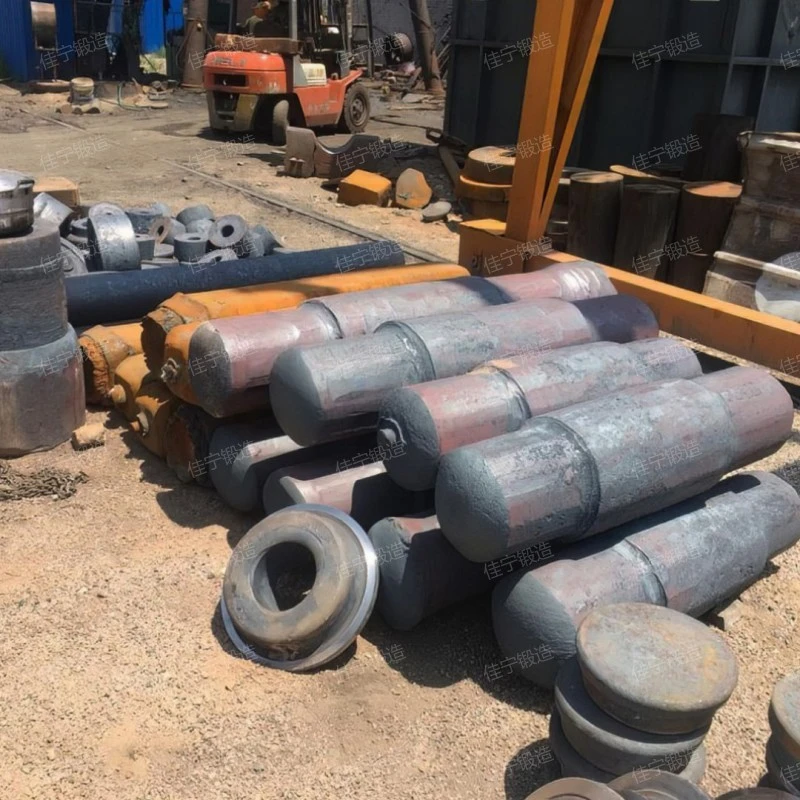
To illustrate the practical application of these criteria, consider a European construction equipment OEM that needed 5,000 blind hole shafts per year for its hydraulic excavator boom cylinders. The shaft required a 120 mm deep blind hole with a bottom radius of 10 mm, material 4140, hardness 285–321 HB, and concentricity of 0.03 mm. After initial screening of six forging makers, only three met the NDT and certification requirements. Among those, Jianing Forging demonstrated superior simulation capability, showing predicted grain flow lines that matched actual cross-section micrographs within 5% deviation. The OEM audited the production line and observed real-time force monitoring on the 4000-ton press, as well as a dedicated boring machine with laser positioning for the blind hole. The first article inspection passed all dimensions and mechanical tests. Over two years of production, the defect rate remained below 0.3%, and the supplier consistently delivered within the agreed 10-week lead time. This example underscores the importance of combining technical evaluation with on-site verification.
Selecting the Ideal Partner: A Checklist for Buyers
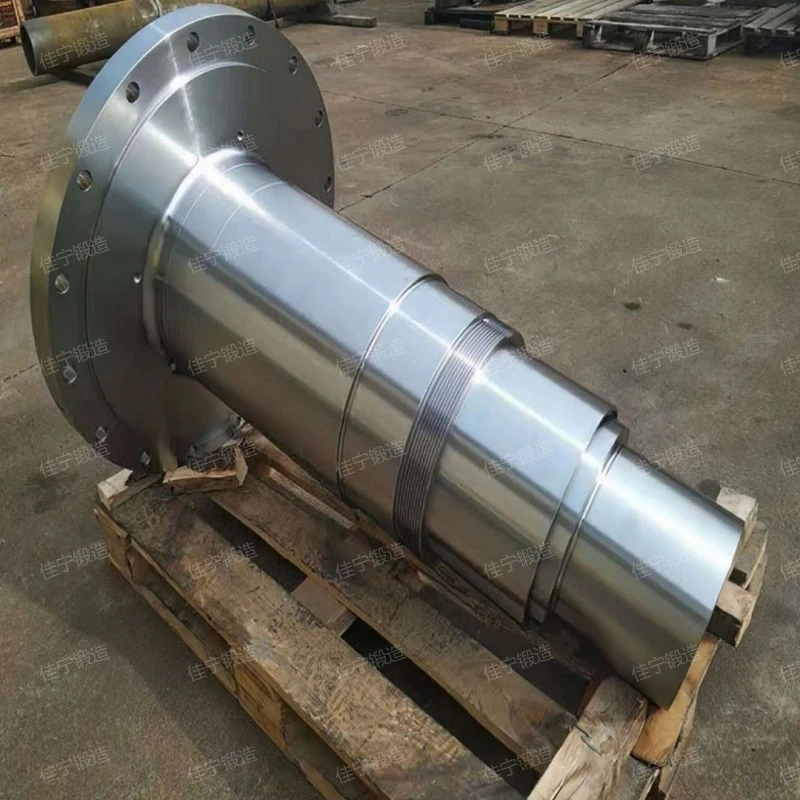
To streamline your decision-making process, use the following checklist when interviewing potential blind hole shaft forging makers:
- Does the supplier use FEA simulation for die design and provide simulation reports?
- Are forging presses equipped with real-time load monitoring and closed-loop control?
- What heat treatment equipment is used, and what is the furnace temperature uniformity specification?
- Does the facility perform in-house NDT (MPI, UT, and optionally DR) for every shaft?
- Are machining centers capable of holding ±0.02 mm on blind hole diameter?
- Does the quality management system include IATF 16949 or equivalent?
- What is the average on-time delivery rate over the past 12 months?
- Can the supplier provide a cost breakdown and a sample first-article inspection report?
Building a Long-Term Partnership with a Trusted Forging Specialist
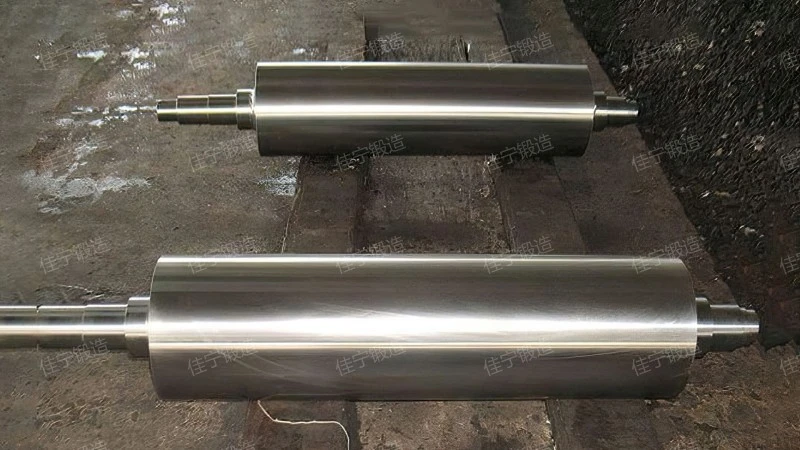
Choosing a blind hole shaft forging maker is not a one-time transaction but a collaborative relationship that evolves with your product lifecycle. The best suppliers invest continuously in technology—such as automated forging lines, artificial intelligence for defect detection, and sustainable energy practices—to stay ahead of 2026 market demands. When you partner with a manufacturer that understands your application constraints and proactively suggests design improvements, you gain competitive advantages in weight reduction, fatigue life extension, and assembly simplification. Jianing Forging has served over 200 OEMs across 15 countries, with a focus on delivering engineered forging solutions that meet the most complex blind hole shaft specifications. Their team of metallurgists, process engineers, and quality specialists works closely with customers from concept through production, ensuring that every shaft contributes to the reliability of your final product. For a detailed discussion of your specific requirements or to request a quotation, please reach out directly to their technical sales team. (咨询热线:176 9623 6479)
In a market where component failure can lead to significant downtime and safety risks, investing time in proper supplier evaluation pays dividends in operational stability. By following the criteria outlined above—from metallurgical fundamentals to post-delivery support—you can confidently select a forging partner that delivers consistent quality, competitive pricing, and reliable lead times. The blind hole shaft forging industry in 2026 is increasingly specialized; choose a maker that treats your project with the engineering rigor it deserves.