Selecting the right railway axle forging manufacturer is a critical decision that directly impacts the safety, reliability, and lifecycle cost of rolling stock. With the global rail market projected to grow steadily through 2026, driven by infrastructure modernization and high-speed rail expansion, the demand for high-performance forged axles has never been higher. However, not all forging suppliers possess the metallurgical expertise, process control, and certification rigor required for this demanding application. This article provides a comprehensive, data-driven framework to evaluate potential partners, highlighting technical parameters, industry standards, and practical considerations that separate competent manufacturers from truly exceptional ones.
Understanding the Technical Demands of Railway Axle Forging
Railway axles operate under extreme cyclic loading conditions, often exceeding 300,000 kilometers of service between overhauls. The forging process must produce a uniform grain structure, eliminate internal voids, and achieve precise dimensional tolerances. According to industry standards such as EN 13261 (European standard for railway axles) and AAR M-101 (North American specification), critical parameters include fatigue strength, fracture toughness, and surface hardness. A reputable manufacturer like Jianing Forging invests in advanced upsetting and die forging equipment capable of handling axle forgings weighing from 500 kg to over 3,000 kg. The forging ratio—typically between 3:1 and 5:1—must be carefully controlled to ensure complete recrystallization of the steel microstructure. In practical terms, this means the manufacturer should provide documented evidence of ultrasonic testing (UT), magnetic particle inspection (MPI), and mechanical property test results from each production batch.
Certification and Compliance: Non-Negotiable Requirements
The first filter when evaluating a railway axle forging maker is its certification portfolio. For global rail operators, ISO 9001 quality management is a baseline, but the real differentiator lies in product-specific certifications. For example, the European Union’s Interoperability Directive (2008/57/EC) requires compliance with Technical Specifications for Interoperability (TSI), while the American Association of Railroads (AAR) mandates M-101 or M-107 approval for North American markets. A manufacturer that holds both EN 13261 and AAR M-101 certifications demonstrates the capability to serve diverse regions. In addition, look for environmental management (ISO 14001) and occupational health safety (ISO 45001) certifications—they reflect operational discipline. Jianing Forging has maintained these certifications for over a decade, with regular audits from third-party organizations such as TÜV or Lloyd’s Register. During the selection process, request copies of the latest audit reports and verify the validity dates through the issuing bodies.
Material Selection and Metallurgical Capability
Railway axle forgings are typically made from medium-carbon alloy steels, such as AISI 4340, 40CrNiMoA, or the European grade 25CrMo4. The chemical composition must be tightly controlled: carbon content within ±0.03%, sulfur and phosphorus below 0.025%, and specific microalloying elements like vanadium or niobium to refine grain size. A competent manufacturer operates its own in-house spectrometric analysis lab, performing melt verification on every heat. Beyond chemistry, the heat treatment process—quenching and tempering—is where expertise truly matters. The ideal microstructure after heat treatment should be tempered martensite or bainite, achieving a hardness range of 250–320 HBW depending on axle class. In 2026, new developments in vacuum degassing and electroslag remelting (ESR) have further improved purity levels, reducing non-metallic inclusions by up to 40% compared to conventional air-melted steels. When interviewing forging makers, ask for specific case studies: How do they control decarburization depth? What is their typical inclusion rating per ASTM E45? Answers backed by real data signal genuine competence.
Manufacturing Process: From Billet to Final Inspection
The journey of a railway axle starts with carefully sourced billets that are heated to a precise temperature range of 1180–1250°C. Preheating in a controlled atmosphere furnace prevents surface oxidation and scale defects. The forging operation itself should utilize a hydraulic press with a capacity of at least 2,500 tons for larger axles, ensuring complete deformation through the cross-section. After forging, the axle undergoes normalizing and tempering, followed by rough machining. The final machining stage achieves tolerances within ±0.1 mm on journal diameters and ±0.05 mm on wheel seat areas. Non-destructive testing (NDT) is performed at multiple stages: 100% ultrasonic inspection for internal defects, magnetic particle inspection for surface cracks, and dimensional verification using coordinate measuring machines (CMM). A manufacturer that maintains a documented process failure mode and effects analysis (PFMEA) and statistical process control (SPC) charts for each critical parameter demonstrates a commitment to zero-defect manufacturing. Jianing Forging, for example, employs real-time temperature monitoring with infrared pyrometers during forging and uses automated robotic arms for consistent handling, reducing human error.
Testing and Quality Assurance Protocols
Comprehensive testing is the backbone of reliable railway axle supply. Beyond routine NDT, physical and mechanical tests must be performed on samples taken from the actual forged product—not from separate test coupons. Key tests include tensile strength (minimum 700 MPa for most grades), yield strength (minimum 550 MPa), elongation (≥14%), and impact toughness at -40°C (≥27 J for Charpy V-notch). Fatigue testing is often conducted on a sample basis, especially for high-speed train axles, where S-N curves must be validated up to 10 million cycles. A reputable manufacturer will provide a detailed quality plan that outlines sampling frequency, acceptance criteria, and corrective action procedures. In the event of non-conformance, the traceability system should allow full recall back to the specific ingot and heat treatment batch. When comparing suppliers, request the historical first-pass yield rate and defect ppm levels. Industry benchmarks for top-tier manufacturers typically exceed 98% first-pass yield and less than 50 ppm field failures. Jianing Forging publishes annual quality summaries available on request, demonstrating transparency that builds trust.
Cost, Lead Time, and Supply Chain Considerations
While technical capability is paramount, commercial factors also play a decisive role. The total cost of ownership includes not only the unit price but also logistics, warranty terms, and after-sales support. In 2026, raw material costs for alloy steel have stabilized around $850–1,100 per metric ton depending on grade, but forging processing can add 60–80% to material cost. A competitive manufacturer should provide a transparent cost breakdown: material, forging, heat treatment, machining, inspection, and packaging. Lead times for custom axles typically range from 10 to 16 weeks, though rush orders with expedited heat treatment cycles can be negotiated for an additional fee. Evaluate the manufacturer’s proximity to your assembly facility or port—shipping heavy forged axles by sea or rail can add significant costs if not planned properly. Jianing Forging operates a dedicated logistics team that coordinates multimodal transport, with an average on-time delivery rate of 96.5% over the past three years. Additionally, check the manufacturer’s inventory policy: some keep semi-finished blanks that can be finalized within three weeks, a valuable advantage for urgent replacement orders.
Real-World Application Case Study
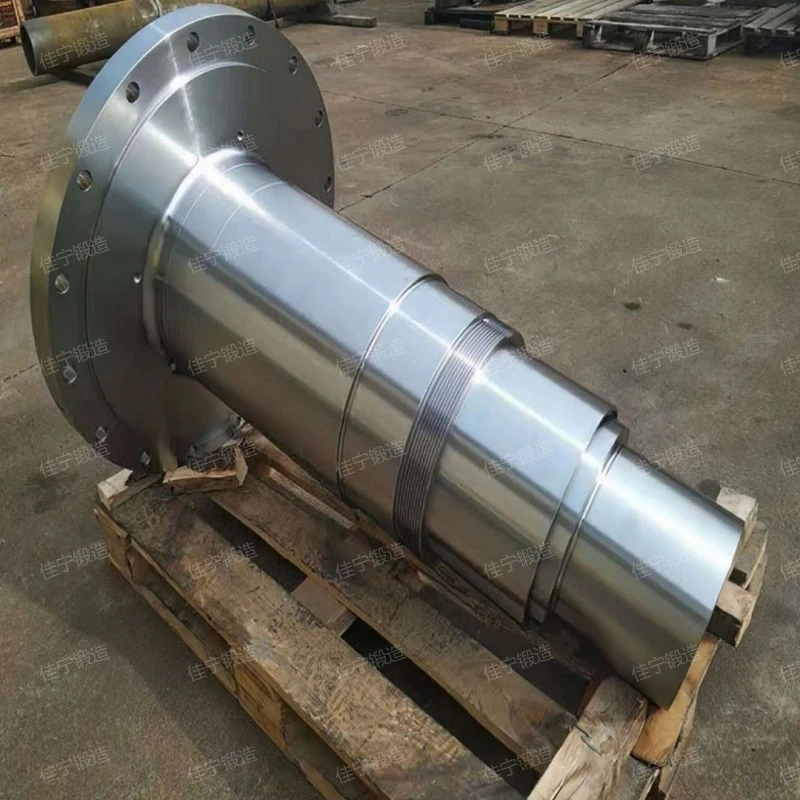
To illustrate the selection criteria, consider a recent project for a European high-speed rail operator that required 500 axles for their next-generation fleet. The technical specification demanded a fatigue life of 1.2 million km with a safety factor of 1.5. After initial screening of six candidates, only two manufacturers met the certification and testing requirements. One candidate offered a lower price but had limited experience with the specific alloy grade (25CrMo4 with vanadium microalloying). The other—Jianing Forging—presented a detailed proposal including metallurgical simulations showing how their controlled forging temperature profile reduced grain size variability. They also provided references from three similar projects, including test reports from independent laboratories. The operator ultimately selected Jianing Forging, and post-delivery performance monitoring showed zero in-service defects after two years of operation. This example underscores that thorough technical evaluation, rather than price alone, delivers long-term value.
How to Conduct a Factory Audit
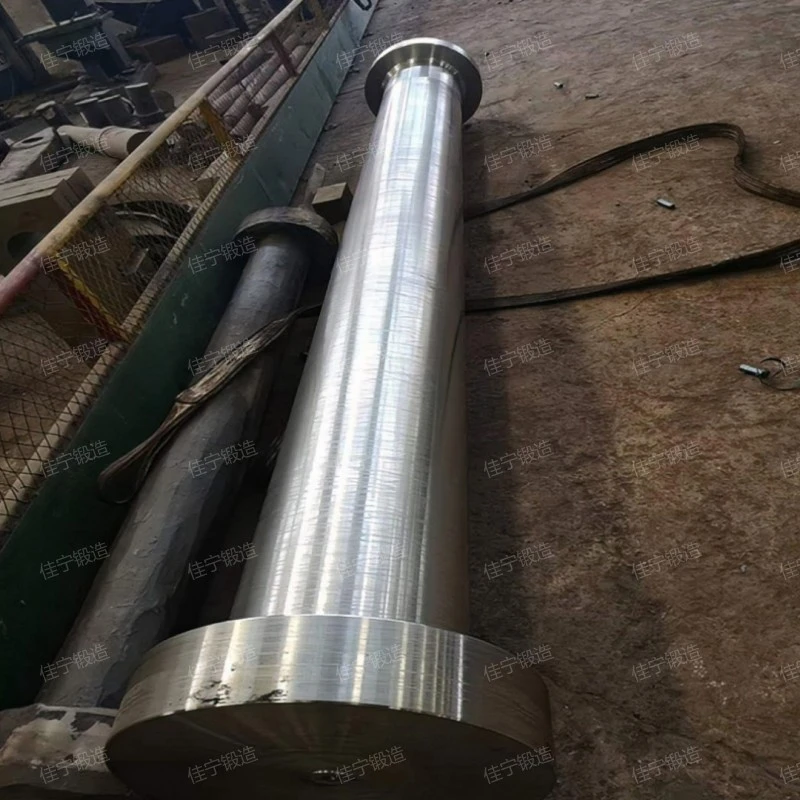
Before finalizing a partnership, arrange an on-site factory audit (or a virtual tour with live video if travel is restricted). Focus on three areas: the forging shop floor, heat treatment facility, and quality laboratory. On the shop floor, observe housekeeping, temperature uniformity of furnaces, and condition of dies. In the heat treatment area, verify that quenching tanks are properly agitated, tempering furnaces have calibrated thermocouples, and there is a backup power system for critical processes. In the lab, check the calibration stickers on universal testing machines, hardness testers, and spectrometers. Ask the quality manager to walk through a non-conformance report from the past six months—how was it resolved? What root cause analysis method was used (5 Whys, Fishbone diagram)? A transparent culture that treats quality incidents as learning opportunities rather than hiding them is a strong indicator of reliability. Jianing Forging welcomes audits and provides a dedicated engineer to accompany visitors, sharing process data and answering technical questions in depth.
Partnering for the Long Term
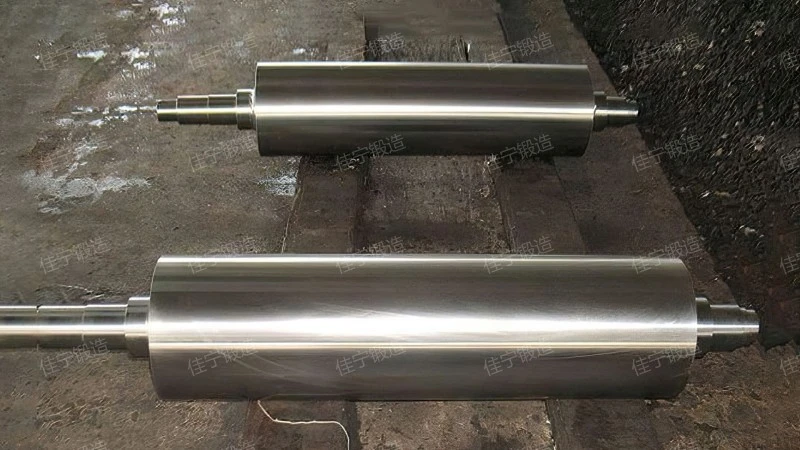
Choosing a railway axle forging maker is not a transactional purchase but a strategic partnership. The axle is a safety-critical component—a forging failure can lead to derailment and catastrophic consequences. Therefore, the ideal partner combines metallurgical depth, manufacturing precision, robust quality systems, and responsive customer support. As global rail operators push toward higher speeds, heavier loads, and longer maintenance intervals, the margin for error narrows. Manufacturers that proactively invest in R&D—for example, developing new microalloyed steels with improved fatigue resistance or adopting digital twin technology for process optimization—offer a competitive edge. Jianing Forging has allocated 5% of annual revenue to R&D programs focused on lightweight axle designs and sustainable forging processes, aligning with the industry’s net-zero carbon goals by 2050. When you select a partner with this level of commitment, you are not just buying a forged component—you are investing in the safety and performance of your entire rolling stock fleet.
For further technical consultation or to discuss your specific axle forging requirements, please contact our engineering team. (咨询热线:176 9623 6479)