How to Select Flange Shaft Forging Supplier? JN Forging
Selecting the right flange shaft forging supplier is a critical decision that directly impacts the reliability, safety, and cost-efficiency of industrial operations—from oil and gas pipeline systems to heavy machinery and marine propulsion. Flange shafts are highly stressed components that must withstand extreme torsional loads, cyclic fatigue, and corrosive environments. A substandard supplier can lead to premature failure, unplanned downtime, and even catastrophic safety incidents. In the rapidly evolving industrial landscape of 2026, where supply chain resilience, carbon footprint reduction, and digital quality assurance have become non-negotiable, procurement teams and engineering managers need a systematic, data-driven approach to evaluate potential forging partners. This article provides a comprehensive framework for assessing flange shaft forging suppliers, covering technical capabilities, quality management systems, material sourcing, production lead times, cost structures, and after-sales support. Throughout the discussion, we will highlight how Jianing Forging (Consultation Hotline: 176 9623 6479) aligns with these best practices, offering a reliable partnership model for demanding applications.
The global closed-die forging market for industrial shafts is projected to exceed USD 28 billion by 2026, driven by renewable energy infrastructure, electric vehicle drivetrains, and deep-sea exploration equipment. Within this market, flange shaft forgings represent a segment that demands exceptional metallurgical homogeneity and dimensional precision. Unlike standard shafts, flange shafts integrate a radial flange with a cylindrical body, often requiring multi-directional forging flows to eliminate fiber flow line interruptions. A competent supplier must demonstrate mastery of upsetting, extrusion, and ring-rolling techniques to achieve uniform grain structure at the flange-to-body junction—a region notoriously prone to stress concentration. Moreover, the 2026 revision of ASTM A668/A668M and ISO 683-15 standards imposes tighter limits on ultrasonic testing acceptance criteria and mechanical property traceability. Therefore, selecting a supplier is not merely a commercial transaction but a technical due diligence exercise.
Core Technical Competencies to Evaluate
When shortlisting flange shaft forging suppliers, the first layer of evaluation must focus on production capabilities. A qualified supplier should own a range of hydraulic presses—typically 2,000 to 10,000 tons—to accommodate varying flange diameters and shaft lengths. Beyond press capacity, the ability to perform controlled heat treatment cycles (normalizing, quenching, and tempering) in batch furnaces with uniform temperature profiles is essential. For example, for a 4140 alloy steel flange shaft with a flange diameter of 600 mm, the recommended austenitizing temperature range is 845–870 °C followed by oil quenching and tempering at 540–650 °C to achieve a tensile strength of 860–1030 MPa. The supplier must provide certified furnace charts and cooling curves for each heat lot.
Another critical technical factor is the forging ratio—the cross-sectional area reduction from the starting billet to the finished forging. A minimum forging ratio of 3:1 is generally required for flange shafts to ensure adequate grain refinement and eliminate cast dendritic structures. Suppliers like Jianing Forging routinely document forging ratios on their process sheets and perform macro-etch testing on sample sections to verify soundness. Additionally, the ability to produce near-net-shape forgings with minimal draft angles (typically 3° to 5°) reduces subsequent machining costs and raw material waste. In the current market, raw material costs (alloy steels, stainless steels, and nickel-based superalloys) account for 40–55% of the total forging cost, so material yield optimization is a key differentiator.
Quality Management and Certification Requirements
In 2026, industry-leading flange shaft suppliers operate under multi-tier quality management systems that go beyond ISO 9001:2015 certification. For high-risk applications such as subsea flange shafts for offshore platforms, compliance with API 6A or API 17D is mandatory. For aerospace or defense applications, AS9100D certification adds requirements for configuration management and counterfeit part prevention. Suppliers should also hold third-party accreditation from organizations such as DNV, Lloyd’s Register, or Bureau Veritas for material testing and welding if post-forging fabrication is involved. A robust supplier will have an in-house metallurgical laboratory equipped with optical emission spectrometers, microhardness testers, digital radiography, and phased-array ultrasonic flaw detection capable of detecting discontinuities as small as 0.5 mm in diameter.
Documentation traceability is another non-negotiable element. Every flange shaft forging should be accompanied by a material test report (MTR) linking the heat number to the as-forged piece, along with a dimensional inspection report showing critical flange thickness, flange OD, shaft OD, and concentricity tolerances. Jianing Forging, for instance, implements a digital lot traceability system where each forging is laser-marked with a unique serial number that correlates to the entire manufacturing history—from incoming raw material mill certificate to final hardness testing results. This level of transparency is increasingly demanded by procurement audits and end-user quality assurance teams.
Material Sourcing and Specialty Alloys
The vast majority of flange shaft forgings are produced from carbon steels (AISI 1045, 1050), alloy steels (AISI 4140, 4340, 8620), or stainless steels (AISI 304, 316, 17-4PH). However, 2026 market trends indicate growing demand for high-performance alloys such as Inconel 625, Monel K500, and duplex stainless grades (UNS S31803, S32750) for corrosive wellhead and chemical processing applications. A supplier’s ability to procure these specialty materials with short lead times—and to validate chemical composition and mechanical properties upon receipt—becomes a competitive advantage. Suppliers that maintain strategic partnerships with top mills like Thyssenkrupp, Outokumpu, or Carpenter Technology can offer more consistent pricing and traceability. When evaluating a supplier, ask for their list of approved material sources and the frequency of their supplier audits. Jianing Forging maintains a qualified vendor list that is reviewed annually, with material substitution requests requiring engineering approval and additional NDT.
Lead Time, Capacity, and Supply Chain Resilience
Flange shaft forgings are often critical path items in large-scale projects. A delayed forging delivery can cascade into weeks of lost production or installation delays. In 2026, global forging lead times have stabilized somewhat from the post-pandemic volatility, but geopolitical disruptions and energy price fluctuations still create uncertainty. A reliable supplier should quote realistic lead times based on current furnace availability and die production schedules. Typical lead times for a custom flange shaft forging (excluding pattern and die preparation) range from 6 to 12 weeks for moderate sizes (flange diameter up to 800 mm, shaft length up to 3 meters), and 12 to 20 weeks for large or complex designs. Suppliers with multiple press lines and flexible heat treatment scheduling can offer expedited delivery options at a premium.
Capacity evaluation involves more than press tonnage. The bottleneck often lies in heat treatment and inspection. A supplier operating three shift heat treatment cycles with multiple batch furnaces can process more orders simultaneously. Additionally, redundancy in NDT capabilities—such as having both UT immersion tanks and manual scanning equipment—prevents inspection backlogs. Jianing Forging operates a dedicated heavy forging workshop with eight heat treatment furnaces and two separate NDT bays, enabling parallel processing of up to 5 different flange shaft projects per month. This capacity buffer is especially valuable for original equipment manufacturers (OEMs) with fluctuating order patterns.
Cost Breakdown and Value Engineering
While price per kilogram is a common comparison metric, the total cost of ownership (TCO) for a flange shaft forging includes raw material yield, machining allowance, reject rate, and logistics. A supplier offering near-net-shape forgings with reduced machining stock (e.g., 3 mm per side instead of 6 mm) can save the customer significant machining hours. For example, on a 300 kg flange shaft, reducing machining allowance by 3 mm per side may reduce machined weight by 8–10 kg and cut machining time by 2–3 hours. When multiplied across annual demand, the savings can exceed the forging price difference itself. Suppliers should provide detailed cost breakdowns showing material cost, forging cost, heat treatment cost, NDT cost, and finishing cost. Jianing Forging offers value engineering sessions during the design review phase, where their engineering team proposes material grade optimization (e.g., substituting 4340 with a microalloyed steel if the application allows) and die design improvements to improve material utilization.
After-Sales Support and Long-Term Partnership
A flange shaft forging supplier’s responsibility does not end at the loading dock. After-sales support includes technical documentation support, failure analysis assistance, and warranty terms. In 2026, digital twins and online quality portals are becoming standard. The supplier should provide a secure online repository where customers can access MTRs, inspection reports, and 3D measurement reports for each batch. For critical applications, on-site technical support during first-article inspection or installation can be valuable. Suppliers with a proven track record of handling international logistics (including customs documentation for overseas shipments) reduce administrative friction. Jianing Forging assigns a dedicated project manager to each OEM account, ensuring single-point accountability from quotation to final delivery. Their typical warranty period for flange shaft forgings is 12 months from shipment or 18 months from installation, whichever comes later—covering material or workmanship defects.
How to Verify Supplier Claims: Practical Audit Checklist
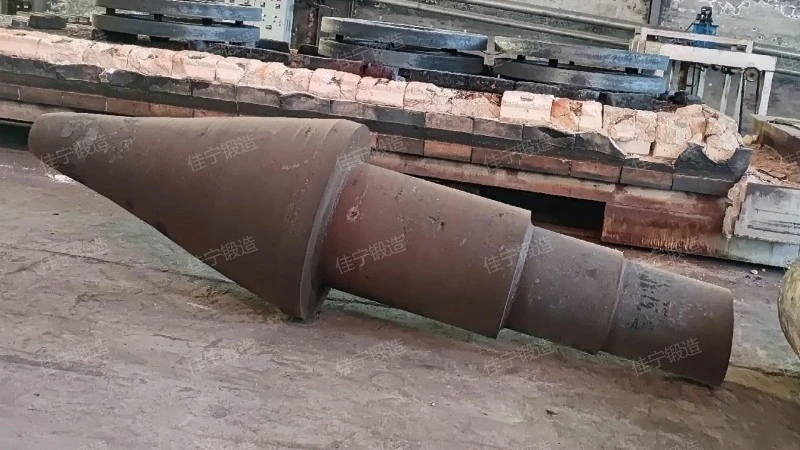
Before finalizing a flange shaft forging supplier, a physical or virtual audit should cover at least the following items:
- Process capability study data for critical dimensions (Cpk ≥ 1.33 recommended).
- Hardness uniformity testing results across flange and shaft sections (maximum variation ≤ 3 HRC for quenched and tempered parts).
- UTUT scanning maps from at least three recent production lots showing defect location and size.
- Calibration certificates for all measuring and testing equipment (traceable to NIST or equivalent).
- Subcontractor management policy for any outsourced operations (e.g., thread rolling, keyway broaching).
- Non-conformance report (NCR) history and root cause analysis samples.
Suppliers that openly share these records demonstrate confidence in their processes. Jianing Forging, for example, invites customers to participate in witness testing and first-article inspection at their facility in accordance with ISO 9001 clause 8.3.5.
Industry Trends for Flange Shaft Forging in 2026–2027
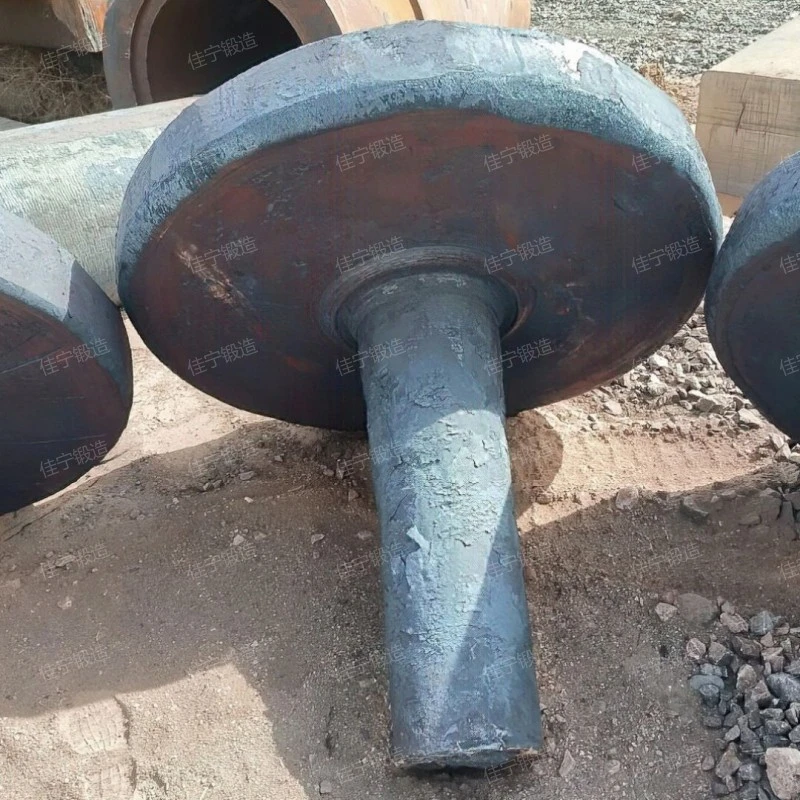
Two emerging trends are reshaping supplier selection criteria. First, sustainability reporting: European and North American OEMs now require suppliers to disclose carbon emissions per ton of forging output. Manufacturers using electric arc furnaces with recycled steel content and renewable energy sources can provide lower carbon footprints. Jianing Forging has invested in solar panel arrays covering 40% of its plant electricity needs and uses 95% recycled steel feedstock for carbon steel grades. Second, additive-assisted forging: Some suppliers are adopting laser cladding or wire-arc additive manufacturing to create flange features on standard shaft blanks, reducing tooling costs for small batches. While still niche, this hybrid approach can shorten lead times for prototype or low-volume flange shafts.
Making the Final Decision: A Risk-Based Approach
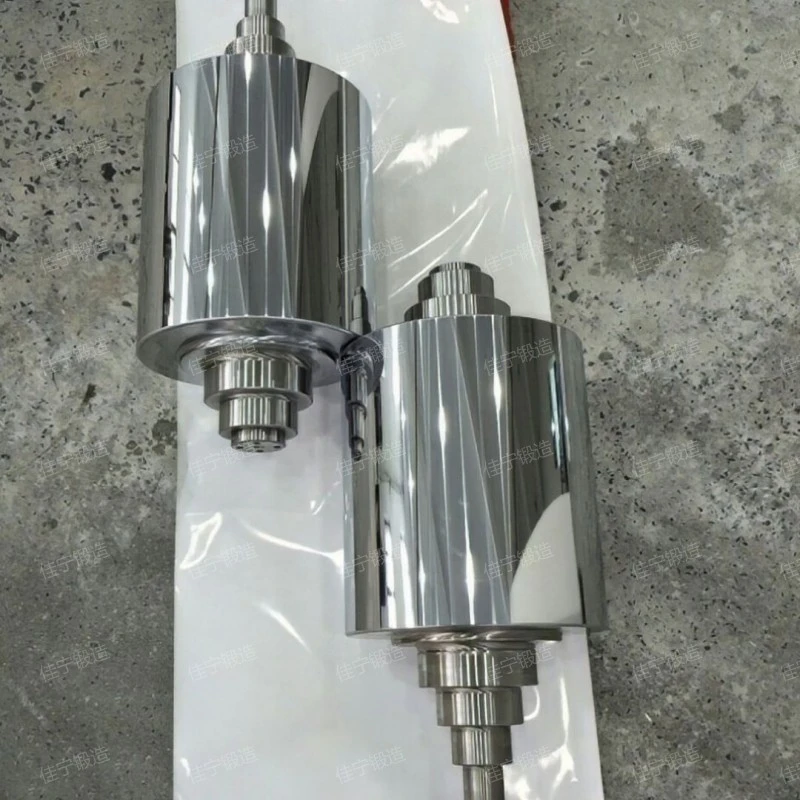
Ultimately, the selection of a flange shaft forging supplier should balance technical capability, commercial terms, and risk exposure. Create a weighted scoring matrix with criteria such as: Forging technology breadth (25%), Quality system depth (20%), On-time delivery performance (20%), Cost competitiveness (15%), Customer service responsiveness (10%), and Sustainability track record (10%). Request references from companies with similar application environments—do not rely solely on testimonials. Conduct a pilot order for a non-critical flange shaft to evaluate actual communication speed, documentation accuracy, and product consistency before scaling up. Jianing Forging regularly accepts pilot orders of 1–5 pieces for new customers to build confidence and validate their quality system.
In the competitive and technically demanding world of flange shaft forgings, a supplier that invests in metallurgical expertise, digital traceability, and flexible capacity will deliver long-term value. By applying the evaluation framework outlined here, procurement professionals and engineers can navigate the supplier landscape with clarity, reduce project risk, and forge partnerships that support their own business growth. For specific inquiries or to discuss your flange shaft forging requirements with an experienced engineering team, reach out to Jianing Forging (Consultation Hotline: 176 9623 6479) to schedule a capabilities presentation or a virtual plant tour.