Understanding the Strategic Importance of Large Head Shaft Forging Selection
The selection of a reliable large head shaft forging factory directly influences the operational reliability, maintenance cost, and service life of heavy machinery used in industries such as mining, cement, wind energy, marine propulsion, and oil & gas. Large head shafts, often weighing several tons and measuring multiple meters in length, serve as critical rotating components that transmit torque and support axial loads. A single quality failure in such a shaft can lead to catastrophic downtime, safety hazards, and significant financial loss. As the global heavy equipment market continues to expand—with projections indicating a compound annual growth rate of around 4.8% from 2025 to 2030—demand for high-integrity forged shafts is rising correspondingly. However, the forging industry faces challenges including raw material volatility, stricter environmental regulations, and the need for advanced simulation technologies. Choosing the right factory is no longer a matter of comparing price lists; it requires a thorough evaluation of technical capabilities, quality management systems, delivery reliability, and long-term partnership potential. This article provides a comprehensive framework for decision-makers who need to select a large head shaft forging supplier that meets both current project requirements and future sustainability goals. By examining key parameters such as forging process capability, material sourcing, heat treatment precision, nondestructive testing standards, and after-sales support, we aim to equip procurement professionals, engineers, and project managers with actionable insights. Throughout the discussion, we will reference the operational practices of Jianing Forging as an illustrative example of a factory that aligns with industry best practices, without making unsubstantiated claims. The goal is to help you make an informed, low-risk selection that ensures your large head shafts perform reliably under demanding conditions.
Core Technical Requirements for Large Head Shaft Forging
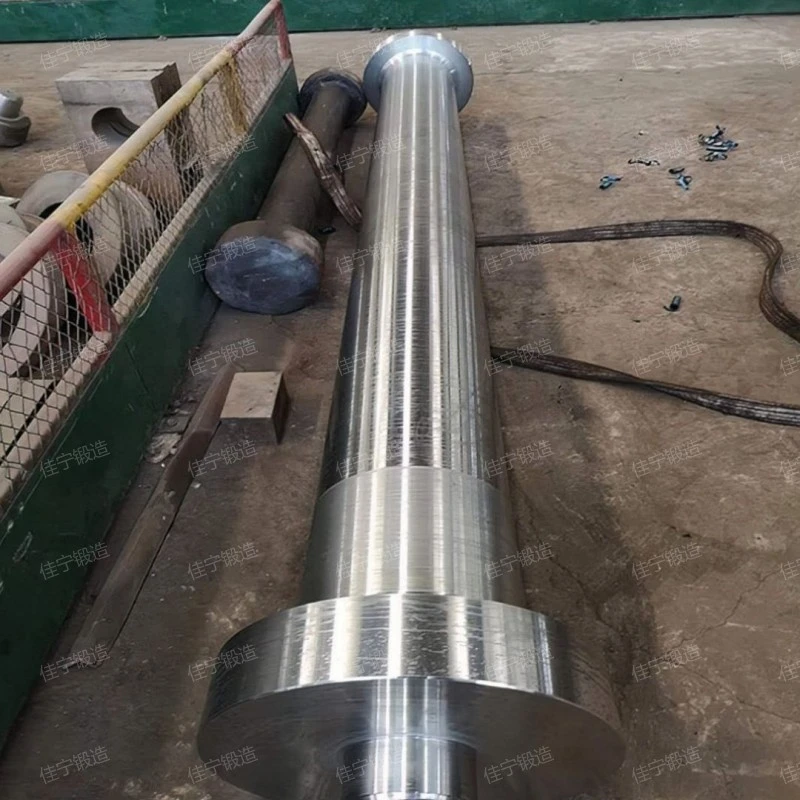
Before initiating factory evaluation, it is essential to define the technical specifications that a large head shaft must satisfy. Typical parameters include outer diameter (often exceeding 500 mm), overall length (up to 10 meters or more), final weight (ranging from 2 to 30 tons), material grade (e.g., 42CrMo4, 34CrNiMo6, or custom alloy steels), and mechanical properties such as tensile strength, yield strength, impact toughness, and hardness uniformity. The forging ratio—usually recommended above 3:1 for critical shafts—ensures grain refinement and elimination of internal voids. Additionally, dimensional tolerances (e.g., ISO 2768-m or tighter), surface roughness, and concentricity requirements must be clearly documented. A capable factory should demonstrate its ability to perform finite element analysis (FEA) for forming simulation, optimize ingot design, and control the entire thermal cycle from preheating to forging and post-forge heat treatment. For instance, Jianing Forging utilizes computer-aided engineering (CAE) tools to simulate material flow and stress distribution before actual production, reducing trial-and-error iterations. The factory’s process data should be verifiable through material test certificates (EN 10204 3.1 or 3.2), heat treatment records, and dimensional inspection reports. When evaluating multiple suppliers, request detailed technical proposals that include proposed forging sequence, expected grain structure, and proposed heat treatment cycles. Avoid factories that cannot provide clear, documented evidence of their process capability. Modern industry standards such as ASTM A788, EN 10083, and ISO 683-2 serve as benchmarks; ensure the factory can comply with the specific standard required by your application.
Evaluating Forging Equipment and Production Scale
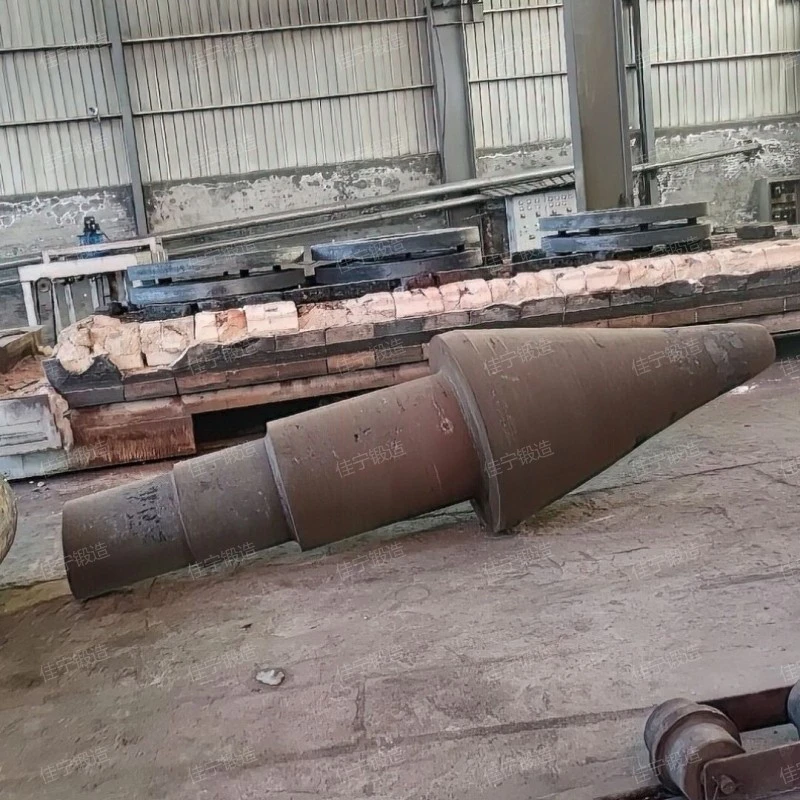
The physical capacity of a forging factory directly determines the maximum size and complexity of large head shafts it can produce. Key equipment includes hydraulic presses (typically in the range of 3,000 to 15,000 tons), ring rolling mills, manipulators, and heating furnaces with precise temperature control. For large head shafts, the press tonnage must be sufficient to achieve full deformation through the cross-section; a 5,000-ton press can handle shafts up to approximately 4-ton unit weight, while heavier shafts require larger presses. The availability of manipulators with load capacities above 10 tons improves handling safety and dimensional accuracy. Furthermore, the factory should operate multiple heating furnaces with uniform temperature zones (±10°C or better) to avoid thermal gradients that cause internal stresses. Jianing Forging, for example, operates a 10,000-ton hydraulic press and four computer-controlled bogie hearth furnaces, enabling consistent processing of shafts up to 8 tons in single-piece weight. Beyond raw equipment, evaluate the factory's maintenance schedule, calibration records for temperature sensors and pressure gauges, and the age profile of critical machinery. An older press may still be capable if regularly refurbished, but a well-maintained modern press offers better repeatability and energy efficiency. Also consider the factory's capacity for ancillary operations such as rough machining, stress relieving, and surface treatment. A vertically integrated facility that performs forging, heat treatment, machining, and testing in-house reduces lead times and quality control handover risks. When visiting or auditing, inspect the workshop cleanliness, material flow layout, and safety protocols—these are indirect indicators of management discipline.
Quality Management and Nondestructive Testing Capabilities
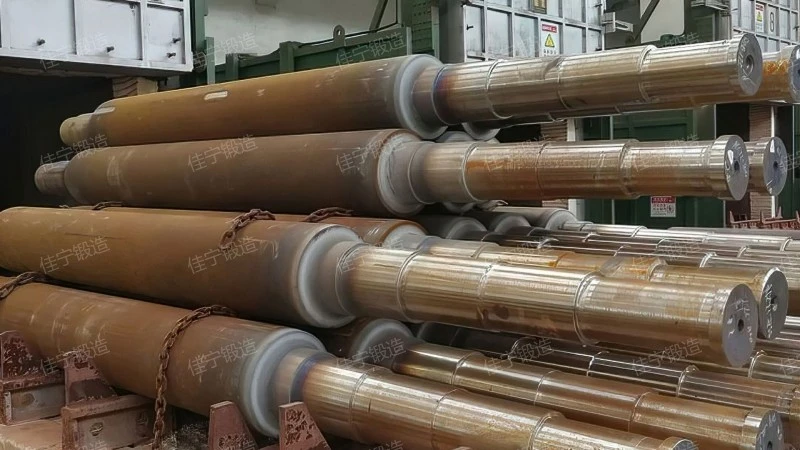
Large head shafts are subject to rigorous nondestructive testing (NDT) to detect internal defects such as porosity, inclusions, cracks, or segregation. The most common methods include ultrasonic testing (UT), magnetic particle inspection (MPI), and liquid penetrant testing (PT). A qualified factory should have certified NDT personnel (Level II or Level III per ISO 9712 or ASNT) and calibrated equipment. For critical shafts, UT is performed on the entire surface area after rough machining and again after final heat treatment, with scanning sensitivity set to detect reflectors as small as 1.5 mm at equivalent flaw size. The factory should also have a documented quality management system certified to ISO 9001 (and preferably ISO 14001 for environmental management). Additional certifications such as PED (Pressure Equipment Directive) for European markets or API Q1 for oilfield components may be required depending on your industry. Avoid factories that rely solely on visual inspection or that cannot provide calibration certificates for their NDT probes. Jianing Forging maintains an independently accredited laboratory equipped with digital UT flaw detectors, eddy current instruments, and a metallographic microscope for microstructural analysis. Furthermore, the factory performs mechanical testing on witness samples cut from prolongations of each forged shaft, ensuring that actual material properties are traceable to the production lot. When selecting a partner, request a sample quality plan (inspection and test plan) that outlines hold points, acceptance criteria, and third-party involvement. A factory that proactively suggests additional testing—such as hydrogen content analysis for large ingots or fracture toughness testing—demonstrates a deeper understanding of risk management.
Supply Chain and Logistics Considerations for Large Shafts
The production of large head shafts often requires specialized raw materials such as ingots from reputable steel mills (e.g., those following SAE, DIN, or GB standards). The factory's relationship with steel suppliers affects lead times and material consistency. Ideally, the factory should have long-term agreements with multiple mills to mitigate supply disruptions. Additionally, the ingot size must be carefully matched to the final shaft design to avoid excessive yield loss; typical yield from ingot to forged shaft ranges from 60% to 75%, depending on geometry and trimming allowances. Evaluate the factory's scrap management and recycling practices—these reflect both cost efficiency and environmental responsibility. For international shipments, the logistics of oversized and overweight forged shafts require specialized lifting equipment, ocean freight arrangements, and customs documentation. The factory should have experience in packaging for heavy loads (e.g., steel cradles, moisture-proof wrapping, and sea-fastening) and can provide estimated dimension and weight data early in the quotation process. A common oversight is underestimating the cost and time for transportation; a factory located near a deep-water port or with dedicated inland transport partnerships can reduce this burden. Jianing Forging, for instance, is situated in an industrial zone with direct access to major logistics hubs, enabling door-to-door delivery for projects in Asia, Europe, and the Americas. When comparing quotes, ask for a detailed breakdown that includes inland transport, insurance, and export clearance fees. A transparent factory will provide this information without hesitation.
Balancing Cost, Delivery, and Long-Term Partnership Value
While upfront unit price is a visible factor, the total cost of ownership (TCO) for large head shafts includes quality assurance, potential rework, downtime risk, and warranty support. A factory offering a 20% lower price but lacking robust quality controls may result in higher inspection rejection rates and project delays. Conversely, a premium-priced factory with proven track records can deliver shafts that exceed specification, reducing field failures. To make a balanced decision, request references from existing customers, particularly those in similar industries. Ask for case studies where the factory solved a complex forging challenge—such as achieving tight concentricity on a long slender shaft or accommodating an unusual material grade. Also evaluate the factory's after-sales responsiveness: do they provide technical support during installation or troubleshooting? Do they offer spare part storage or expedited reorders? Jianing Forging has established a customer service framework that includes dedicated account managers, 24-hour response for urgent inquiries, and a documented complaint resolution procedure. Delivery reliability is equally critical: typical lead time for a large head shaft forging (excluding machining) ranges from 8 to 16 weeks, depending on complexity. Assess the factory's current order backlog and capacity utilization. A factory with more than 80% utilization may struggle to meet tight schedules, while one operating below 50% could have supply chain issues. Ask for a realistic delivery schedule with milestones (ingot procurement, forging, heat treatment, inspection) and a penalty clause for delays. In the current market, where raw material costs have fluctuated by 15-20% annually, a stable factory with good financial health is more likely to honor price commitments. Request financial statements or credit references if possible.
Industry Trends and Future-Proofing Your Forging Partner
The large head shaft forging industry is evolving under the influence of digitalization, sustainability, and advanced manufacturing technologies. By 2026, it is anticipated that at least 30% of medium-to-large forging factories will adopt cloud-based manufacturing execution systems (MES) for real-time process tracking. Factories that invest in digital twinning—where forging simulations are linked to sensor data from the shop floor—can achieve higher first-pass yields and reduce material waste. Energy efficiency is another growing priority; electric or hybrid heating furnaces, regenerative burners, and heat recovery systems can lower carbon footprint by 20-40% compared to conventional fuel-fired furnaces. When selecting a factory, inquire about their environmental sustainability roadmap and any certifications such as ISO 50001 (energy management). Jianing Forging, for example, has implemented an energy monitoring system across its furnace fleet and recently upgraded to low-NOx burners, achieving compliance with tightening emission standards. Additionally, consider the factory's R&D collaboration with universities or research institutes. This often translates into improved process innovations—like using alternative alloying elements to reduce reliance on critical materials, or developing near-net-shape forging techniques that minimize machining waste. A forward-looking factory is more likely to remain competitive and adaptable to your future needs, even as your product designs evolve. Therefore, treat the selection process not as a one-time purchase but as the beginning of a strategic partnership. Ask about the factory's plans for capacity expansion, technology upgrades, and workforce training over the next five years. This due diligence will help you avoid the disruption of having to requalify a new supplier after a few years.
Making the Final Decision: A Structured Approach
To consolidate your evaluation, create a weighted scorecard covering four dimensions: technical capability (40%), quality system (25%), delivery and cost (20%), and long-term partnership attributes (15%). Assign scores based on factory audits, document reviews, and reference feedback. Schedule an on-site visit for shortlisted factories—nothing replaces seeing the operation firsthand. During the visit, observe the cleanliness of the forging pit, the condition of die storage, and the discipline of operators during heat treatment. Engage with the quality manager and discuss how your specific specification would be handled; a knowledgeable quality team will ask clarifying questions about your application rather than simply accepting the requirements. Request a mock order or a small sample forging (if feasible) to test real-world communication and production speed. Finally, negotiate a clear contract that includes inspection hold points, acceptance criteria, payment terms tied to milestones, and a warranty period (commonly 12-18 months from delivery). By following this structured approach, you reduce the risk of selecting a factory that cannot deliver as promised. And while no factory is perfect for every scenario, a partner like Jianing Forging—with its combination of large-press capacity, certified quality systems, and transparent communication—represents a solid baseline for comparison. Remember that the cheapest quote often conceals hidden costs, while a slightly higher investment in a competent forging partner yields long-term returns in equipment reliability and operational uptime. For further consultation or to discuss your specific large head shaft requirements, you can reach out to the team directly (咨询热线:176 9623 6479). They can provide tailored technical assessments and commercial proposals that align with your project timeline.