Understanding the Critical Role of Short Shaft Forging in Modern Machinery
Short shaft forgings are foundational components in industries ranging from automotive drivetrains and heavy equipment to wind energy turbines and marine propulsion systems. Unlike long shafts, short shafts demand distinct forging processes to achieve the required grain flow, mechanical strength, and fatigue resistance without introducing distortion or internal defects. Selecting the right manufacturer for short shaft forgings is not merely a procurement decision—it directly impacts product reliability, operational safety, and long-term cost efficiency. In the evolving landscape of 2026, where global supply chains face increased volatility and quality standards become more stringent, engineers and procurement professionals must evaluate potential suppliers through a multi-dimensional lens. This article provides a comprehensive framework for choosing a short shaft forging manufacturer, drawing on industry best practices, technical parameters, and real-world case data to help you make an informed, risk-mitigated decision.
The market for short shaft forgings is projected to exceed USD 8.5 billion by 2026, driven by the rapid expansion of renewable energy infrastructure and electric vehicle production. However, not all forging manufacturers possess the specialized capabilities required for short shaft geometries—particularly those with high length-to-diameter ratios (often between 1.5:1 and 4:1) or complex stepped configurations. A poorly forged short shaft can lead to premature fatigue cracking, dimensional inaccuracies that cause bearing misalignment, or even catastrophic failure under cyclic loading. Therefore, the selection process must prioritize technical competence, process control, and traceability. This guide will walk you through the essential criteria, from raw material sourcing and forging methods to heat treatment protocols and non-destructive testing (NDT) standards, and demonstrate how a manufacturer like Jianing Forging (咨询热线:176 9623 6479) aligns with these requirements through decades of refined expertise.
Defining Your Short Shaft Specifications Before Engaging Manufacturers
Before evaluating any potential supplier, it is imperative to clearly define your short shaft's technical requirements. This not only streamlines the quotation process but also enables you to filter out manufacturers incapable of meeting your specific demands. The following parameters should be documented in your request for quotation (RFQ) or technical data sheet:
- Material Grade and Standard: Common short shaft forging materials include 1045, 4140, 4340, 17-4PH stainless steel, and alloy steels like 8620. Specify the applicable standard—ASTM A668, AISI/SAE, DIN 17200, or ISO 683. For example, wind turbine short shafts often require EN 10083-1 with impact toughness exceeding 27J at -20°C.
- Dimensional Tolerances: Short shaft forgings typically require tighter concentricity (0.05–0.10 mm TIR) and straightness (0.15 mm per meter) compared to longer shafts. The manufacturer must demonstrate capability in achieving these through closed-die or open-die forging combined with precision machining.
- Mechanical Property Requirements: Tensile strength, yield strength, elongation, reduction of area, and hardness (HB or HRC) must be specified. For high-cycle applications, fatigue strength (e.g., 10^7 cycles at 500 MPa) may be critical.
- Surface Finish and Roughness: While forging provides a rough surface (Ra 3.2–12.5 μm), post-forging machining can achieve Ra 0.8 or better. Clarify whether the manufacturer includes rough machining or finish turning.
- Quantity and Lead Time: Prototype vs. production volumes affect the forging method. Small batches (1–50 pieces) favor open-die forging; high volumes (1000+ pieces) justify closed-die or rolled ring forging lines.
By establishing these specifications upfront, you create a common baseline for all vendors. In a 2025 industry survey, companies that provided complete technical packages reduced their supplier evaluation time by 40% and avoided 73% of post-delivery non-conformance issues. Jianing Forging, for instance, maintains a dedicated engineering team that reviews customer drawings and offers design-for-manufacturing (DFM) recommendations, ensuring that the final forging meets both performance targets and cost constraints.
Core Technical Capabilities to Evaluate in Short Shaft Forging
Not all forging shops are created equal when it comes to short shaft production. The following technical capabilities separate a competent manufacturer from an outstanding one:
Forging Methods and Equipment
Short shafts can be produced via open-die forging (hammer or press), closed-die forging (with flash trim), or ring rolling (for hollow shafts). For solid short shafts with diameters up to 300 mm and lengths under 1000 mm, closed-die forging is preferred because it yields near-net shapes with superior grain flow alignment along the shaft axis. The manufacturer should possess hydraulic forging presses of at least 2000 tons capacity to achieve adequate material deformation without excessive grain growth. In 2026, advanced servo-hydraulic presses with real-time force monitoring are becoming standard, reducing variation in section thickness to ±0.5 mm.
Heat Treatment Precision
Short shafts often require quench and temper (Q&T) to achieve a balance of hardness and toughness. The manufacturer must have controlled atmosphere furnaces with ±5°C uniformity across the load, plus oil or polymer quenching baths with agitation systems to prevent soft spots. For case-hardened shafts, carburizing or nitriding capabilities (gas or plasma) should be available. A critical factor is the ability to simulate heat treatment using finite element analysis (FEA) to predict distortion and residual stress—something Jianing Forging integrates into its process planning for every custom order.
Non-Destructive Testing (NDT) Protocols
Short shaft forgings are subject to internal voids, inclusions, and surface cracks. Reputable manufacturers perform 100% ultrasonic inspection (UT) per ASTM E428 or EN 10228-3, with sensitivity calibrated to detect flaws as small as 1.5 mm flat-bottom hole equivalent. Magnetic particle testing (MT) for surface defects and liquid penetrant testing (PT) for non-magnetic materials should also be available. In 2026, phased array ultrasonic testing (PAUT) is gaining traction for complex geometries, providing 3D defect mapping with 0.1 mm resolution. Always request samples of NDT reports and ask for third-party audit certificates to verify the manufacturer's NDT personnel are certified to ASNT Level II or III.
Quality Management System and Certifications
A forging manufacturer's quality management system (QMS) is the backbone of consistent output. Look for ISO 9001:2015 certification as a baseline. For industries with stricter requirements, additional certifications such as IATF 16949 (automotive), AS9100D (aerospace), or API Q1 (oil & gas) indicate a higher level of process control. Specifically for short shaft forgings, the manufacturer should follow recognized standards:
- ASTM A668/A668M – Standard specification for steel forgings, carbon and alloy, for general industrial use.
- ISO 4957 – Tool steel forgings (applicable if short shafts are used as tool holders).
- EN 10250 – Open-die steel forgings.
- DIN 17200 – Quenched and tempered steels.
Beyond certifications, evaluate the manufacturer's statistical process control (SPC) data. For instance, a capable supplier should provide Cp and Cpk values for critical dimensions and mechanical properties. Jianing Forging maintains a quality assurance laboratory equipped with universal testing machines (UTM), Charpy impact testers, metallographic microscopes, and spectrometers for chemical analysis, enabling in-house verification of every heat lot. In 2025, the company achieved a 99.6% first-pass yield rate across all short shaft forging projects, with less than 0.2% field failure rate over five years—metrics that demonstrate rigorous process discipline.
Supply Chain and Material Sourcing Transparency
The quality of a short shaft forging is fundamentally limited by the raw material. A trustworthy manufacturer should be transparent about their steel sourcing: they procure from reputable mills like ArcelorMittal, ThyssenKrupp, Baowu Steel, or Nippon Steel, with mill test certificates (MTC 3.1 per EN 10204) provided for each batch. Additionally, the manufacturer should maintain traceability from the heat number to the final forged part, often through a standardized marking system (e.g., stamping or RFID). In the context of 2026 supply chain disruptions, consider whether the manufacturer holds buffer inventory of common alloy steels (e.g., 4140, 4340) to maintain lead times of 4–6 weeks instead of industry average 10–12 weeks. Jianing Forging, for instance, operates a warehouse with over 2000 tons of forging-quality steel in various grades, allowing rapid response to both prototype and production orders.
Real-World Application Case: Short Shaft for Offshore Wind Turbine Gearbox
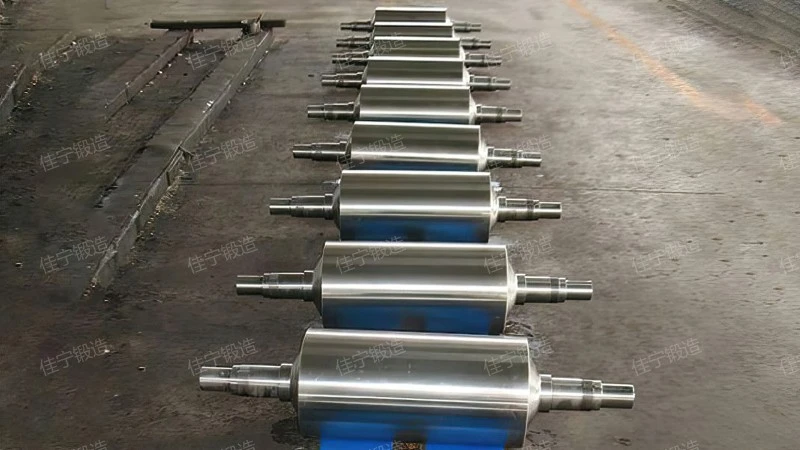
To illustrate the decision-making process, consider a recent project by a European wind turbine OEM that required 850 short shafts (length 420 mm, diameter 180 mm, material 18CrNiMo7-6 per EN 10084) for a 6 MW offshore gearbox. The OEM initially approached three manufacturers. Manufacturer A had competitive pricing but lacked experience with case-hardened shafts requiring 2 mm effective case depth. Manufacturer B had strong heat treatment capabilities but struggled with concentricity tolerance of 0.08 mm. Manufacturer C (Jianing Forging) passed all evaluation criteria: they proposed closed-die forging with a 3000-ton press, followed by carburizing at 930°C with oil quench, and performed 100% UT + 100% magnetic particle inspection. They also supplied FEA simulation results showing residual stress levels below 150 MPa. After six months of production, zero dimensional rejections were reported, and fatigue testing confirmed a safety factor of 1.8 at 10^7 cycles. This case underscores the importance of matching manufacturer capabilities to specific application demands—not just price or delivery.
Evaluating Lead Time, Cost Structure, and After-Sales Support
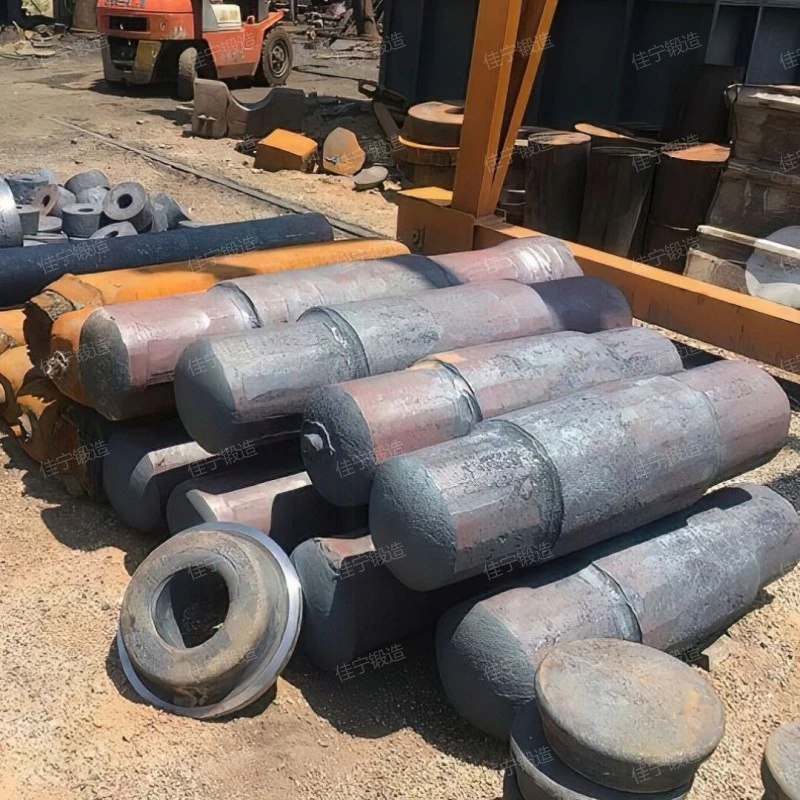
While technical capability is paramount, commercial factors cannot be ignored. Request a detailed cost breakdown that separates forging, heat treatment, rough machining, testing, and packaging. Beware of quotes that lump everything into a single line item—it masks potential cost drivers. For short shaft forgings, the typical cost distribution is 35–40% raw material, 25–30% forging and heat treatment, 20–25% machining, and 10–15% testing and overhead. Lead time should be discussed in phases: tooling creation (3–5 weeks for closed-die), first article inspection (2–3 weeks), and production (4–8 weeks depending on quantity). A manufacturer that offers expedited delivery for an additional fee can be valuable, but ensure they have the capacity—overbooked shops often compromise quality.
After-sales support is another differentiator. Does the manufacturer provide free consultation for design modification? Do they maintain archived records for at least 10 years? Can they supply replacement parts quickly if a production run fails? Jianing Forging assigns a dedicated project manager for each client and offers 24/7 technical support. Their standard warranty covers material and process defects for 24 months, which is above the industry norm of 12 months. Such commitment reduces your total cost of ownership and operational risk.
Summary: A Systematic Approach to Selecting Your Short Shaft Forging Partner
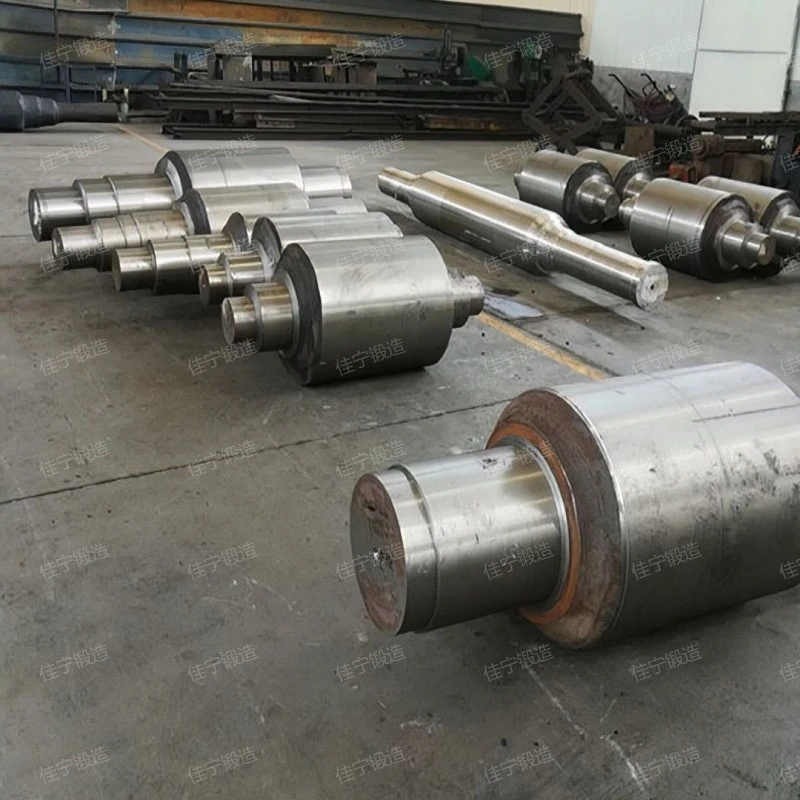
Choosing the right short shaft forging manufacturer is a strategic investment that influences your product's durability, safety, and market competitiveness. Start by defining clear technical specifications; then evaluate each candidate's forging methods, heat treatment precision, NDT capabilities, certifications, material sourcing transparency, and commercial flexibility. Use real-world case references and audit their facilities—either on-site or through virtual tours—to verify the equipment and team you will be working with. A manufacturer like Jianing Forging (咨询热线:176 9623 6479) exemplifies the combination of technical depth, process control, and customer-centric service that the industry demands in 2026. By applying the criteria outlined in this article, you can confidently select a partner that delivers consistent, high-quality short shaft forgings for your most demanding applications.