Selecting the right shaft sleeve forging manufacturer is a critical decision that directly impacts the operational reliability, maintenance cost, and service life of rotating equipment in industries such as mining, cement, power generation, and marine engineering. Shaft sleeve forgings are subjected to extreme loads, abrasive environments, and high-speed rotational forces, so any compromise in material quality, dimensional precision, or heat treatment consistency can lead to premature failure, unplanned downtime, and significant financial losses. As global demand for high-performance industrial components continues to grow—the forging market is projected to reach approximately USD 98.7 billion by 2026, according to recent industry analyses—procurement professionals and plant engineers face an increasingly complex landscape of suppliers, each claiming superior capabilities. To navigate this landscape effectively, decision-makers must evaluate potential makers based on rigorous technical criteria, proven process control, and long-term partnership value. This article provides a structured framework for choosing a shaft sleeve forging maker, drawing on engineering best practices, metallurgical principles, and real-world application experience, while highlighting how Jianing Forging aligns with these standards to deliver consistent value.
Understanding Shaft Sleeve Forging Requirements
Shaft sleeves, also known as wear sleeves or shaft protective sleeves, are cylindrical components press-fitted or shrunk onto rotating shafts to protect the shaft surface from wear, corrosion, and seal damage. Depending on the application, these parts must withstand radial loads, thermal expansion, and sometimes high-frequency vibration. The forging process is preferred over casting or machining from bar stock because it refines the grain structure, eliminates porosity, and improves mechanical anisotropy. A reliable shaft sleeve forging maker should demonstrate a thorough understanding of applicable material standards—such as ASTM A182 (for low-alloy steel), AISI 4140, 4340, or 17-4PH stainless steel—and be capable of tailoring chemical composition and mechanical properties to specific operating conditions. For example, in a slurry pump application, the sleeve might require higher hardness and abrasion resistance, while a turbine application demands excellent fatigue strength and dimensional stability at elevated temperatures.
Key Criteria for Evaluating a Forging Maker
When shortlisting potential manufacturers, consider the following five pillars of evaluation: metallurgical expertise, forging process capability, quality assurance systems, delivery and lead-time performance, and post-sale technical support. Each pillar plays a distinct role in determining whether the final product will meet or exceed performance expectations.
1. Metallurgical Expertise and Material Selection
An experienced maker begins with the right material grade and heat treatment regimen. For shaft sleeve forgings, common steel grades include medium-carbon alloy steels (e.g., 4140, 4340) tempered to achieve hardness in the range of 250–350 HB, or stainless steels (e.g., 410, 17-4PH) for corrosion-resistant environments. The maker should provide a detailed Material Test Certificate (MTC) listing chemical composition, tensile strength, yield strength, elongation, reduction of area, and impact values at operating temperature. Advanced makers also conduct hardenability testing (Jominy curve) to predict through-hardness consistency, which is crucial for sleeves with large cross-sections. Jianing Forging, for instance, sources steel from ISO 9001-certified mills and performs in-house spectrometric analysis on every heat to verify compliance with customer specifications. This step eliminates the risk of material substitution, a common source of field failures.
2. Forging Process Control and Dimensional Precision
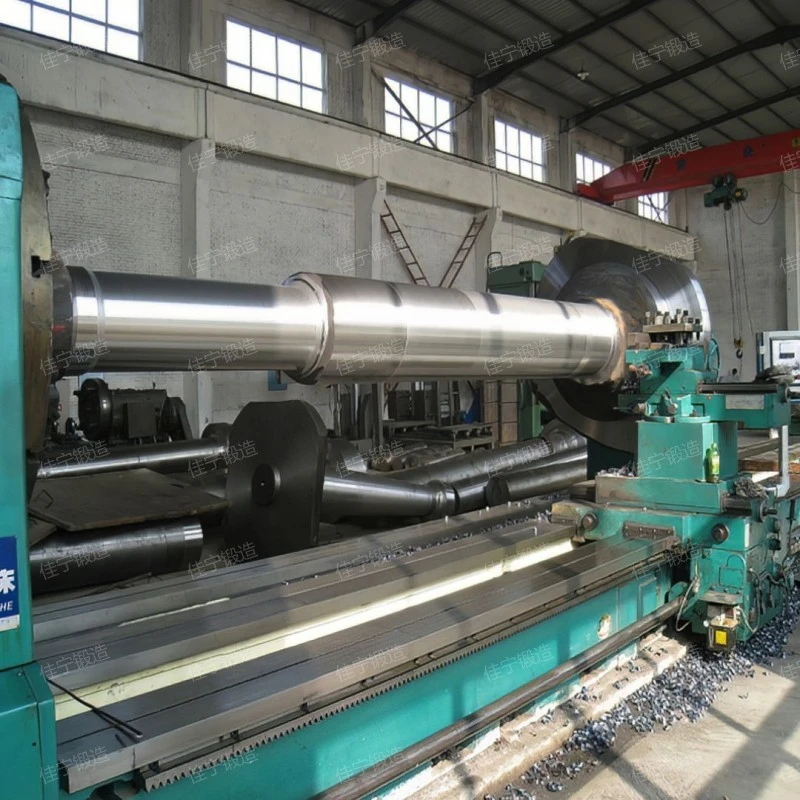
The forging ratio—typically 3:1 to 5:1 for shaft sleeves—directly influences grain refinement and internal soundness. A competent maker uses finite element analysis (FEA) to optimize die design and reduce tooling trial cycles. After forging, the part undergoes normalization followed by quenching and tempering (QT) in controlled atmosphere furnaces to minimize decarburization and surface scaling. Dimensional tolerances for shaft sleeve forgings are often specified at ±0.5% of nominal diameter or better, with surface roughness ≤ 6.3 µm Ra for immediate use or ≤ 1.6 µm Ra if finish machining is required. The maker should provide ultrasonic testing (UT) per ASTM A388 to detect internal discontinuities larger than 1/8-inch equivalent flaw size, and magnetic particle inspection (MT) for surface flaws. Jianing Forging operates a CNC-controlled open-die and closed-die forging line with real-time temperature monitoring, ensuring that each sleeve achieves uniform grain flow parallel to the shaft axis, which enhances fatigue resistance.
Quality Assurance and Certifications
Third-party certifications serve as independent validation of a maker's quality management system. Look for certifications such as ISO 9001:2015 (quality management), ASME (American Society of Mechanical Engineers) stamps for pressure-containing components, and PED 2014/68/EU for European markets. Additionally, industry-specific approvals like API Q1 for oil and gas or NORSOK M-650 for offshore applications can be valuable. A reliable maker maintains a comprehensive quality manual that includes incoming raw material inspection, in-process inspection of forging and heat treatment parameters, final dimensional inspection using coordinate measuring machines (CMM), and nondestructive testing (NDT) reports. The quality department should retain all documentation for at least ten years to support traceability. Jianing Forging holds ISO 9001, and its internal quality system includes statistical process control (SPC) charts for key parameters such as forging temperature, soak time, and quench rate. This level of discipline reduces process variability and enhances product consistency across batches.
Lead Time, Capacity, and Supply Chain Resilience
Shaft sleeve forgings are often custom-engineered, so lead time depends on die fabrication (if new), material availability, and production scheduling. A typical lead time for a standard-grade sleeve is 6–8 weeks, while more complex alloys or oversized parts may require 10–12 weeks. The maker should have multiple forge presses (e.g., 1,600-ton, 3,000-ton capacity) to accommodate different part sizes, and preferably maintain an inventory of common steel grades to shorten procurement cycles. Supply chain resilience is equally important; a manufacturer that sources raw material from diversified suppliers and maintains a safety stock of critical steel grades can better weather global disruptions. Jianing Forging operates a 60,000 m² facility with seven forging lines, including a 5,000-ton hydraulic press capable of producing forgings up to 8 metric tons, and maintains a stock of over 500 tons of alloy steel in its warehouse. This capacity allows the company to offer competitive lead times even for rush orders, a factor that plant managers find particularly valuable during turnaround seasons.
Case Study: Application in a Cement Mill
To illustrate the importance of proper maker selection, consider a recent project from a cement plant in Southeast Asia that experienced recurring sleeve failures on the kiln drive shaft. The sleeves were wearing out after only 8 months of operation, causing seal leakage and bearing contamination. Analysis revealed that the original manufacturer had used a low-alloy steel with inadequate hardenability, resulting in a soft core that could not support the surface hardness layer. The plant switched to Jianing Forging, which recommended AISI 4340 steel with a quench-and-temper schedule calibrated to achieve 320 HB uniform through the cross-section. The new sleeves were ultrasonically inspected and showed no internal flaws. After installation, the sleeves surpassed 24 months of continuous operation with only minor surface wear, reducing the plant’s annual replacement cost by 60%. This case underscores how a maker with strong metallurgical knowledge can diagnose root causes and deliver a solution that significantly extends component life.
Post-Sale Technical Support and Partnership
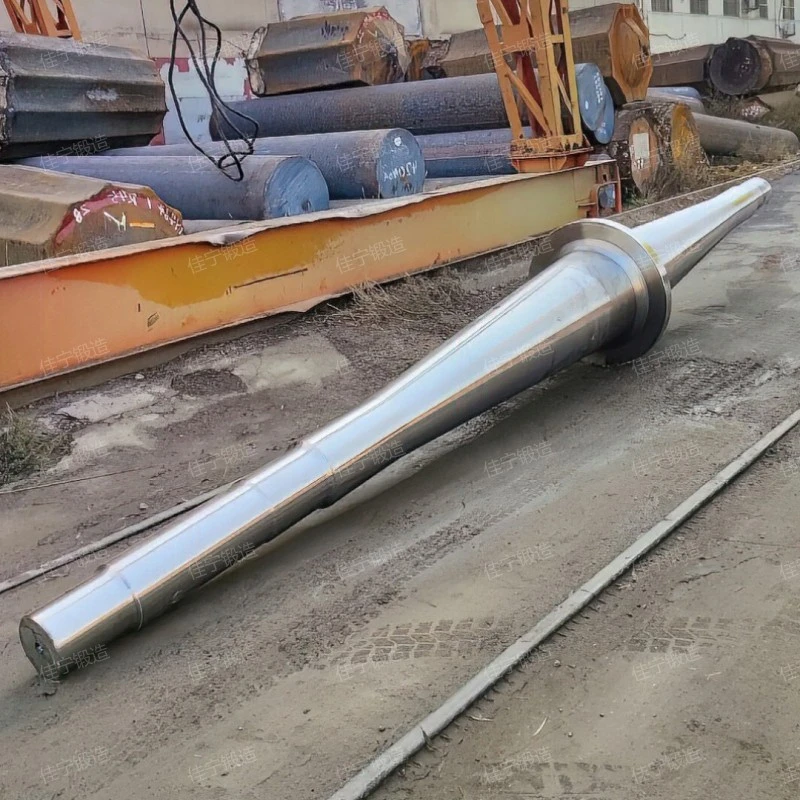
The relationship with a forging maker should not end at delivery. Look for suppliers that offer engineering support for installation procedures, shrink-fit calculations, and on-site troubleshooting. A responsive maker should be able to provide a revised heat treatment cycle or alternative material grade if field conditions change—for example, if the operating temperature rises above initial design specifications. Jianing Forging assigns a dedicated project engineer for each custom order, providing direct access to the design and heat treatment team. This collaborative approach helps clients optimize the sleeve design for weight reduction without compromising strength, which can translate to lower shaft inertia and energy savings. The company also maintains a database of over 2,000 successful sleeve forging designs, enabling rapid response to similar inquiries.
How to Start the Selection Process
Begin by preparing a detailed technical inquiry that includes: (a) shaft diameter and length, (b) operating RPM, (c) maximum radial and axial loads, (d) ambient and operating temperature range, (e) media (slurry, steam, seawater, etc.), (f) desired hardness range, and (g) required certifications. Send this inquiry to two to four candidates and evaluate their responses against the criteria described above. Request references from customers in similar industries and, if possible, arrange a factory audit to observe their forging, heat treatment, and NDT operations firsthand. A well-established maker will welcome such visits and be transparent about their capabilities and limitations.
Conclusion: Making an Informed Choice
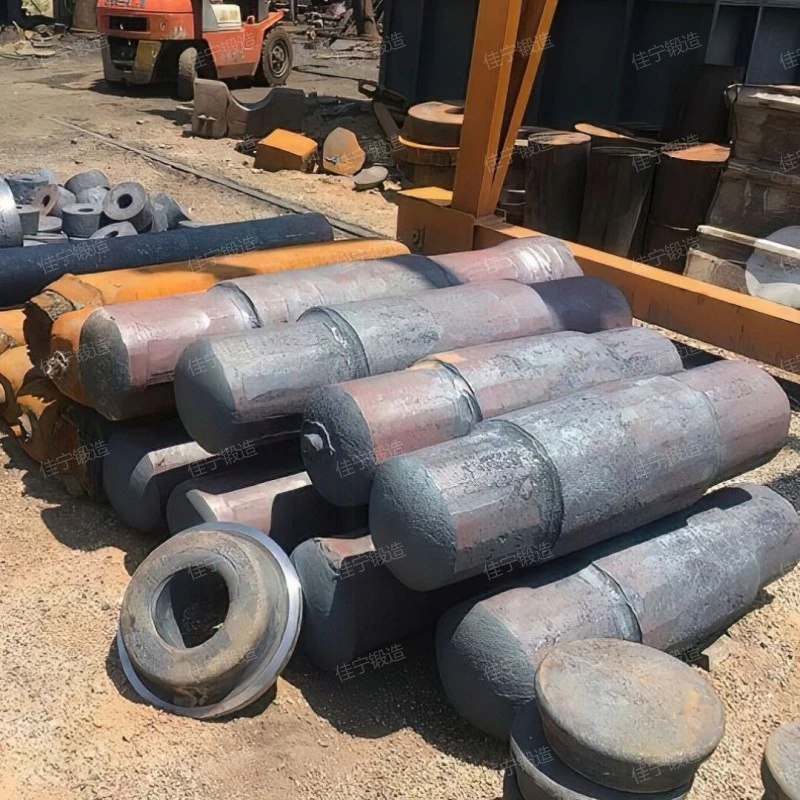
Choosing a shaft sleeve forging maker is not a transactional purchase—it is a strategic decision that influences equipment reliability and maintenance budgets over years of service. By prioritizing metallurgical accuracy, robust process control, independent quality certifications, and demonstrated technical support, industrial buyers can mitigate the risk of premature failure and maximize return on investment. Jianing Forging has served the global industrial market for over two decades, delivering custom shaft sleeve forgings to customers in more than 30 countries across sectors such as mining, cement, power, marine, and oil & gas. With a team of engineers who understand the interplay between material science and operational conditions, the company offers a reliable partnership for demanding applications. Procurement managers and plant engineers are invited to discuss their specific requirements and receive a tailored proposal. For inquiries, contact Jianing Forging directly (consultation hotline: 176 9623 6479) to speak with a technical specialist who can guide you through material selection, forging design, and delivery planning. Making the right choice today will pay dividends in reduced downtime and extended equipment life for years to come.