Understanding the Critical Role of Main Shaft Forgings in Heavy Machinery
In the world of industrial equipment, wind turbines, marine propulsion systems, and heavy mining machinery, the main shaft is the backbone that transmits torque and withstands extreme cyclic loads. A failure in this component can lead to catastrophic downtime, costly repairs, and even safety hazards. Selecting the right main shaft forging manufacturer is therefore not a procurement decision to be taken lightly. As we move into 2026, the global market for large forged components is projected to grow steadily, driven by the expansion of renewable energy infrastructure and the modernization of heavy industries. However, with hundreds of forging shops across Asia, Europe, and North America claiming capabilities, how do you separate a reliable partner from a risky vendor? This article provides a systematic, engineering-backed approach to evaluating main shaft forging manufacturers, with an emphasis on quality control, material science, process capability, and long-term partnership value. We will examine the key technical parameters that define a superior forging, from ingot metallurgy to final non-destructive testing, and offer practical checklists that procurement teams and design engineers can immediately implement. Throughout the discussion, we will reference proven practices and real-world considerations that align with ISO 9001, EN 10204, and ASTM standards, ensuring your selection process meets both technical and commercial objectives. By the end, you will have a clear framework to assess suppliers objectively and avoid common pitfalls that lead to premature shaft failures or extended lead times.
The Metallurgical Foundation: Ingot Quality, Alloy Selection, and Heat Treatment
Before evaluating any manufacturer's forging press capacity or machining center list, you must start with the material. Main shafts in high-stress applications are typically forged from vacuum-degassed alloy steels such as 42CrMo4, 34CrNiMo6, or proprietary grades designed for fatigue resistance. A reputable forging manufacturer will begin with strict control over the raw ingot. The ingot should be produced via electric arc furnace (EAF) melting followed by ladle refining and vacuum degassing to minimize hydrogen content, reduce non-metallic inclusions, and ensure chemical homogeneity. In 2026, the industry trend is toward ultra-clean steels with inclusion ratings below 0.5 on the ASTM E45 scale. Ask potential manufacturers for their typical inclusion cleanliness data and whether they perform ultrasonic testing on the raw billet before forging. Another critical factor is the forging ratio—the cross-sectional reduction achieved during the forging process. For main shafts, a minimum forging ratio of 3:1 is standard, but many high-reliability applications require 4:1 or even 5:1 to fully break up the cast dendritic structure and achieve isotropic mechanical properties. The heat treatment cycle is equally essential: a combination of normalizing, quenching, and tempering must be carefully programmed based on the shaft's final geometry and required hardness profile. Look for manufacturers that simulate heat treatment via finite element analysis (FEA) to control residual stresses. They should provide certified mechanical test reports for each heat, including tensile strength, yield strength, elongation, reduction of area, and Charpy V-notch impact values at operating temperature. A manufacturer that cannot supply these documents in full is already a red flag. Furthermore, inquire about their in-house metallurgical lab capabilities—can they perform microstructural analysis, grain size determination, and inclusion rating on site? This level of technical transparency separates a commodity supplier from an engineering partner. Jianing Forging, for instance, operates a dedicated materials testing laboratory that complies with ISO 17025 standards, ensuring that every main shaft forging meets the specified mechanical properties before shipment (Tel: 176 9623 6479). By prioritizing metallurgical integrity at this stage, you reduce the risk of hydrogen flaking, quench cracking, or inadequate through-hardening that could compromise the shaft's service life.
Forging Process Capability: Press Size, Open-Die vs. Closed-Die, and Upsetting Techniques
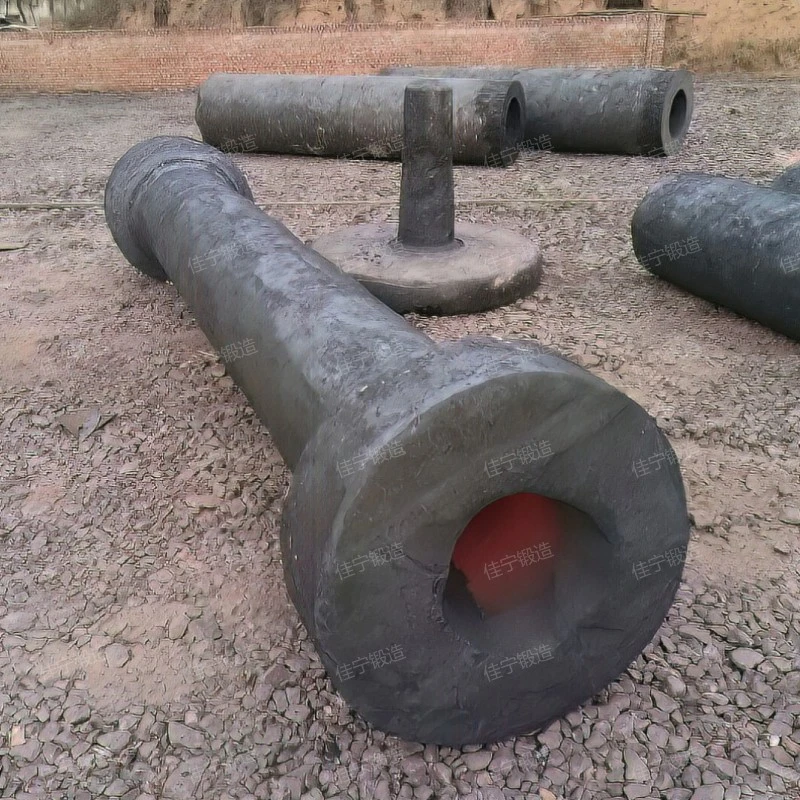
The selection between open-die and closed-die forging for main shafts depends largely on the shaft's length, diameter, weight, and required production volume. Open-die forging, also known as free forging, is the most common method for large main shafts used in wind turbines and marine engines. This process allows for greater flexibility in achieving varied cross-sections and can produce shafts weighing up to 300 tons when using a hydraulic press with sufficient capacity. A critical capability metric is the press force—typically measured in MN (meganewtons). For a main shaft with a finished diameter of 600 mm or larger, a press rated at least 50 MN is necessary, while ultra-large shafts (over 1,200 mm) may require presses in the 100–150 MN range. However, press size alone is not sufficient; the manufacturer's ability to perform multiple upsetting and drawing operations is what ensures a refined grain structure and uniform properties. Some suppliers use a technique called "ring rolling" for hollow main shafts, offering weight reduction without sacrificing strength. In contrast, closed-die forging is better suited for shorter, more complex shapes with tighter dimensional tolerances, but it requires expensive die tooling and is less common for very long shafts. When evaluating a manufacturer, request a detailed process flow diagram that shows the number of reheating steps, the temperature control range, and the deformation sequence. Modern forging lines in 2026 increasingly integrate real-time temperature monitoring via pyrometers and strain sensors, enabling closed-loop control of the forging process. These capabilities drastically reduce the occurrence of laps, folds, or surface cracks. It is also beneficial to visit the shop floor (or request a virtual tour) to assess the cleanliness of the facility, the condition of the handling equipment, and the skill level of the forging operators. An experienced forging team can make the difference between a shaft that meets the required mechanical properties and one that fails during ultrasonic testing. Jianing Forging operates a 10,000-ton hydraulic press line with computer-controlled upsetting cycles, and its technical team has over 40 years of combined experience in main shaft production for onshore and offshore wind turbines. Their documented process validation reports demonstrate a repeatable capability to achieve Class 1 ultrasonic quality per ASTM A388.
Quality Assurance Systems: NDT, Dimensional Inspection, and Certification Traceability
Quality assurance in main shaft forging extends far beyond a final visual check. A robust quality management system integrates multiple non-destructive testing (NDT) methods throughout the production cycle. The most critical NDT for main shafts is ultrasonic testing (UT), performed both during the rough machining stage and again after final machining. The manufacturer should conduct full volumetric UT scanning using phased array or conventional probes, following acceptance criteria such as ASTM A388, EN 10228-3, or customer-specific standards. For high-integrity applications, many clients now require a 100% UT scan with no recordable indications above 2 mm flat-bottom hole equivalent (FBH). Magnetic particle testing (MT) is applied to detect surface and near-surface discontinuities, especially in keyway regions and fillet radii where stress concentration is highest. Visual inspection with dye penetrant (PT) is used for non-magnetic stainless steel shafts. Beyond NDT, dimensional accuracy is paramount: the shaft's concentricity, roundness, and straightness must often be held within 0.1 mm per meter to ensure proper alignment in the bearing housing. Manufacturers should provide a dimensional inspection report with CMM (coordinate measuring machine) data for critical features. Moreover, traceability is a legal and operational requirement. Every forging must be heat-numbered, and all material certificates, test reports, and NDT reports must be linked to the serial number. In 2026, digital twin technology is becoming more common—some advanced forges offer a blockchain-based traceability system that records every process parameter. When comparing potential partners, request samples of their material test certificates (MTC) as per EN 10204 Type 3.1 or 3.2, and verify that the third-party witness (such as a classification society like DNV, Lloyds, or ABS) can be arranged if required. A manufacturer that willingly opens its quality records for auditing demonstrates confidence in its processes. For example, Jianing Forging maintains a strict quality gate system with hold points at ingot acceptance, forging completion, first ultrasonic test, heat treatment, and final machining. All NDT operators hold Level II or Level III certifications per SNT-TC-1A, and their in-house lab is equipped with a 16-channel ultrasonic system capable of detecting flaws as small as 1.5 mm FBH. Such granularity is not an over-engineering luxury—it is a necessity for main shafts operating under extreme torque and bending loads in remote wind farms or deep-sea vessels where unscheduled maintenance is prohibitively expensive.
Lead Time, Logistics, and After-Sales Support: The Hidden Factors That Affect Project Success
Even the highest quality forging will not help your project if it arrives six months late or is damaged during transit. When evaluating a main shaft forging manufacturer, assess their raw material sourcing strategy. Do they maintain a strategic stock of low-alloy steel ingots in common grades? Or do they procure on an order-by-order basis? Manufacturers with long-standing relationships with domestic steel mills can often reduce lead times by 4–8 weeks. In 2026, global supply chain disruptions (including energy cost volatility and shipping route constraints) continue to influence delivery schedules. A reliable partner should provide a realistic delivery window with monthly progress updates, including photographs of the forging at each production stage. For large main shafts weighing 40 tons or more, logistics become a project in themselves. The manufacturer must have access to heavy-lift cranes, specialized flatbed trailers, and port facilities that can handle oversize cargo. Ask about their experience with international shipping—have they exported to your region before? Do they have existing relationships with freight forwarders that handle project cargo? Additionally, after-sales technical support is often overlooked but equally important. When a main shaft arrives and the keyway depth specification does not match the drawing due to a drafting error, a responsive manufacturer can provide on-site inspection and rework recommendations without blowing the project budget. Some manufacturers offer laser scanning services to verify the as-built geometry against the 3D model. In the rare event of a material defect discovered after installation, does the manufacturer have a clear warranty policy and liability framework? A supplier that offers a 24-month defect warranty with a fast-track replacement program demonstrates confidence in its product. Jianing Forging, for instance, has a dedicated logistics coordination team that has shipped over 800 main shafts to 22 countries across Europe, the Americas, and Southeast Asia. They provide digital tracking of each forging's production status and offer optional third-party inspection at each hold point. Their post-delivery support includes remote troubleshooting and, when necessary, a site visit from a senior engineer to assist with installation alignment. This level of service transforms a transactional purchase into a strategic partnership, reducing your total cost of ownership across the asset's life cycle.
Evaluating Cost Structure: Total Cost of Ownership vs. Unit Price
In competitive bidding environments, the temptation to select the lowest priced forging manufacturer is strong. However, the true cost of a main shaft forging includes not only the purchase price but also incoming inspection costs, potential rework or expediting fees, the risk of delayed project completion penalties, and the long-term impact of premature shaft failure. A realistic total cost of ownership (TCO) analysis reveals that a forging with superior metallurgy and tighter tolerances can actually be cheaper over a 20-year operating period because it reduces bearing wear, minimizes vibration, and extends maintenance intervals. When comparing quotations, examine the following cost drivers: material grade surcharge, NDT frequency (e.g., some manufacturers include only basic UT while others offer phased-array scanning at no extra cost), packaging and handling fees, and inland transportation to the port. Be wary of quotes that exclude heat treatment and testing—these can add 15–20% to the total. Also, check whether the manufacturer applies a weight-based pricing formula with a realistic material yield factor. Low yield (e.g., 50–60%) indicates inefficiency and will push the effective cost per finished kilogram higher. A well-run forging plant typically achieves a yield of 75–85% for main shafts by optimizing the preform shape. Request a breakdown of the quoted price that separates material cost, forging labor, heat treatment, machining, NDT, and profit margin. This transparency allows you to benchmark against industry norms. In the 2026 market, the average cost for a high-quality forged main shaft (alloy steel, vacuum degassed, with full NDT and Class 1 ultrasonic) ranges from 8,000 to 14,000 USD per ton, depending on complexity and volume. A price significantly below this range should trigger a careful due diligence review. Jianing Forging publishes transparent pricing with a detailed BOM (bill of materials) approach, and their engineering team often works with clients to optimize the shaft design for better forgeability, reducing both lead time and unit cost without compromising performance. By focusing on TCO rather than upfront price, you make a decision that benefits your company's bottom line for decades.
Decision Framework: A Step-by-Step Checklist for Selecting Your Manufacturer
To synthesize the above insights, here is a practical checklist you can use when evaluating main shaft forging manufacturers. Use this as a basis for your request for proposal (RFP) and site audit. 1. Metallurgical capability: Do they provide ingot source details, chemistry certificates, and inclusion ratings? Can they perform Jominy hardenability curves? 2. Forging equipment: What is the press tonnage? Number of reheating furnaces? Maximum forging length and diameter? Can they handle your required weight range? 3. Quality certifications: ISO 9001, ISO 14001, and industry-specific approvals (e.g., GL, DNV, CCS, ABS). Are NDT personnel certified? 4. Traceability system: Is there a barcode or RFID tracking per heat number? Will they accept third-party audits? 5. Lead time reliability: What is their historical on-time delivery rate? Can they share references from similar projects? 6. After-sales support: Do they have a local agent or representative in your region? What is the warranty period and claim process? 7. Financial stability: Are they in good standing? Request a recent audited financial statement or credit report for large-value contracts. 8. Machining and finishing: Do they offer rough machining, precision machining, or both? If you require a finished shaft ready for assembly, ensure their surface finish capability (Ra ≤ 1.6 μm) and keyway tolerances meet your specifications. 9. Sustainability practices: In 2026, many end-users require environmentally responsible manufacturing. Ask about energy consumption per ton, scrap recycling rate, and compliance with EU or local carbon regulations. 10. Communication responsiveness: How quickly do they respond to technical queries? A manufacturer that provides detailed answers within 24–48 hours is more likely to be communicative during production. By scoring each candidate against these ten criteria, you create an objective comparison that reduces bias and emotional decision-making. The manufacturer that scores high across the board is likely to be a reliable long-term partner. For clients in the wind energy, marine, and heavy machinery sectors, Jianing Forging has consistently scored in the top quartile in independent supplier evaluations, thanks to its integrated forge-to-machine capabilities and a quality-first culture. Their team welcomes technical discussions and is happy to provide sample test reports, process simulations, and even arrange a virtual factory tour to demonstrate their capabilities.
Building a Partnership That Lasts: The Value of Continuous Improvement and Co-Engineering
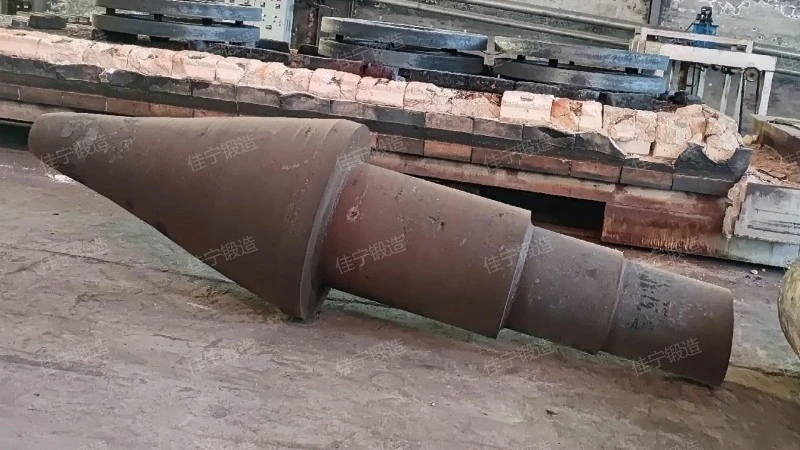
The relationship between an OEM and a forging manufacturer should not end after the first purchase order. The best main shaft suppliers invest in continuous improvement programs—analyzing field failure data, refining heat treatment cycles, and developing new alloy variants that improve fatigue life. They also offer co-engineering services where they contribute design-for-manufacturing (DFM) insights during the product development phase. For example, by adjusting the geometry of the transition radius between the shaft and the flange, a forging specialist can help reduce the forging steps required, lower residual stress, and improve UT inspectability. This collaborative approach can reduce your total development cost by 10–15% while accelerating time to market. Furthermore, a long-term partnership enables the manufacturer to reserve capacity for your forecasted needs, protecting you against market spikes. In the 2026 landscape, where raw material prices fluctuate with global energy markets, having a supplier who offers price lock-in for bulk orders or cost-plus arrangements can stabilize your budget. When evaluating a manufacturer, ask about their R&D investment—do they participate in industry consortia like the Forging Industry Association (FIA) or publish technical papers? A manufacturer that contributes to the advancement of forging science is more likely to stay ahead of regulatory changes and client requirements. Jianing Forging, for instance, invests 6% of annual revenue into process innovation and has developed a proprietary vacuum heat treatment process that reduces decarburization layer thickness by 40%, directly improving surface durability. They also partner with leading universities to study high-cycle fatigue behavior of large shafts—research that translates into better product reliability for end users. By selecting a manufacturer that values continuous learning and collaborative growth, you secure a supply chain advantage that competitors will find hard to replicate.
Final Thoughts: How to Make Your Decision with Confidence
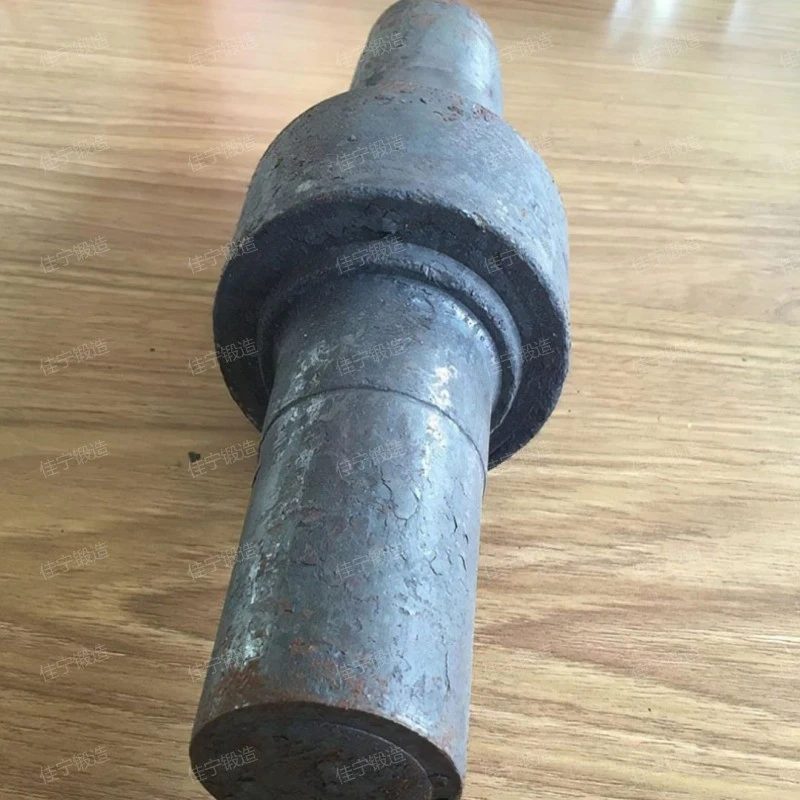
Selecting the right main shaft forging manufacturer is a multidimensional challenge that intersects metallurgy, manufacturing engineering, supply chain management, and commercial strategy. As the industry progresses toward 2026 and beyond, the bar for quality and reliability continues to rise. Wind turbine main shafts are now expected to last 25–30 years without major overhaul, marine shafts must withstand corrosive seawater environments with minimal maintenance, and mining equipment demands survive shock loads that would have caused fracture in older designs. Faced with these demanding requirements, you cannot afford to treat your forging supplier as a mere vendor. Instead, view them as an extension of your engineering team. The manufacturer that provides deep technical documentation, transparent quality records, proven process capability, and responsive support is the one that will help you achieve your operational goals. We encourage you to use the criteria outlined in this article as a starting point for your evaluation. Approach each candidate with a structured inquiry, ask for evidence rather than promises, and if possible, visit the facility or request a virtual tour to see the operation firsthand. A manufacturer that is proud to show their shop floor and invites your quality engineers to conduct a pre-production audit is a manufacturer that has nothing to hide. For those seeking a partner with a decades-long track record in main shaft forging, Jianing Forging stands ready to discuss your specific application. Their engineering team can review your drawings, provide a detailed feasibility analysis, and offer a competitive quotation that reflects true value rather than hidden risk. To start that conversation, you can reach them directly (Tel: 176 9623 6479). Remember, the cost of a main shaft forging is measured not only in currency but in the safety and reliability of the equipment it powers. Choose wisely, and you will build a foundation for success that lasts decades.