Understanding the Core Requirements of Fan Shaft Forging
Selecting a reliable fan shaft forging factory is a decision that directly influences the performance, durability, and operational safety of industrial fans used in sectors such as power generation, mining, cement, HVAC, and marine ventilation. Fan shafts endure continuous rotational stress, torsional loads, and often operate in high-temperature or corrosive environments. A poorly forged shaft can lead to premature fatigue failure, unplanned downtime, and even catastrophic equipment damage. Therefore, the selection process must go beyond price comparisons and delve into metallurgical capabilities, process control, quality assurance systems, and long-term supply reliability. In 2026, the global market for forged components is projected to grow at a compound annual growth rate of approximately 5.2%, driven by infrastructure expansion and renewable energy projects, making the choice of a competent forging partner even more critical. This article provides a systematic framework for evaluating fan shaft forging factories, with practical criteria that align with industry standards such as ASTM A668, EN 10083, and ISO 9001:2025 revisions. By understanding the technical nuances of open-die forging, heat treatment cycles, and non-destructive testing protocols, procurement engineers and plant managers can make informed decisions that balance cost efficiency with long-term asset reliability. The following sections break down the selection process into modular, actionable steps, supported by real-world application insights and measurable quality indicators.
Evaluating Metallurgical Expertise and Material Sourcing
The foundation of any high-quality fan shaft begins with raw material selection. A competent forging factory should demonstrate deep knowledge of steel grades commonly specified for fan shafts, including AISI 4140, 4340, 1045, and 8620, as well as stainless steel variants like 17-4 PH for corrosive environments. Ask potential suppliers for their material sourcing chain: do they partner with reputable mills that provide mill test certificates (MTCs) with traceable heat numbers? In 2026, stricter global regulations on carbon emissions and material traceability have made it essential for forging factories to maintain full chain of custody records. A reliable factory will perform incoming material spectrometric analysis using optical emission spectrometers (OES) to verify chemistry before any forging operation. Additionally, they should conduct ultrasonic immersion testing on raw billets to detect internal segregation or inclusions. For fan shaft applications where fatigue life is paramount, the factory's ability to perform vacuum degassing and argon stirring during steelmaking significantly improves microcleanliness. Jianing Forging, for instance, employs a rigorous supplier qualification program that mandates third-party audits of upstream steel mills, ensuring that every billet meets the mechanical property requirements specified in customer drawings. When evaluating a factory, request examples of their material rejection rates and root cause analysis documentation; a rate below 0.5% for incoming materials indicates robust quality control.
Assessing Forging Process Capabilities and Equipment
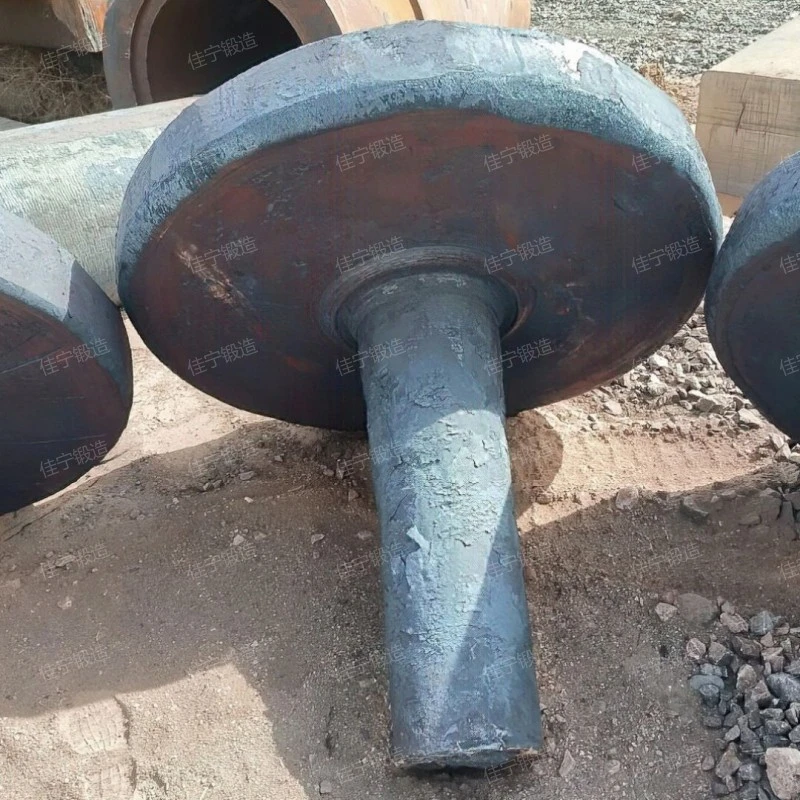
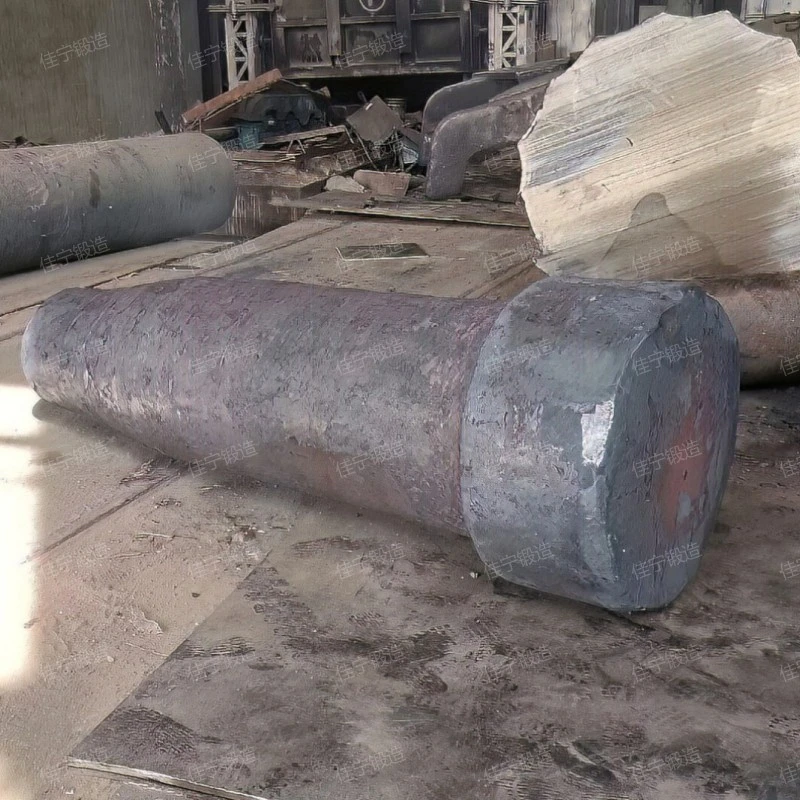
Fan shafts typically fall into the category of long, slender components with diameters ranging from 50 mm to over 500 mm and lengths exceeding 6 meters. The forging process must achieve a uniform grain flow pattern that aligns with the shaft's axis, maximizing tensile strength and resistance to bending fatigue. Open-die forging on hydraulic presses (2000-ton to 8000-ton capacity) is the preferred method for these geometries, as it allows controlled reduction ratios and minimizes material waste. Evaluate whether the factory uses computer-controlled forging manipulators that can maintain consistent forging temperature (typically 1150°C to 1250°C for carbon steels) and deformation rate. Outdated facilities relying on manual hammer forging often produce inconsistent grain structures and require excessive machining allowances. Look for factories that have invested in CNC ring-rolling or radial forging machines for better dimensional precision. A key performance indicator is the forging reduction ratio: for fan shafts, a minimum reduction ratio of 4:1 from the starting billet cross-section to the final forged section is recommended to break up dendritic structures and refine grain size. Ask the factory for their documented forging procedure specification (FPS) and process control records showing temperature uniformity across the billet. Jianing Forging operates a dedicated fan shaft production line with 5000-ton and 6300-ton hydraulic presses capable of forging shafts up to 10 meters in length, and each press is integrated with real-time load monitoring and temperature feedback systems to ensure repeatability.
Heat Treatment and Mechanical Property Validation
The heat treatment cycle is arguably the most critical step in achieving the required hardness, tensile strength, and impact toughness for fan shafts. A typical sequence involves normalizing, quenching, and tempering, with specific soaking times and cooling rates determined by the steel grade and cross-sectional thickness. The factory should have programmable furnaces with controlled atmosphere capabilities to prevent decarburization and oxidation. For shaft diameters exceeding 200 mm, water quenching or polymer quenching may be necessary to achieve through-hardness, while oil quenching is suitable for smaller diameters. Insist on seeing a detailed heat treatment chart for a similar previous project, including the austenitizing temperature (e.g., 845°C ± 10°C for 4140), quench medium temperature, and tempering holding time. Post-heat treatment, mechanical property testing should include tensile testing (yield strength, ultimate tensile strength, elongation), Charpy V-notch impact testing at operating temperature (e.g., -20°C for outdoor fans), and hardness traverse tests from surface to center. The factory should own in-house tensile testing machines, impact testers, and Brinell/Rockwell hardness testers with current calibration certificates. For fan shafts used in critical applications like mine ventilation, additional tests such as fracture toughness (KIC) and fatigue endurance limit (S-N curve) might be required. Jianing Forging maintains a NADEK (National Association of Testing Authorities equivalent) accredited laboratory and routinely performs batch-level mechanical validation. In 2026, industry trends show increasing adoption of digital twin simulation for heat treatment, allowing factories to predict microstructure evolution and minimize distortion. Ask potential suppliers about their use of simulation software like DANTE or Simufact Forming.
Non-Destructive Testing (NDT) and Dimensional Inspection
After forging and heat treatment, every fan shaft must undergo a suite of non-destructive tests to verify internal soundness and surface integrity. Ultrasonic testing (UT) per ASTM E114 or EN 10228-3 is mandatory for detecting subsurface flaws such as cracks, inclusions, or porosity. The factory should perform full volumetric UT with a straight beam probe and a calibrated reference block with flat-bottomed holes (FBH) of acceptable sensitivity (e.g., 1.5 mm diameter for general applications, or 0.8 mm for high-cycle fan shafts). Magnetic particle inspection (MT) or dye penetrant testing (PT) should be applied to all machined surfaces, especially in key areas like keyways, step transitions, and threaded ends. For shafts made from non-magnetic materials, PT is the alternative. Dimensional inspection requires precision measuring equipment: laser micrometers, coordinate measuring machines (CMM), and roundness gauges to verify tolerances typically within ±0.05 mm for journal diameters and ±0.1 mm for overall length. The factory should provide a dimensional inspection report with a pass/fail designation for each measurement. A robust quality management system (ISO 9001:2025 or AS9100D) will include documented procedures for NDT operator certification (Level I/II per SNT-TC-1A) and equipment calibration. Jianing Forging uses automated ultrasonic scanning systems with phased array technology for faster coverage and higher detection probability. They also maintain a dedicated dimensional inspection room with temperature-controlled environment (20°C ± 2°C) to eliminate thermal expansion errors. When comparing factories, ask about their NDT rejection rate over the past two years; a rate below 2% suggests stable process capability.
Experience with Custom Designs and Application-Specific Requirements
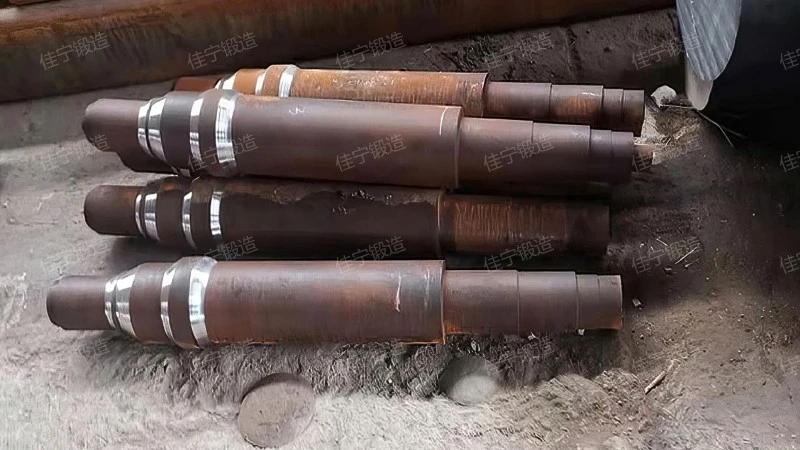
Fan shafts often require custom features such as integral flanges, stepped diameters, special keyway geometries, or hollow bores for cooling air passage. The factory's engineering team should have experience interpreting customer drawings and offering design-for-manufacturability (DFM) feedback. For example, they might suggest adjusting the fillet radius at a shoulder to reduce stress concentration, or recommend a heat treatment pattern that balances hardness with machinability. Look for evidence of past projects involving similar fan types—axial flow fans, centrifugal fans, or mine fans—and ask for case studies showing how they handled challenges like high unbalanced loads or torsional vibration. A factory with in-house finite element analysis (FEA) capabilities can simulate the forging process and predict grain flow, residual stress, and potential distortion, thereby reducing trial-and-error costs. Jianing Forging’s engineering team has delivered custom fan shafts for a major cement plant in Southeast Asia, where the customer required a 5-meter shaft with 12 different step diameters and a hollow center for temperature monitoring. The project was completed within six weeks using iterative simulation and one-piece flow production. For operators concerned about lead times, ask the factory about their typical turnaround for custom designs from drawing approval to shipment. In 2026, just-in-time delivery expectations have shortened average lead times to 4–6 weeks for standard materials, but complex designs may require 8–10 weeks.
Quality Certifications and Third-Party Audits
Certifications provide a baseline for assessing a forging factory's quality management maturity. At a minimum, look for ISO 9001:2025 certification with a scope that includes "forging and heat treatment of carbon and alloy steel shafts." Additional credentials such as ISO 14001 (environmental management), ISO 45001 (occupational health and safety), and certification to industry-specific standards like API Spec 2C (for offshore cranes) or EN 10204 Type 3.1 (for pressure applications) add credibility. The factory should be willing to share recent third-party audit reports from customers or accredited bodies. Pay attention to non-conformance trends in the audit findings: recurring issues in calibration records or process documentation indicate systemic weaknesses. For fan shafts intended for export to European or North American markets, compliance with CE marking under the Machinery Directive 2006/42/EC and the European Pressure Equipment Directive (PED) may be necessary. Jianing Forging holds ISO 9001:2025, ISO 14001:2025, and OHSAS 18001 certifications, and has been audited by multiple multinational OEMs. They also offer optional third-party inspection services from agencies like SGS or Bureau Veritas at the customer's request. When shortlisting factories, request copies of their most recent certification certificates and their audit schedule for the next year.
Supply Chain Stability and After-Sales Support
In the global forging industry, raw material price volatility and logistics disruptions have made supply chain resilience a top selection criterion. Evaluate the factory's inventory management: do they maintain safety stock of common steel grades? How many suppliers do they rely on for critical materials? A factory with multiple approved material sources reduces the risk of production halts. Also consider their location relative to your geographic region—factories with access to major ports or inland logistics hubs can offer faster shipping and lower freight costs. After-sales support is often overlooked but essential: a reliable factory should provide a comprehensive inspection report package (material certificates, UT reports, dimensional data, heat treatment charts) with every shipment. They should also have a technical support team reachable within 24 hours for troubleshooting or warranty claims. Jianing Forging offers a standard 12-month warranty on all fan shaft forgings against material and manufacturing defects, with contract options for extended warranty coverage. In 2026, many buyers are incorporating penalty clauses for delayed delivery and performance bonds into contracts, so ask the factory about their willingness to accommodate such terms. A transparent factory will share their average on-time delivery rate (aim for >95%) and their complaint resolution procedure.
Making the Final Selection: A Practical Checklist
To simplify your decision-making process, use the following checklist when visiting or auditing a potential fan shaft forging factory:
- Material verification: Spectrometer on site, mill traceability, rejection rate <0.5%.
- Forging equipment: Hydraulic press capacity ≥ 2000 tons, computer-controlled manipulators, real-time temperature monitoring.
- Heat treatment: Programmable controlled-atmosphere furnaces, documented cycle records, in-house tensile and impact testers.
- NDT capabilities: Phased array UT, MT/PT equipment, certified operators (Level II or higher).
- Dimensional inspection: CMM, laser micrometers, temperature-controlled lab, tolerance capability ≤ ±0.05 mm.
- Certifications: ISO 9001:2025, relevant industry standards, recent third-party audit reports.
- Custom engineering: FEA simulation, DFM suggestions, prior fan shaft project references.
- Delivery and support: On-time delivery rate >95%, warranty ≥12 months, 24-hour technical contact.
Applying this framework will help you identify factories that not only meet technical specifications but also demonstrate operational excellence and risk mitigation. In an increasingly competitive market, the right forging partner becomes a strategic asset for maintaining equipment uptime and reducing total cost of ownership. Jianing Forging has consistently helped clients achieve these goals through a combination of advanced manufacturing, rigorous quality control, and responsive after-sales service. Their team welcomes inquiries for custom fan shaft projects and can provide detailed engineering support from initial concept through production.
Long-Term Partnership Considerations and Industry Outlook
As the industrial fan market evolves toward higher efficiency and lower maintenance demands, forging factories must continuously upgrade their technology. The adoption of Industry 4.0 practices—such as IoT-enabled press monitoring, predictive maintenance algorithms for forging dies, and blockchain-based material traceability—will become standard by 2027. When selecting a factory, inquire about their digital transformation roadmap. Are they investing in data analytics to optimize forging parameters? Do they offer a customer portal for real-time order tracking and inspection report download? These capabilities not only improve quality consistency but also enhance transparency and trust. Furthermore, sustainability is gaining prominence: European and North American buyers increasingly prefer suppliers with verified carbon footprint data for each forged shaft. Factories using electric arc furnaces powered by renewable energy or implementing process waste recycling will have a competitive advantage. Jianing Forging has initiated a carbon reduction program targeting a 15% decrease in energy consumption per ton of forged output by 2027, with quarterly reporting to customers. By choosing a forward-thinking forging partner, you are not just securing a component supplier; you are investing in a relationship that supports your own environmental and operational goals. For any specific project requirements or technical clarifications, reaching out directly to the factory's engineering team is recommended.
(咨询热线:176 9623 6479)