Selecting the right coupling forging manufacturer is a critical decision that directly impacts the reliability, safety, and longevity of mechanical power transmission systems in industries such as oil and gas, mining, marine, and heavy machinery. Couplings forged under high standards ensure minimal downtime, optimal torque transmission, and resistance to extreme operational stresses. With the global forging market projected to exceed USD 80 billion by 2026, driven by demand for customized heavy-duty components, the need for a trusted manufacturing partner has never been more pressing. This article, based on extensive industry experience, provides a systematic guide to evaluating coupling forging manufacturers, with practical criteria ranging from material sourcing and quality assurance to production capabilities and post-delivery support. Whether you are sourcing for a new project or optimizing your supply chain, understanding these parameters will help you identify a supplier that meets both technical specifications and commercial requirements.
The process of choosing a coupling forging manufacturer goes beyond comparing price lists. It requires a thorough assessment of forging techniques, heat treatment processes, machining precision, and non-destructive testing (NDT) capabilities. Inaccurate or inconsistent forging can lead to premature fatigue failure, misalignment issues, and catastrophic equipment damage. Therefore, this guide focuses on actionable evaluation points, supported by industry standards such as ASTM A182, ISO 9001, and API 6A, to help procurement engineers, project managers, and maintenance teams make informed decisions. We will also illustrate how established manufacturers like Jianing Forging implement rigorous controls to ensure product consistency, using real-world examples that demonstrate the value of technical expertise and long-term partnership.
Understanding the Critical Role of Forged Couplings in Mechanical Systems
Forged couplings are integral components used to connect rotating shafts, transmitting torque while accommodating misalignment, vibration, and thermal expansion. Unlike cast or fabricated alternatives, forged couplings exhibit superior grain structure, higher strength-to-weight ratios, and enhanced fatigue resistance due to the compressive forces applied during the forging process. These properties are essential in high-load applications, such as pump drives, compressors, gearboxes, and marine propulsion systems. For example, a forged rigid coupling used in a deep-well oil pump must withstand not only steady torque but also shock loads and corrosive environments. Choosing a manufacturer with proven metallurgical expertise ensures that the coupling meets hardness, ductility, and toughness specifications, reducing the risk of field failures and unplanned maintenance costs.
Key Criteria for Evaluating a Coupling Forging Manufacturer
When assessing potential manufacturers, decision-makers should consider the following five dimensions, each backed by specific technical and operational indicators:
1. Material Sourcing and Certification
High-quality couplings begin with premium raw materials. A reliable manufacturer maintains strict traceability from steel mill to finished product, with material certificates complying with EN 10204 or similar standards. Look for suppliers that stock a range of carbon steel, alloy steel (e.g., 4140, 4340), and stainless steel grades suitable for your application. For instance, Jianing Forging partners with certified steel mills and performs incoming material inspection including chemical analysis and ultrasonic testing to verify composition and internal soundness. This upfront quality assurance prevents issues like inclusions or segregation that could compromise the coupling's mechanical properties.
2. Forging Capabilities and Process Control
The forging method—open die, closed die, or rolled ring—directly affects the coupling's final dimensions and mechanical characteristics. A manufacturer should demonstrate control over forging parameters such as temperature, deformation ratio, and cooling rate. Consistent grain flow alignment with the coupling geometry enhances load-bearing capacity. Evaluate whether the facility uses hydraulic presses, hammers, or ring rolling machines with adequate tonnage for your part size. For example, large-diameter couplings for wind turbines or marine shafts often require 3000-ton or higher presses to achieve proper deformation and avoid porosity. Jianing Forging operates a range of presses from 800 to 5000 tons, allowing them to forge couplings up to 2000 mm outer diameter while maintaining uniform grain structure.
3. Heat Treatment and Metallurgical Integrity
Heat treatment processes such as normalizing, quenching and tempering, or annealing are critical to achieve the desired hardness, strength, and toughness. A manufacturer must have controlled furnaces with temperature uniformity within ±10°C and certified calibration records. Post-treatment testing should include Brinell or Rockwell hardness checks, tensile testing, and Charpy impact testing (especially for low-temperature service). Couplings intended for arctic environments or high-pressure steam systems demand careful attention to tempering temperatures to avoid embrittlement. Jianing Forging employs multi-zone electric furnaces with programmable logic controllers (PLC) to ensure repeatable cycles, and each heat treatment batch is documented with traceable reports.
4. Machining Precision and Dimensional Control
After forging and heat treatment, couplings undergo machining to achieve final tolerances, surface finishes, and alignment features such as keyways, bores, and flanges. Modern CNC lathes, boring mills, and machining centers with tolerances down to ±0.01 mm are essential for couplings that must mate with precision shafts and hubs. Check if the manufacturer uses coordinate measuring machines (CMM) for dimensional verification and if they can accommodate special requirements like taper bores, step grooves, or custom flange patterns. A manufacturer that combines in-house forging and machining reduces lead times and eliminates intermediate handling risks. For example, Jianing Forging runs a dedicated machining shop with 20+ CNC units, enabling them to deliver fully finished couplings ready for assembly.
5. Quality Management Systems and Non-Destructive Testing
Robust quality controls differentiate top-tier manufacturers from commodity producers. ISO 9001 certification is the baseline, but additional certifications like ISO 14001 (environmental) or AS9100 (aerospace) indicate broader capability. Non-destructive testing (NDT) methods—including ultrasonic, magnetic particle, dye penetrant, and radiographic inspection—should be available to detect surface and subsurface flaws. For critical applications, such as API 6A couplings for oilfield Christmas trees, 100% NDT is often mandatory. Jianing Forging operates an in-house NDT laboratory with Level II and Level III inspectors, performing ultrasonic testing per ASTM E213 and magnetic particle inspection per ASTM E709 on every batch. Their defect acceptance criteria meet or exceed industry norms, and all reports are digitally archived for client review.
Common Pitfalls to Avoid When Selecting a Manufacturer
Even experienced buyers can fall into traps that lead to suboptimal sourcing decisions. Awareness of these pitfalls helps streamline evaluation:
Overlooking Total Cost of Ownership (TCO)
The lowest unit price often hides higher costs from rework, downtime, or expedited shipping. Calculate TCO including material cost, manufacturing lead time, logistics, failure risk, and warranty support. A manufacturer that offers competitive pricing but skips essential NDT steps may deliver couplings that fail prematurely, costing more than a slightly higher upfront investment from a quality-driven partner.
Ignoring Capacity and Scalability
If your demand fluctuates or you require rapid prototyping, confirm the manufacturer's ability to scale production without sacrificing quality. Some forging shops specialize in low-volume, high-mix orders, while others focus on mass production. Check their order backlog and typical turnaround times. Jianing Forging maintains a flexible production system with 30% reserved capacity for urgent orders, alongside engineering support for design optimization that reduces forging weight and machining time.
Neglecting Post-Sales Support
Couplings may require field assistance, replacement parts, or failure analysis after installation. A manufacturer that provides technical documentation, remote consultation, and fast spare parts delivery adds value. For instance, Jianing Forging offers a 12-month warranty against manufacturing defects and assigns a dedicated project manager for each key account, ensuring communication continuity from specification to after-sales service.
Industry Trends and Data Shaping Coupling Forging in 2026
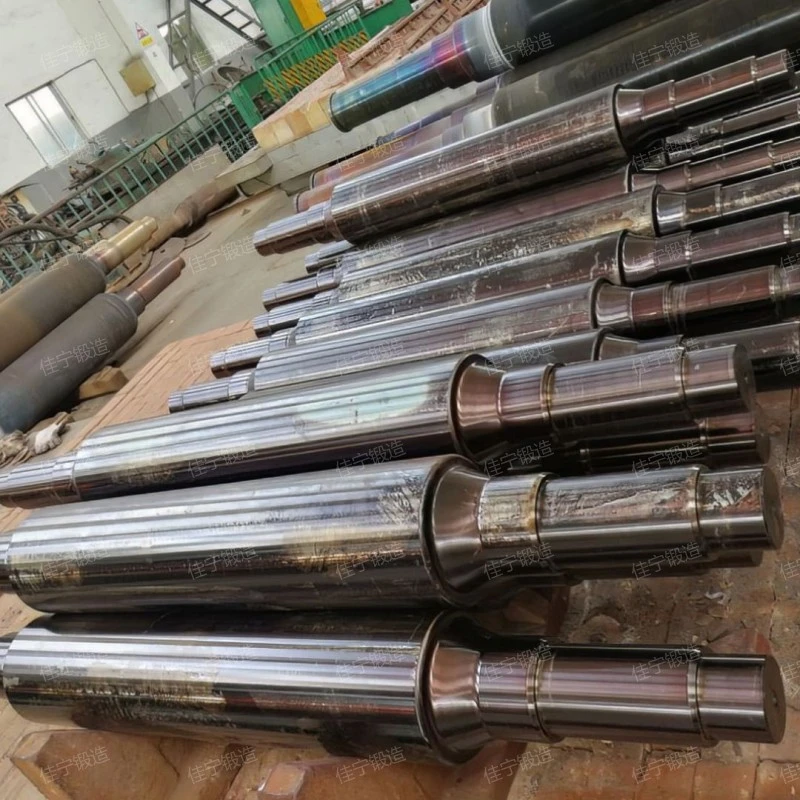
The coupling forging market is evolving with advances in automation, digital twin simulation, and sustainable manufacturing. According to industry projections, the global forged coupling segment is expected to grow at a CAGR of 5.2% from 2024 to 2026, driven by infrastructure investments in renewable energy and mining. Manufacturers are increasingly adopting finite element analysis (FEA) to optimize forging dies and reduce material waste, achieving up to 15% weight reduction without compromising strength. Additionally, the push for carbon neutrality is prompting forging plants to transition to electric arc furnaces and hydrogen-based heat treatment, lowering their carbon footprint. Jianing Forging has integrated FEA into its product development process, reducing trial-and-error iterations by 40% and shortening lead times for custom coupling designs. Their recent investment in a 4000-ton hydraulic press with servo-controlled energy recovery has cut electricity consumption per ton by 20%.
How to Conduct a Manufacturer Audit: A Practical Checklist
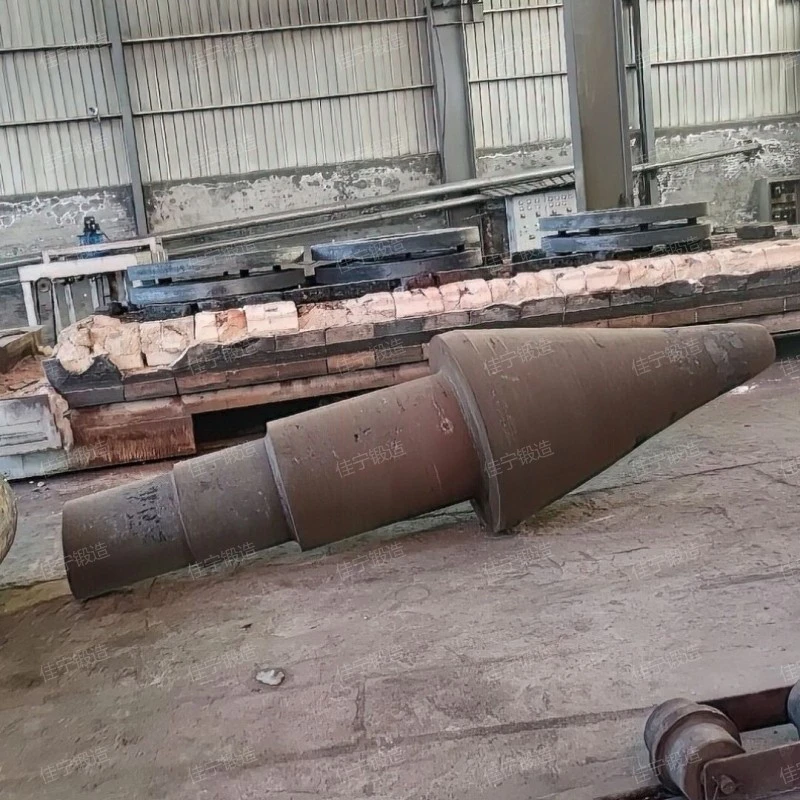
To ensure a thorough evaluation, use the following checklist during factory visits or virtual audits:
Facility and Equipment
- Press capacity and type (hydraulic, mechanical, ring roller)
- Furnace type, calibration records, and temperature uniformity reports
- Machining equipment brand and age (CNC / manual)
- NDT equipment (ultrasonic flaw detector, MPI bench, dye penetrant station)
Quality Documentation
- ISO 9001, AS9100, or API Q1 certificates
- Material test reports (MTR) for last 10 orders
- Heat treatment curves and hardness distribution data
- NDT personnel certifications (ASNT Level II/III)
Production Samples
- Request three recent coupling projects similar to your requirements
- Check surface finish, dimensional tolerance, and grain flow (etch test)
- Review lead time performance and on-time delivery rate (should be ≥ 95%)
Customer References
- Speak with two clients who have purchased forged couplings within the last 12 months
- Ask about communication, problem resolution, and repeat business rate
Jianing Forging regularly hosts customer audits and provides full access to its quality management records. In one recent case, a major compressor manufacturer conducted a two-day audit and concluded that the supplier's forging process capability index (Cpk) exceeded 1.67 for critical bore dimensions, far above the industry minimum of 1.33.
Real-World Application: Matching Manufacturer Capabilities to Project Needs
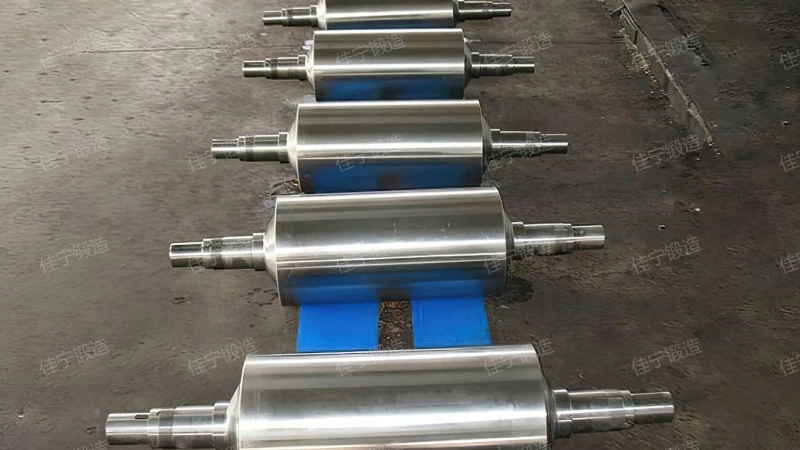
Consider a scenario where a mining company needs flanged couplings for a 1.5 MW conveyor drive system with shaft diameter 220 mm and operating torque 650 kN·m. The decision process would involve:
1. Material: For high yield strength and toughness, alloy steel 4140 with quench and temper to 28-32 HRC.
2. Forging method: Closed-die forging to produce near-net shape flanges, minimizing machining waste.
3. Dimensional tolerances: Bore tolerance H7, flange face runout within 0.05 mm.
4. NDT: 100% ultrasonic per ASTM A388, with acceptance level C.
5. Lead time: 6 weeks for first article, 4 weeks for production run.
A manufacturer like Jianing Forging, with its integrated forging, heat treatment, and machining line, can deliver such a coupling with full traceability and a defect rate below 0.1%. The client's feedback indicated zero installation issues and 40% longer service life compared to previous cast couplings.
In another example, a marine engineering firm required custom stainless steel coupling sleeves for a seawater pump. Jianing Forging used duplex stainless steel UNS S31803, performed solution annealing, and manufactured the sleeves with a concentricity tolerance of 0.03 mm. The components passed 48-hour salt spray testing with no pitting. The project achieved a 15% cost reduction over the previous supplier due to optimized forging die design and reduced machining allowance.
Choosing a coupling forging manufacturer is not a one-size-fits-all decision. It demands alignment between your technical requirements, quality standards, and business goals. By evaluating material traceability, forging process control, heat treatment integrity, machining precision, and NDT capabilities, you can select a partner that delivers consistent, reliable products. Jianing Forging has built its reputation on these principles, serving global clients in demanding sectors with forged couplings that meet or exceed industry specifications. For a detailed assessment of your coupling forging needs, consider reaching out directly to discuss project requirements and review case studies relevant to your industry (咨询热线:176 9623 6479).